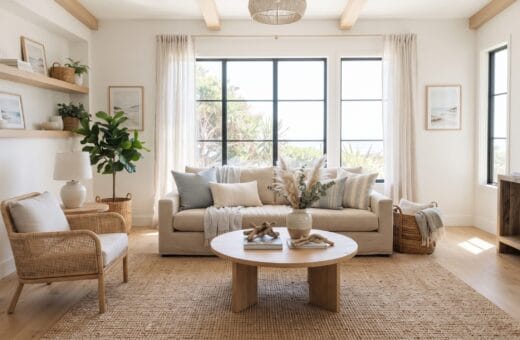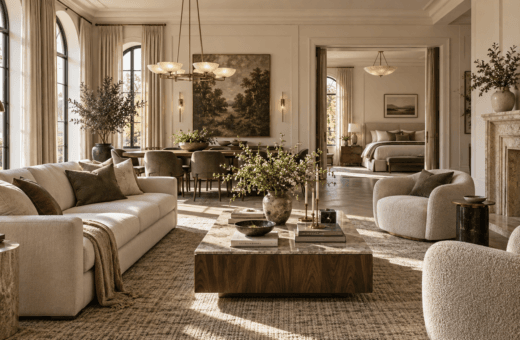
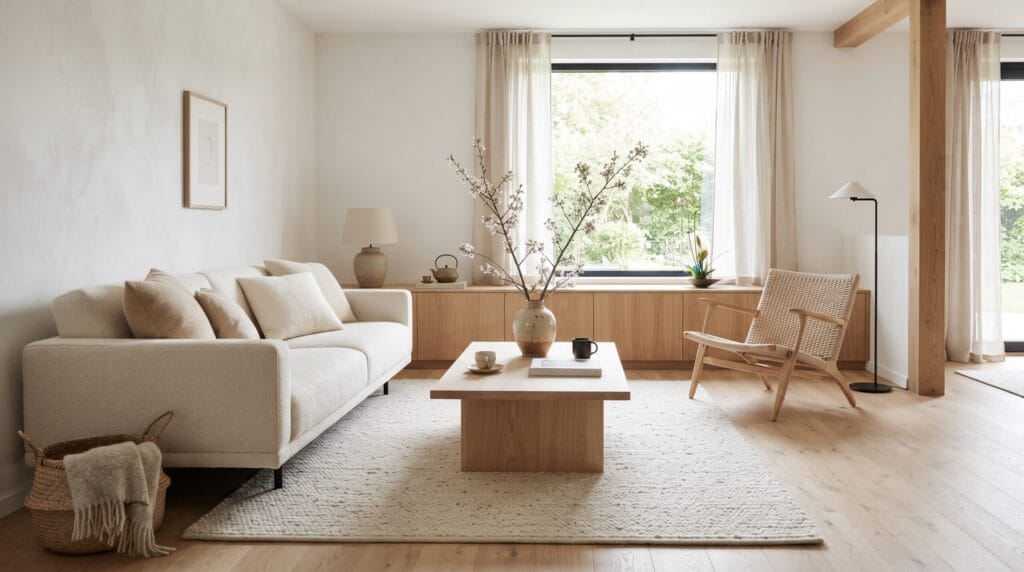
Japandi interior design brings together the calm restraint of Japanese interiors and the warmth, comfort, and functionality associated with Scandinavian design. The result is a home that feels simple without feeling cold, natural without becoming rustic, and minimal without looking empty.
The style works because it focuses on what matters most: proportion, quality, texture, craftsmanship, light, storage, and a limited material palette. Rather than filling a room with decorative objects, Japandi interiors rely on beautiful wood grain, handmade ceramics, linen, wool, stone, quiet color, and thoughtfully placed furniture.
A successful Japandi room also feels lived in. The goal is not perfect emptiness. It is visual calm. Everyday items are organized, surfaces stay mostly clear, and each object has enough space around it to be appreciated.
This guide shares 21 practical Japandi interior design ideas for living rooms, bedrooms, dining rooms, kitchens, bathrooms, entryways, home offices, rentals, and small spaces. You will also find color palettes, material combinations, common mistakes, budget strategies, and a final checklist for creating a calm and minimal home.
What Is Japandi Interior Design?
Japandi combines two design traditions that share several values.
Japanese Influence
Common characteristics include:
- Simplicity
- Natural materials
- Low furniture
- Empty space
- Handmade objects
- Imperfect natural texture
Scandinavian Influence
Common characteristics include:
- Comfort
- Light interiors
- Practical furniture
- Soft textiles
- Warm wood
- Functional storage
The Shared Result
Together, these influences create interiors that feel:
- Quiet
- Warm
- Functional
- Natural
- Uncluttered
- Timeless
How to Make Japandi Interior Design Feel Warm Instead of Sparse
Minimalism can feel cold when texture and warmth are removed.
Use Warm Neutrals
Choose cream, oatmeal, beige, taupe, warm gray, and soft brown instead of stark white everywhere.
Add Natural Wood
Oak, ash, beech, walnut, and other natural wood tones bring warmth and visible grain.
Layer Soft Materials
Linen, cotton, wool, and woven fibers prevent the room from feeling hard.
Use Dark Accents Carefully
A small amount of charcoal, black, or dark wood gives the space structure.
1. Start With Warm White or Soft Beige Walls
One of the easiest Japandi interior design ideas is creating a quiet background.
Good Wall Colors
- Warm white
- Cream
- Sand
- Light beige
- Pale greige
Why It Works
Soft neutrals allow furniture, wood, pottery, and textiles to stand out without strong visual competition.
Avoid
Very cool gray walls if the goal is a warm, natural atmosphere.
2. Use Pale Natural Wood as a Foundation
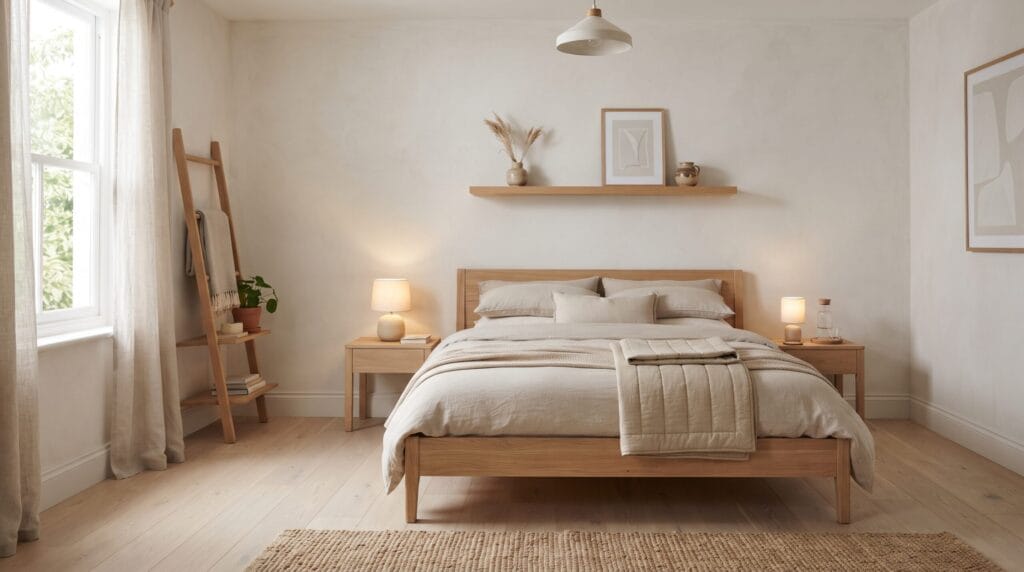
Light wood is strongly associated with Scandinavian interiors and works beautifully in Japandi spaces.
Use It On
- Flooring
- Dining tables
- Shelving
- Bed frames
- Cabinets
- Chairs
Good Directions
Try oak, ash, beech, or similar warm-toned woods.
Why It Works
The grain provides visual interest without adding busy color.
3. Mix Light Wood With Darker Accents
A room made entirely from pale wood can feel flat.
Add Contrast With
- Walnut
- Dark-stained wood
- Charcoal furniture
- Black metal
- Deep brown ceramics
Why It Works
The contrast creates depth while preserving a neutral palette.
Keep It Limited
One or two darker elements are often enough.
4. Choose Low-Profile Furniture
Low furniture is one of the most recognizable Japandi interior design features.
Consider
- Low sofa
- Low bed frame
- Low coffee table
- Compact bench
- Short storage cabinet
Why It Works
Lower furniture makes walls feel taller and creates a calmer horizontal line through the room.
Keep Comfort First
Low-profile furniture should still provide proper support for everyday use.
5. Use Furniture With Clean, Rounded Lines
Japandi rooms often avoid overly ornate shapes.
Look For
- Rounded corners
- Simple legs
- Soft curves
- Slim profiles
- Visible craftsmanship
Why It Works
Gentle curves soften minimal spaces without introducing decorative clutter.
6. Choose One Strong Wood Coffee Table
A beautiful coffee table can become a functional centerpiece.
Good Shapes
- Round
- Oval
- Soft rectangular
- Sculptural low table
Styling
Keep the surface simple with:
- Two or three books
- Ceramic bowl
- Small branch arrangement
Why It Works
Natural wood becomes decoration on its own.
7. Add a Large Neutral Wool Rug
A properly sized rug is essential to comfortable Japandi interior design.
Good Colors
- Oatmeal
- Cream
- Taupe
- Warm gray
- Natural wool
Living Room
Choose a rug large enough to connect the main seating group.
Bedroom
Let the rug extend beyond the bed.
Why It Works
A wool rug softens hard surfaces while keeping the palette calm.
8. Use Linen Curtains for Softness
Linen works especially well with wood and plaster-like walls.
Choose
- Warm white
- Natural flax
- Beige
- Soft gray
Hang Them Full Length
Floor-length curtains add softness without making the room feel formal.
Why It Works
The slight texture keeps neutral rooms from looking flat.
9. Add Handmade Ceramics
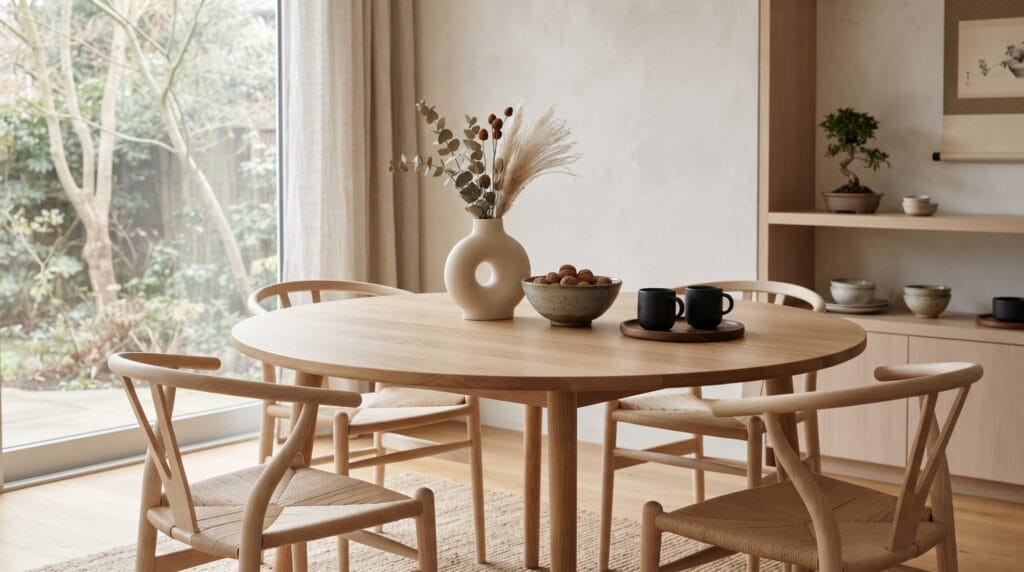
Handmade pottery is one of the most natural Japandi interior design accents.
Use
- Bowls
- Vases
- Lamps
- Cups
- Planters
Good Finishes
- Matte cream
- Speckled clay
- Black ceramic
- Warm gray
- Terracotta used sparingly
Styling Rule
Use fewer pieces with stronger shape.
10. Bring in Simple Branch Arrangements
Japandi styling often uses natural forms instead of large decorative displays.
Try
- One sculptural branch
- Green stems
- Seasonal foliage
- Minimal floral arrangement
Place It
- Dining table
- Entry console
- Coffee table
- Kitchen island
Why It Works
A simple natural arrangement adds movement while preserving negative space.
11. Use Paper or Fabric-Shaded Lighting
Soft diffused lighting suits a calm interior.
Good Fixtures
- Paper pendant
- Linen shade
- Ceramic table lamp
- Frosted glass light
Layer Lighting
Combine:
- Ceiling light
- Table lamps
- Floor lamp
- Wall lights
Why It Works
Diffused light makes natural materials feel warmer.
12. Keep Storage Mostly Closed
Visual order is central to Japandi interior design.
Use
- Low cabinets
- Sideboards
- Drawer units
- Built-in storage
- Storage benches
Store
- Electronics
- Papers
- Toys
- Extra textiles
- Small accessories
Why It Works
Closed storage allows the room’s material palette to remain visually calm.
13. Edit Open Shelves Carefully
Open shelves can work in Japandi rooms when they are not crowded.
Display
- Books
- One ceramic vessel
- Small plant
- Art object
- Useful bowl
Leave Empty Space
Do not fill every shelf.
Why It Works
Negative space helps each object feel intentional.
14. Create a Calm Japandi Living Room
The living room should feel comfortable, not overly formal.
Start With
- Low sofa
- Large wool rug
- Wood coffee table
- One lounge chair
- Soft lighting
- Minimal art
Keep the Layout Open
Leave clear circulation around furniture.
Why It Works
Comfort and simplicity are balanced.
15. Create a Japandi Bedroom With Soft Layers
Bedrooms are ideal for quiet Japandi interior design.
Use
- Low bed frame
- Warm neutral bedding
- Natural wood nightstands
- Linen curtains
- Soft rug
- Ceramic lamps
Keep Bedding Simple
Use a duvet, one throw, and a few pillows rather than an elaborate arrangement.
Why It Works
The room feels restful and easy to maintain.
16. Design a Minimal Japandi Dining Room
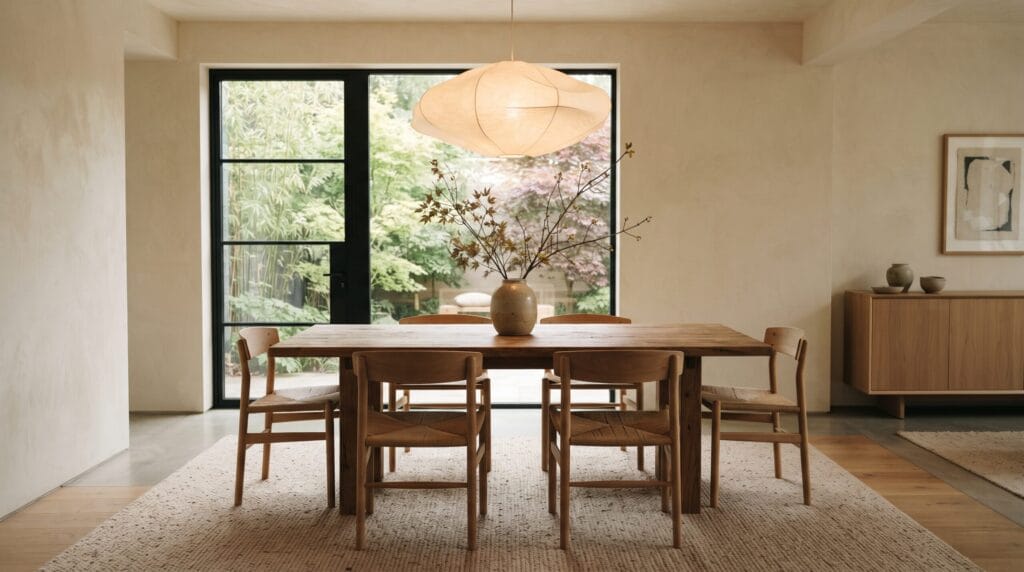
A Japandi dining space should feel practical and calm.
Use
- Wood table
- Simple chairs
- Sculptural pendant
- Ceramic centerpiece
- Neutral rug where appropriate
Keep the Table Clear
One low bowl or branch arrangement is enough.
Why It Works
The furniture itself carries most of the visual interest.
17. Bring Japandi Style Into the Kitchen
Japandi kitchens focus on order and natural materials.
Use
- Simple cabinetry
- Wood accents
- Stone or ceramic
- Neutral hardware
- Clear counters
Display Only a Few Useful Items
For example:
- Wood cutting board
- Ceramic bowl
- Herb pot
- Simple tray
Why It Works
Functional objects become part of the decor.
18. Create a Japandi Bathroom With Natural Texture
Bathrooms can use the same restrained material language.
Combine
- Warm stone
- Wood vanity
- Ceramic basin
- Neutral towels
- Simple mirror
- Matte metal hardware
Keep Products Stored
Use drawers, baskets, or closed cabinets.
Why It Works
The bathroom feels calm even with hard surfaces.
19. Use Japandi Interior Design in Small Spaces
Small homes benefit from the style’s emphasis on editing.
Prioritize
- Low furniture
- Light walls
- Closed storage
- One large mirror
- Full-length curtains
- Multifunctional pieces
Avoid
Too many small furniture items.
Why It Works
Fewer, better-scaled pieces preserve open sightlines.
20. Create a Japandi Home on a Budget
You do not need designer furniture to create the look.
Free Improvements
- Declutter
- Remove excess decor
- Rearrange furniture
- Clear surfaces
- Open curtains
Lower-Cost Upgrades
- Linen-look curtains
- Neutral cushion covers
- Ceramic vase
- Woven basket
- Secondhand wood table
- Simple lamp
Save For
- Sofa
- Rug
- Dining table
- Bed
- Storage
Why It Works
The style depends more on restraint and material consistency than on expensive accessories.
21. Edit Before Adding More
The final and most important Japandi interior design principle is editing.
Review
- Coffee tables
- Shelves
- Nightstands
- Consoles
- Kitchen counters
- Bathroom vanities
Ask
- Is this useful?
- Is it meaningful?
- Does it support the material palette?
- Is the scale right?
- Would the room feel calmer without it?
Why It Works
Japandi style depends on intentional emptiness as much as on the objects that remain.
Japandi Interior Design by Room
| Room | Main Priority | Best Materials | High-Impact Upgrade |
| Living room | Calm comfort | Wood, wool, linen | Large rug and low sofa |
| Bedroom | Restful simplicity | Linen, wood, cotton | Low bed and soft lighting |
| Dining room | Functional warmth | Wood, ceramic | Simple table and pendant |
| Kitchen | Order | Wood, stone, ceramic | Clear counters and closed storage |
| Bathroom | Natural calm | Stone, wood, ceramic | Vanity and warm lighting |
| Entryway | Practical simplicity | Wood, woven fiber | Low bench and storage |
| Home office | Focus | Wood, linen, ceramic | Clean desk and closed storage |
Japandi Interior Design Color Palettes
Light Japandi
- Warm white
- Pale oak
- Beige
- Taupe
- Charcoal
Earthy Japandi
- Cream
- Walnut
- Olive
- Stone
- Soft black
Soft Scandinavian Japandi
- Ivory
- Ash wood
- Sage
- Warm gray
- Natural linen
Dark Japandi
- Greige
- Walnut
- Deep charcoal
- Camel
- Cream
Japandi Materials Compared
| Material | Best Uses | Main Benefit | Design Note |
| Pale oak | Furniture, floors | Light warmth | Strong Scandinavian influence |
| Walnut | Cabinets, accents | Depth and contrast | Use selectively |
| Linen | Curtains, bedding | Soft natural texture | Keeps rooms relaxed |
| Wool | Rugs, throws | Warmth and comfort | Ideal for neutral spaces |
| Ceramic | Lamps, bowls, vases | Handmade character | Use fewer, larger pieces |
| Stone | Tables, bathrooms | Visual permanence | Balance with textiles |
| Woven fiber | Baskets, storage | Practical texture | Helps soften clean lines |
How to Make Japandi Interior Design Look More Expensive
Improve Material Quality
Choose fewer pieces with convincing wood grain, stone texture, and fabric weight.
Use Better Scale
A large rug, substantial pendant, or oversized artwork often looks more intentional.
Keep Surfaces Clear
Negative space is a luxury signal in minimal interiors.
Repeat Wood Tones
Coordinated wood creates visual continuity.
Use Soft Lighting
Warm, diffused light makes simple materials feel richer.
Avoid Trend Overload
Japandi works best when the room feels timeless rather than overly styled.
Japandi Interior Design for Renters
Renters can create a strong Japandi look with portable pieces.
Use
- Rugs
- Curtains
- Lamps
- Freestanding storage
- Wood furniture
- Mirrors
- Ceramics
- Plants
Check the Lease Before
- Painting
- Drilling
- Changing fixtures
- Applying adhesives
Choose Portable Investments
Spend more on furniture and textiles that can move with you.
Common Japandi Interior Design Mistakes
Making the Room Too Empty
Minimal does not mean uncomfortable.
Using Only Pale Beige
Without contrast, the room can feel flat.
Buying Too Many Small Decor Items
Fewer, larger objects usually work better.
Ignoring Storage
Visible clutter quickly breaks the calm atmosphere.
Using Furniture That Is Too Bulky
Choose clean silhouettes and appropriate scale.
Overusing Black
Dark accents should add structure, not dominate the room.
Matching Every Wood Tone Exactly
Natural variation is useful when undertones remain related.
Forgetting Texture
Linen, wool, ceramics, and wood grain are essential for warmth.
Japandi Interior Design Checklist
Use this Japandi interior design checklist:
- Walls use warm, quiet neutrals.
- Natural wood is a key material.
- Light and dark tones are balanced.
- Furniture feels low and simple.
- Curves soften clean lines.
- Rugs are large enough.
- Curtains add soft texture.
- Lighting is warm and diffused.
- Ceramics add handmade character.
- Greenery or branches are used selectively.
- Closed storage hides everyday clutter.
- Open shelves remain edited.
- Living room circulation is clear.
- Bedrooms feel simple and comfortable.
- Dining tables stay mostly clear.
- Kitchen counters remain functional.
- Bathrooms use natural materials.
- Small rooms use fewer furniture pieces.
- Rental upgrades remain portable.
- The home feels calm without feeling empty.
Frequently Asked Questions
What Is Japandi Interior Design?
Japandi interior design combines Japanese simplicity and craftsmanship with Scandinavian warmth, comfort, light wood, practical furniture, and soft textiles.
What Colors Are Best for Japandi Interiors?
Warm white, cream, beige, taupe, pale oak, walnut, sage, olive, charcoal, and soft black all work well in a restrained palette.
What Materials Define Japandi Style?
Natural wood, linen, cotton, wool, ceramic, stone, woven fiber, and small amounts of metal are common materials.
How Do I Make Japandi Style Feel Cozy?
Use warm neutrals, large rugs, linen curtains, soft bedding, layered lighting, wood grain, and comfortable furniture.
Can Japandi Interior Design Work in a Small Home?
Yes. Low furniture, closed storage, light walls, simple layouts, and fewer decorative objects are especially effective in small spaces.
How Can I Create Japandi Style on a Budget?
Declutter first, then focus on secondhand wood furniture, neutral textiles, ceramics, baskets, simple lighting, and a controlled color palette.
Is Japandi the Same as Minimalism?
Japandi is minimalist, but it places more emphasis on natural materials, warmth, craftsmanship, texture, and practical comfort than stark minimalism often does.
Conclusion
The best Japandi interior design creates a calm and minimal home through natural materials, warm neutrals, low furniture, useful storage, soft texture, and thoughtful restraint.
Start with a quiet wall color, then introduce wood, wool, linen, ceramic, stone, and a few darker accents. Keep furniture simple and properly scaled, and use soft lighting to make the room feel warm rather than sparse.
Storage and editing are essential. When everyday clutter disappears, natural materials and handmade objects become more visible and meaningful.
Most importantly, leave room for the space itself. Japandi interiors are not successful because they contain very little. They succeed because every object, material, and empty area feels intentional.
When comfort, craftsmanship, texture, proportion, and visual calm work together, Japandi style can create a home that feels peaceful, functional, and timeless.
Also Read: “10 Minimalist Interior Design Styles for Calm, Modern Spaces“