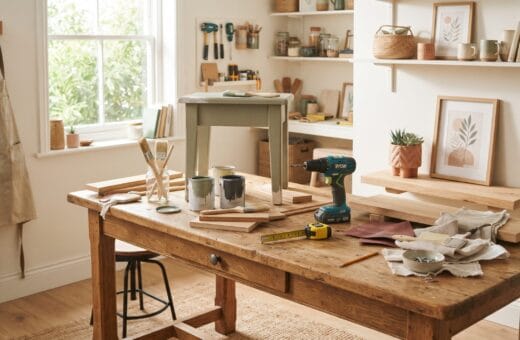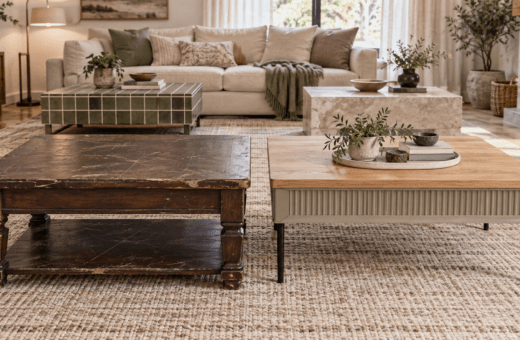
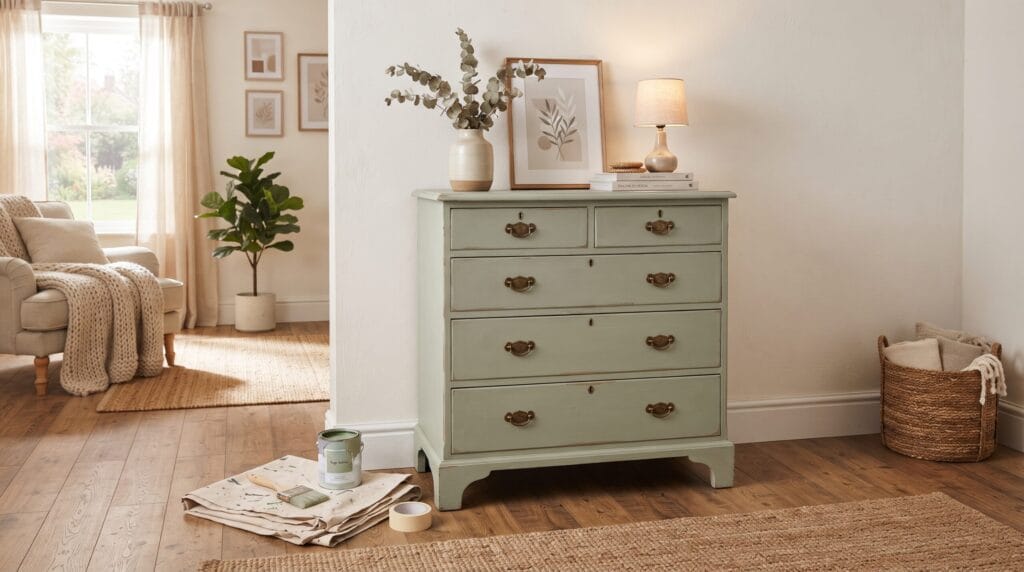
Old furniture often has more potential than it first appears. The best painted furniture ideas use color, preparation, new hardware, and thoughtful finishing to turn dated dressers, nightstands, cabinets, tables, chairs, and storage pieces into furniture that feels intentional again.
Painting furniture can be especially useful when the shape and construction are still good but the finish no longer fits the room. A dark glossy dresser can become a warm white focal point. A basic pine nightstand can feel more refined in sage or greige. A dated cabinet can become dramatic in soft black. The goal is not to hide every sign of age, but to give the piece a finish that works with the rest of the home.
Successful furniture painting depends on preparation as much as color. Cleaning, repairing, sanding where needed, using compatible primer, allowing proper drying time, and choosing a durable topcoat can make the difference between a makeover that lasts and one that chips quickly. Always follow the paint and finish manufacturer’s instructions for surface preparation, ventilation, drying, and recoating.
This guide shares 21 practical painted furniture ideas for bedrooms, living rooms, dining rooms, entryways, bathrooms, home offices, and small spaces. You will also find paint-finish guidance, color palettes, hardware ideas, budget strategies, common mistakes, and a final checklist for achieving a polished result.
What Makes Painted Furniture Look Professional?
A painted piece usually looks better when five things are handled carefully.
Surface Preparation
Paint performs best on a clean, sound surface.
Appropriate Primer
Primer may be needed for glossy finishes, stain-blocking, raw wood, or surfaces with poor adhesion.
Thin, Even Coats
Several controlled coats usually look smoother than one heavy coat.
Good Hardware
Knobs and pulls can change the character of a painted piece immediately.
Enough Drying and Curing Time
A finish can feel dry before it is fully hardened, so avoid heavy use too soon.
How to Choose Painted Furniture Ideas for an Existing Room
Start with the room, not the paint aisle.
Look at the Existing Palette
Identify:
- Wall color
- Flooring
- Main wood tones
- Metal finishes
- Upholstery
- Curtains
Decide Whether the Piece Should Blend or Contrast
A dresser can disappear into a calm neutral scheme or become the room’s main color accent.
Test the Color
Paint a sample board when possible and view it beside the furniture in morning, afternoon, and evening light.
1. Paint a Dresser Warm White
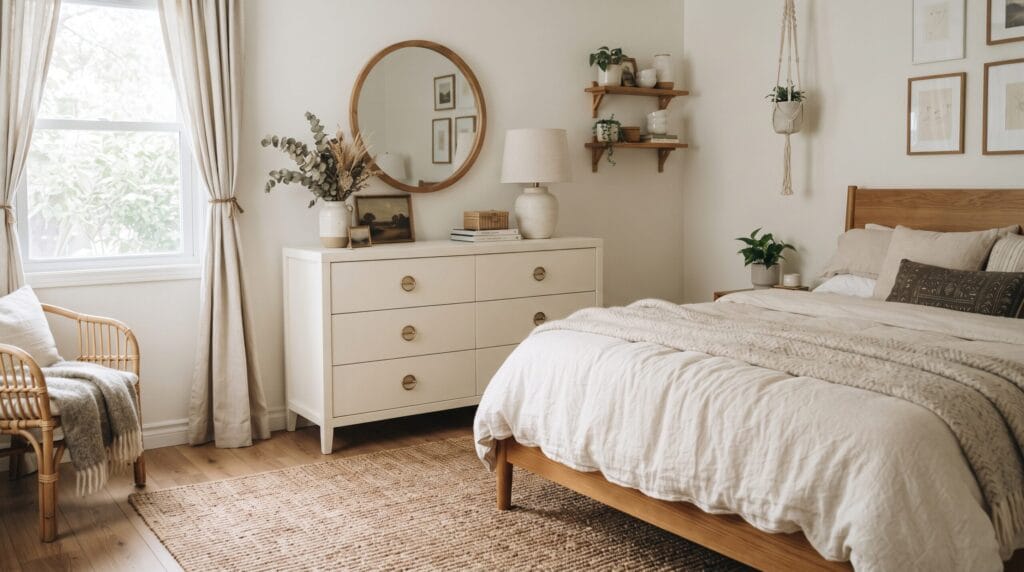
Warm white is one of the most flexible painted furniture ideas for bedrooms and guest rooms.
Why It Works
It can brighten a heavy dresser while allowing wood floors, art, bedding, and hardware to stand out.
Pair With
- Brass pulls
- Black knobs
- Natural wood top
- Linen bedding
Best Look
Choose a warm, slightly creamy white rather than an overly stark tone when the room contains beige, oak, or walnut.
2. Give a Nightstand a Soft Sage Finish
Sage works well when you want color without creating a loud focal point.
Good Pairings
- Cream walls
- Pale oak
- Walnut
- Brass
- Soft black
Add
A simple ceramic lamp and one small drawer pull.
Why It Works
Muted green brings natural color into the room while remaining easy to coordinate.
3. Paint a Cabinet Soft Black
Soft black can make an ordinary cabinet feel more architectural.
Use It On
- Bookcase
- Storage cabinet
- Bar cabinet
- Entry cabinet
Balance It With
- Light walls
- Warm wood
- Cream textiles
- Brass or bronze hardware
Why It Works
Dark paint gives the piece visual weight without requiring elaborate detailing.
4. Create a Two-Tone Dresser With Painted Frame and Wood Drawers
Two-tone painted furniture ideas preserve some natural wood while modernizing the rest.
Try
- Warm white frame + walnut drawers
- Greige frame + oak drawers
- Soft black frame + natural wood drawers
Preparation
The painted and natural sections may require different surface treatments.
Why It Works
The contrast creates depth and makes the makeover feel custom.
5. Paint a Sideboard Greige
Greige is useful when white feels too bright and gray feels too cool.
Best For
- Dining rooms
- Living rooms
- Entryways
Pair With
- Aged brass
- Black metal
- Ceramic lamps
- Large artwork
Why It Works
Greige can coordinate with both warm and cool elements in the same room.
6. Refresh a Small Table in Deep Navy
Deep navy can create a refined accent without the starkness of black.
Good Pieces
- Side table
- Console
- Small desk
- Bedside table
Add
Brass, bronze, or wood hardware where appropriate.
Why It Works
Navy feels classic and works especially well with cream, walnut, and warm gray.
7. Paint Dining Chairs One Coordinated Color
A mismatched group of chairs can feel intentional when unified with paint.
Try
- Soft black
- Warm white
- Olive
- Charcoal
- Deep blue
Keep the Table Natural
Painted chairs around a wood table create a balanced contrast.
Safety
Check joints and structural stability before refinishing chairs used for seating.
8. Paint Only the Drawer Fronts
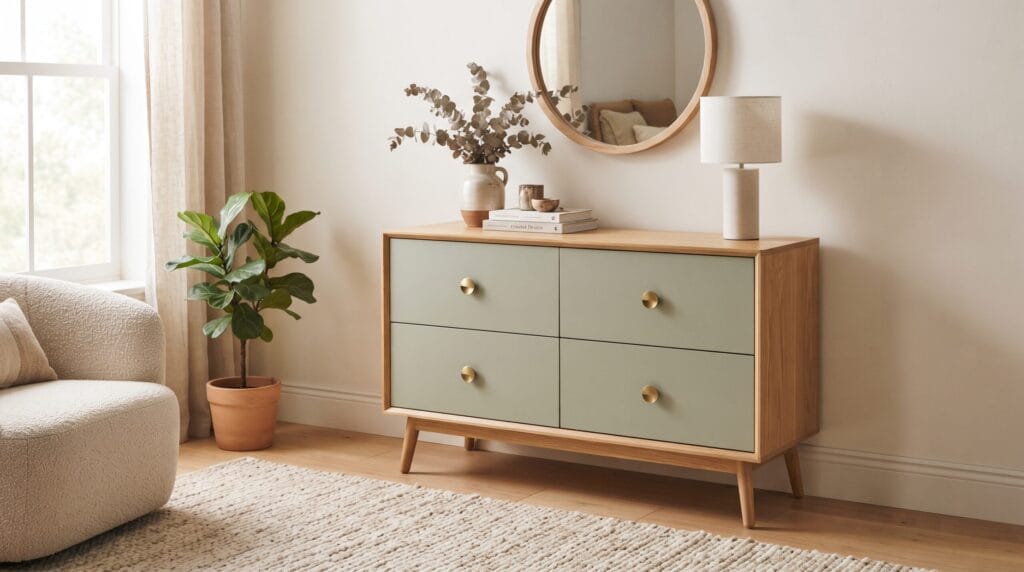
Partial-color painted furniture ideas can refresh a piece without covering every surface.
Good For
- Dressers
- Media units
- Desks
- Storage chests
Try
Painted drawer fronts with a natural wood frame.
Why It Works
The change feels graphic and modern while preserving original material.
9. Add a Color-Blocked Detail
Color blocking can create a more playful makeover.
Ideas
- Lower third in darker color
- One contrasting drawer
- Painted doors on a natural cabinet
- Geometric panel detail
Keep It Restrained
Two colors are usually enough.
Why It Works
The technique adds personality without needing decorative decals or busy patterns.
10. Paint a Console Table Terracotta
Terracotta is one of the warmer painted furniture ideas for earthy interiors.
Pair With
- Cream
- Olive
- Natural wood
- Woven baskets
- Black accents
Best Rooms
- Entryway
- Living room
- Dining room
Why It Works
The color feels grounded and can make a simple console look more distinctive.
11. Paint a Bathroom Vanity a Muted Color
A vanity can become the focal point of a small bathroom.
Good Colors
- Sage
- Deep blue
- Charcoal
- Warm greige
- Soft black
Important
Use coatings appropriate for the existing surface and bathroom conditions.
Hardware
Repeat the room’s main metal finish for a cohesive look.
12. Paint a Desk to Match the Home Office
A painted desk can blend into the room instead of looking like temporary office furniture.
Try
- Wall-color desk
- Soft gray
- Sage
- Deep charcoal
Pair With
- Organized cables
- Task lamp
- Closed storage
Why It Works
A coordinated desk helps the workspace feel integrated with the home.
13. Use Paint to Refresh an Old Bookshelf
Bookshelves can dominate a room, so color matters.
Options
- Match the wall color for a built-in effect
- Use soft black for contrast
- Paint only the back panel
- Use warm white to brighten dark wood
Style After Painting
Use fewer, larger books and objects rather than crowding every shelf.
14. Paint a Storage Bench and Add a New Cushion
A bench makeover combines furniture paint with textiles.
Try
- Warm white base + striped cushion
- Sage base + cream cushion
- Black base + camel cushion
Why It Works
The combination makes a basic storage piece feel more complete.
Safety
Check hinges, supports, and structural condition before using the bench for seating.
15. Paint a Vintage Cabinet in Olive Green
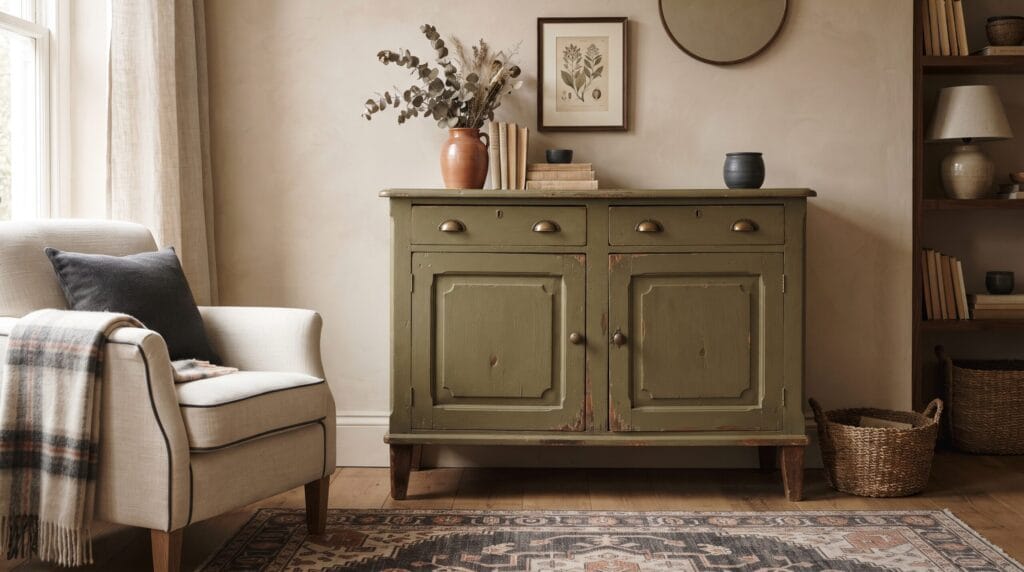
Olive is one of the strongest painted furniture ideas for a collected, timeless look.
Best With
- Walnut
- Cream
- Terracotta
- Aged brass
- Charcoal
Keep Some Age
A perfectly uniform finish is not always necessary on older furniture if the goal is a relaxed, character-rich result.
16. Paint a Small Chest in Dusty Blue
Dusty blue works especially well in bedrooms and guest rooms.
Pair With
- White bedding
- Natural oak
- Warm gray
- Navy accents
Hardware
Try wood, aged brass, or simple black knobs.
Why It Works
The color feels calm while still giving the piece a clear identity.
17. Use One Bold Color on a Small Accent Piece
Small furniture is a good place to experiment.
Try
- Mustard stool
- Burgundy side table
- Deep teal cabinet
- Coral plant stand
Keep the Rest Calm
One bold painted piece works best when the surrounding room has a controlled palette.
Why It Works
You get a strong color moment without committing to a large surface.
18. Paint a Media Console to Reduce Visual Clutter
A media console can blend more naturally into the living room with a quieter finish.
Good Directions
- Match wall color
- Warm white
- Greige
- Soft black
Add
Simple hardware and clean cable management.
Why It Works
The television area looks more intentional when the storage below it is visually calm.
19. Paint a Kitchen Cart or Freestanding Island
Portable kitchen furniture can become a useful color accent.
Good Colors
- Navy
- Olive
- Sage
- Charcoal
Keep the Top Durable
A natural wood or appropriate work surface can remain unpainted.
Why It Works
The two-tone effect makes utilitarian furniture feel more considered.
20. Paint Furniture the Same Color as the Wall
Tone-on-tone painted furniture ideas can make storage look almost built in.
Good Pieces
- Bookcase
- Cabinet
- Console
- Desk
Best Effect
Use the same or a closely related color with suitable furniture paint.
Why It Works
The furniture visually recedes, which can help a small room feel less crowded.
21. Refresh a Thrifted Piece With Paint and New Hardware
The final of these painted furniture ideas focuses on combining several small upgrades.
Before Buying
Check:
- Structural stability
- Drawer operation
- Odors
- Water damage
- Missing parts
- Surface condition
Makeover Formula
- Clean thoroughly.
- Repair loose parts.
- Prepare the surface.
- Prime where needed.
- Paint in controlled coats.
- Allow proper drying time.
- Add updated hardware.
Why It Works
A simple thrifted piece can become a useful, unique addition without the cost of new furniture.
Painted Furniture Ideas by Furniture Type
| Furniture Type | Strong Color Direction | Useful Upgrade | Best Room |
| Dresser | Warm white, greige, sage | New pulls | Bedroom |
| Nightstand | Sage, dusty blue, black | Knob + lamp | Bedroom |
| Cabinet | Soft black, olive | Brass hardware | Living room |
| Sideboard | Greige, navy | Large artwork above | Dining room |
| Dining chairs | Black, olive, cream | Seat cushion | Dining room |
| Desk | Wall color, gray, sage | Cable management | Home office |
| Vanity | Navy, charcoal, green | Coordinated hardware | Bathroom |
| Bench | White, black, sage | Upholstered cushion | Entryway |
Painted Furniture Ideas by Budget
| Budget | Best Improvements | Typical Result |
| Under $25 | Small stool, planter stand, hardware touch-up | Quick accent refresh |
| $25-$75 | Nightstand, side table, chair set | Noticeable makeover |
| $75-$150 | Dresser, desk, cabinet | Strong transformation |
| $150-$300 | Large sideboard, multiple chairs, vanity | Major room update |
| $300+ | Multiple furniture pieces and premium hardware | Coordinated makeover |
Costs vary by paint, primer, tools already owned, hardware, repair needs, and furniture size.
Paint Finish Options Compared
| Finish | Visual Effect | Good For | Consideration |
| Matte | Soft, low sheen | Decorative pieces | May show marks more easily |
| Eggshell | Subtle sheen | Dressers, cabinets | Balanced appearance |
| Satin | Smooth, moderate sheen | High-use furniture | Easier to wipe clean |
| Semi-gloss | Noticeable sheen | Trim-style details | Shows surface flaws more clearly |
| Specialty furniture paint | Varies | Furniture makeovers | Follow system instructions carefully |
Always confirm that the chosen coating is suitable for the existing substrate and expected use.
Timeless Painted Furniture Color Palettes
Warm Neutral
- Warm white
- Beige
- Pale oak
- Camel
- Charcoal
Soft Green
- Cream
- Sage
- Olive
- Walnut
- Brass
Classic Blue
- Ivory
- Dusty blue
- Navy
- Oak
- Warm gray
Earthy
- Sand
- Terracotta
- Olive
- Walnut
- Soft black
How to Prep Furniture Before Painting
Preparation depends on the existing finish, but a general workflow often includes the following.
1. Inspect the Piece
Check for loose joints, damaged veneer, missing hardware, and structural problems.
2. Clean Thoroughly
Remove grease, wax, dust, and residue using products appropriate for the surface.
3. Repair Damage
Address dents, loose hardware, or damaged areas before painting.
4. Sand Where Required
Some finishes need abrasion for adhesion. Follow the coating manufacturer’s guidance.
5. Prime When Needed
Primer may be necessary for stain blocking, glossy surfaces, raw wood, or difficult substrates.
6. Apply Thin Coats
Allow each coat to dry according to instructions before recoating.
7. Protect the Finish
Use the paint system’s recommended topcoat if one is required.
Hardware Ideas for Painted Furniture
Aged Brass
Works well with sage, navy, black, and warm white.
Matte Black
Creates clean contrast against pale paint.
Wood Knobs
Good for Scandinavian, rustic, and natural interiors.
Ceramic Knobs
Useful when you want a softer handmade detail.
Existing Hardware Reused
Original hardware can sometimes be cleaned and reused for a more authentic look.
How to Make Painted Furniture Look More Expensive
Improve the Hardware
Well-scaled pulls can change the entire piece.
Keep the Color Sophisticated
Muted, complex colors often integrate more easily into interiors than very bright primary tones.
Paint Inside Visible Areas
If open shelves or glass doors expose the interior, make sure those areas look intentional.
Repair Before Painting
Paint does not hide broken corners, loose joints, or damaged drawers.
Use Thin Coats
A smooth surface usually looks more professional than thick paint buildup.
Let the Piece Cure
Heavy use too soon can damage a finish that has not fully hardened.
Painted Furniture Ideas for Renters
Furniture makeovers are especially useful for renters because the changes are portable.
Good Projects
- Nightstands
- Dressers
- Desks
- Chairs
- Freestanding cabinets
- Benches
Protect the Rental
Paint furniture in an appropriate workspace and protect floors and walls carefully.
Choose Portable Investments
A well-painted dresser or cabinet can move to a future home.
Common Painted Furniture Mistakes
Skipping Cleaning
Grease and residue can interfere with adhesion.
Painting Over a Failing Surface
Loose or peeling finishes need proper preparation first.
Using the Wrong Paint System
Not every coating works on every substrate.
Applying Coats Too Thickly
Heavy coats can drip, wrinkle, or dry unevenly.
Recoating Too Soon
Follow the specified recoat window.
Ignoring Hardware Placement
Measure existing holes before buying new pulls.
Painting Structurally Unsound Furniture
Cosmetic improvements cannot fix unstable joints or damaged frames.
Using the Piece Before It Cures
A finish may need additional time before heavy use.
Painted Furniture Ideas Checklist
Use this painted furniture ideas checklist:
- The furniture is structurally sound.
- The piece is worth refinishing.
- The room palette has been considered.
- The paint color has been tested.
- Hardware measurements are confirmed.
- The surface is thoroughly cleaned.
- Repairs are completed before paint.
- Sanding is done where required.
- Primer is used when needed.
- Paint is suitable for the substrate.
- Coats are thin and even.
- Recoat times are followed.
- Ventilation is adequate.
- Hardware is installed carefully.
- Drawers and doors still operate smoothly.
- The finish is allowed to cure.
- The final color works with surrounding materials.
- The makeover improves the piece rather than hiding major damage.
- Protective equipment is used where required.
- The finished furniture feels intentional in the room.
Frequently Asked Questions
What Are the Best Painted Furniture Ideas for Beginners?
Start with a nightstand, small side table, simple dresser, stool, or freestanding cabinet. These pieces are easier to move and prepare than very large furniture.
What Color Makes Old Furniture Look More Modern?
Warm white, sage, greige, soft black, charcoal, dusty blue, and olive can all modernize furniture when they work with the room’s existing palette.
Do I Need to Sand Furniture Before Painting?
It depends on the existing finish and the paint system. Some surfaces require sanding or deglossing for adhesion, so follow the coating manufacturer’s preparation instructions.
Do I Need Primer Before Painting Furniture?
Primer may be needed for glossy surfaces, stain blocking, raw wood, difficult substrates, or when specified by the paint manufacturer.
What Paint Finish Is Best for Furniture?
Satin and eggshell are common choices because they balance appearance and cleanability, but the best finish depends on the piece, use level, and coating system.
How Can I Make Painted Furniture Look Professional?
Clean thoroughly, repair damage, prepare the surface correctly, apply thin coats, respect drying times, upgrade the hardware, and allow the finish to cure before heavy use.
Is It Worth Painting Thrifted Furniture?
Yes, when the piece is structurally sound and the makeover cost makes sense. Avoid furniture with severe water damage, unstable construction, strong persistent odors, or major structural problems.
Conclusion
The best painted furniture ideas give old pieces a fresh new look without erasing what made them useful in the first place.
Start by evaluating the furniture carefully. If the construction is solid, choose a color that works with the room, prepare the surface correctly, and use a paint system suited to the material and level of use.
Warm white, sage, greige, navy, olive, terracotta, dusty blue, and soft black can all create very different results. Two-tone finishes, painted drawer fronts, new hardware, and selective color blocking can add even more character.
Most importantly, do not rush the preparation or curing process. A polished furniture makeover depends on clean surfaces, controlled coats, proper drying time, and careful reassembly.
When color, preparation, hardware, and proportion work together, an old dresser, cabinet, chair, table, or vanity can feel completely renewed and ready for years of use.
Also Read: “20 Easy Home Makeover Ideas You Can Try This Weekend“