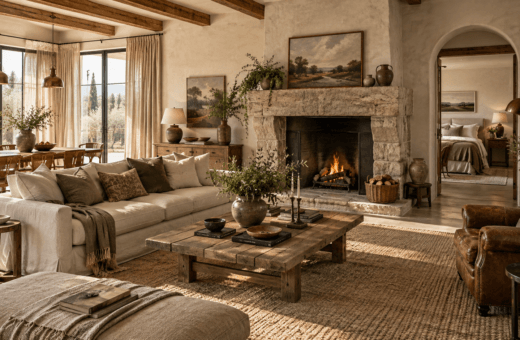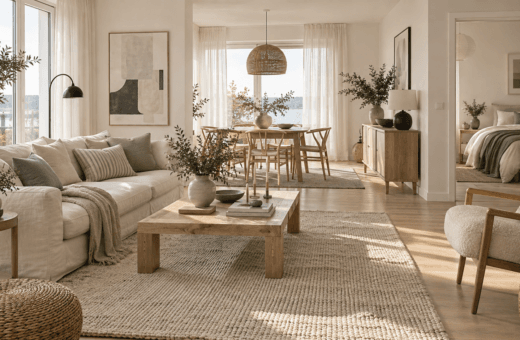
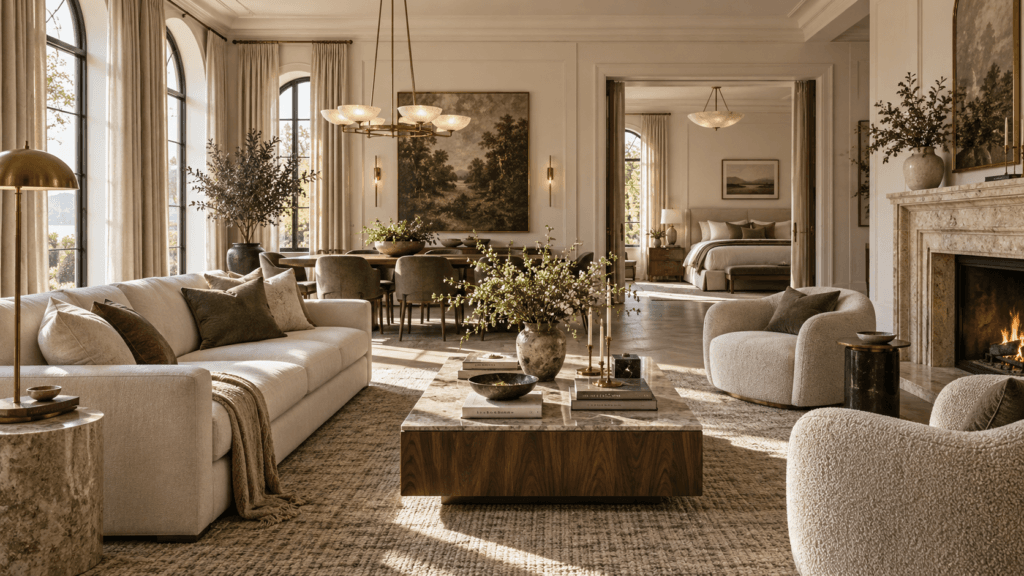
Luxury does not come from filling a home with expensive objects. The strongest luxury interior design ideas create a sense of quality through proportion, material, craftsmanship, lighting, comfort, and restraint. A room feels luxurious when every major element has a clear purpose and when the details work together without competing for attention.
Timeless luxury also avoids depending too heavily on short-lived trends. Instead of building a room around a fashionable color or novelty finish, it uses materials that age well, such as wood, stone, linen, wool, leather, ceramic, glass, and metal. These materials can be combined with refined architectural details, custom-looking window treatments, layered lighting, and carefully scaled furniture to create a home that feels elegant for years.
A successful luxury interior should still feel livable. Deep seating, practical storage, soft textiles, strong task lighting, durable surfaces, and clear circulation matter as much as visual impact. The goal is not to create a showroom. The goal is to create a home that feels considered, comfortable, and quietly sophisticated.
This guide shares 25 practical luxury interior design ideas for living rooms, bedrooms, dining spaces, kitchens, bathrooms, entryways, home offices, small spaces, and rentals. You will also find timeless color palettes, material combinations, budget priorities, common mistakes, and a final checklist for building an elegant interior.
What Makes Interior Design Feel Luxurious?
Luxury interiors usually share several characteristics.
Strong Proportions
Furniture, rugs, artwork, lighting, and window treatments are scaled correctly for the room.
Better Materials
Natural wood, stone, wool, linen, ceramic, glass, and metal create depth and age more gracefully than disposable decor.
Layered Lighting
Ambient, task, and accent lighting create different moods throughout the day.
Architectural Detail
Molding, paneling, built-ins, ceiling detail, and fireplaces can give rooms visual permanence.
Controlled Color
A limited palette makes the home feel cohesive and calm.
Thoughtful Editing
Luxury depends on breathing room. Fewer, stronger objects often create more impact.
How to Use Luxury Interior Design Ideas Without Making a Home Feel Formal
Elegance and comfort should work together.
Mix Tailored and Relaxed Elements
Try:
- Structured sofa with soft linen cushions
- Marble table with a woven basket
- Brass lamp with a casual stack of books
- Traditional molding with modern art
- Vintage side table with contemporary seating
Prioritize Comfort
Do not sacrifice usable seating, functional lighting, or practical storage for appearance.
Avoid Perfect Matching
Rooms feel more collected when furniture coordinates instead of matching exactly.
1. Begin With a Refined Neutral Color Palette
A timeless palette is one of the most useful luxury interior design ideas.
Warm Luxury Palette
Use:
- Ivory
- Cream
- Taupe
- Walnut
- Antique brass
Natural Luxury Palette
Use:
- Warm white
- Sage
- Natural oak
- Stone
- Charcoal
Classic Contrast Palette
Use:
- Cream
- Navy
- Dark wood
- Brass
- Soft gray
Why It Works
Neutral foundations make it easier to layer art, furniture, lighting, and seasonal accents without redesigning the room.
2. Invest in a Few Strong Furniture Pieces
Luxury rooms rarely need large quantities of furniture.
Prioritize
- Comfortable sofa
- Properly scaled coffee table
- Quality dining table
- Strong bed frame or headboard
- Useful sideboard
- One or two accent chairs
Avoid
Buying many small pieces simply to fill empty areas.
Why It Works
Fewer substantial pieces make the room feel deliberate.
3. Use Natural Stone Strategically

Stone instantly introduces weight and permanence.
Use It On
- Coffee table
- Console
- Fireplace surround
- Side table
- Kitchen worktop
- Bathroom vanity
Popular Directions
- Marble
- Travertine
- Limestone
- Slate
- Granite
Keep It Balanced
One strong stone feature is often enough in a room.
4. Use Rich, Warm Wood
Wood is essential to many elegant interiors.
Good Choices
- Walnut
- Medium oak
- Dark oak
- Cherry
- Mahogany-inspired finishes
Use It On
- Tables
- Sideboards
- Consoles
- Cabinetry
- Bed frames
- Shelving
Why It Works
Wood prevents stone, glass, and metal from making the room feel cold.
5. Choose a Properly Sized Wool Rug
A large rug can make an entire room look more expensive.
Living Room
Choose a rug large enough to connect the main seating group.
Bedroom
Let the rug extend beyond both sides and the foot of the bed.
Dining Room
Use a rug large enough for dining chairs to remain on it when pulled back.
Why It Works
Correct scale creates visual unity and softness.
6. Use Floor-to-Ceiling Curtains
Window treatments are one of the most visible luxury interior design ideas.
Use
- Full-length panels
- Linen
- Wool blend
- Cotton
- Sheer layers
- Tailored pleats
Hang Them High
Mounting curtain hardware close to the ceiling can visually increase room height.
Keep the Fabric Generous
Luxury curtains should look full rather than skimpy.
7. Layer Lighting at Multiple Heights
Lighting creates atmosphere and visual depth.
Combine
- Ceiling fixture
- Table lamps
- Floor lamps
- Wall sconces
- Picture lights
- Accent lighting
Avoid
Relying on one harsh overhead fixture.
Use Warm Evening Light
Soft light makes stone, wood, textiles, and art feel richer.
Safety
Hardwired electrical work should be completed by a qualified professional.
8. Add One Statement Light Fixture
A single sculptural fixture can become the room’s focal point.
Good Locations
- Dining room
- Entryway
- Living room
- Bedroom
Timeless Directions
- Aged brass chandelier
- Sculptural glass pendant
- Alabaster-style fixture
- Linen-shaded pendant
- Bronze fixture
Keep the Silhouette Simple
A restrained shape is more likely to age well.
9. Use Substantial Table Lamps
Large furniture needs lamps with enough visual weight.
Use On
- Nightstands
- Consoles
- Sideboards
- End tables
Good Materials
- Ceramic
- Stone
- Glass
- Brass
- Wood
Why It Works
A properly scaled lamp makes a surface feel intentional and complete.
10. Add Architectural Molding
Architectural details can make a new room feel established.
Options
- Picture-frame molding
- Crown molding
- Wall paneling
- Wainscoting
- Ceiling trim
Modern Approach
Paint trim the same color as the wall for a quieter look.
Keep Scale in Mind
Very ornate molding can overwhelm small or low-ceiling rooms.
11. Create Built-In-Looking Storage

Storage can feel luxurious when it integrates with the architecture.
Use
- Floor-to-ceiling shelving
- Closed cabinetry
- Media walls
- Wardrobes
- Window-seat storage
Why It Works
Integrated storage reduces visual clutter and makes rooms feel more finished.
Budget Alternative
Use freestanding cabinets in matching finishes and align them carefully.
12. Use Large Artwork Instead of Many Small Accessories
Artwork can create scale and identity.
Good Locations
- Above sofa
- Above bed
- Dining room wall
- Entry console
- Hallway
Choose
- Abstract art
- Landscape
- Photography
- Vintage painting
- Textile art
Why It Works
One strong artwork often creates more impact than several decorative objects.
13. Add Mirrors With Architectural Presence
Mirrors can increase light and create visual depth.
Good Locations
- Entryway
- Dining room
- Bedroom
- Hallway
- Above a console
Frames
Try:
- Brass
- Dark wood
- Thin black metal
- Antique-inspired finishes
Check the Reflection
A mirror should reflect something attractive, such as daylight, art, greenery, or open space.
14. Layer Texture Instead of Adding More Color
Texture is central to luxury interior design ideas.
Combine
- Linen
- Wool
- Velvet
- Leather
- Wood
- Stone
- Ceramic
- Glass
Example
A cream linen sofa can sit on a wool rug beside a walnut table, velvet cushion, stone lamp, and glass vase.
Why It Works
The palette stays calm while the room gains richness.
15. Mix Vintage and Contemporary Furniture
A room that looks collected over time often feels more luxurious.
Try
- Modern sofa + vintage side table
- Contemporary dining table + antique cabinet
- Clean bed frame + vintage nightstands
- New console + older mirror
Why It Works
Contrast gives the room character.
Keep One Common Thread
Use color, material, scale, or shape to connect the pieces.
16. Create a Luxury Living Room Around Conversation
Furniture layout has a major effect on sophistication.
Focus On
- Comfortable conversation
- Clear walkways
- One focal point
- Proper scale
Try
- Sofa facing two chairs
- Sofa plus one large lounge chair
- Seating oriented around fireplace or artwork
Avoid
Pushing every piece against the wall when space allows a more connected layout.
17. Style a Coffee Table With Restraint
Coffee tables should look polished without losing function.
Simple Formula
Use:
- Tray
- Two or three books
- Sculptural bowl
- Vase or greenery
Leave Space
Keep room for drinks and everyday use.
Why It Works
Luxury styling is edited rather than crowded.
18. Create an Elegant Dining Room
Dining rooms are naturally suited to formal materials, but they should remain comfortable.
Start With
- Strong dining table
- Comfortable chairs
- Statement light
- Large artwork
Centerpiece
Use:
- Flowers
- Branches
- Ceramic bowl
- Low candles used safely
Keep It Functional
The centerpiece should not block conversation.
19. Make the Bedroom Feel Like a Quiet Suite
Bedrooms are ideal for soft luxury interior design ideas.
Use
- Upholstered or wood headboard
- Layered bedding
- Coordinated nightstands
- Substantial lamps
- Full curtains
- Large rug
Color Direction
Try:
- Ivory
- Taupe
- Sage
- Dusty blue
- Walnut
- Charcoal
Avoid Overstyling
A luxurious bed should still be practical to use every day.
20. Give the Kitchen a Refined, Timeless Look
Luxury kitchen design is often about material consistency.
Use
- Durable stone
- Quality cabinetry
- Simple hardware
- Warm wood accents
- Good task lighting
Keep Counters Clear
Display only a few useful or attractive objects.
Hardware
Brass, bronze, black, and polished nickel can all work when used consistently.
21. Create a Hotel-Inspired Bathroom
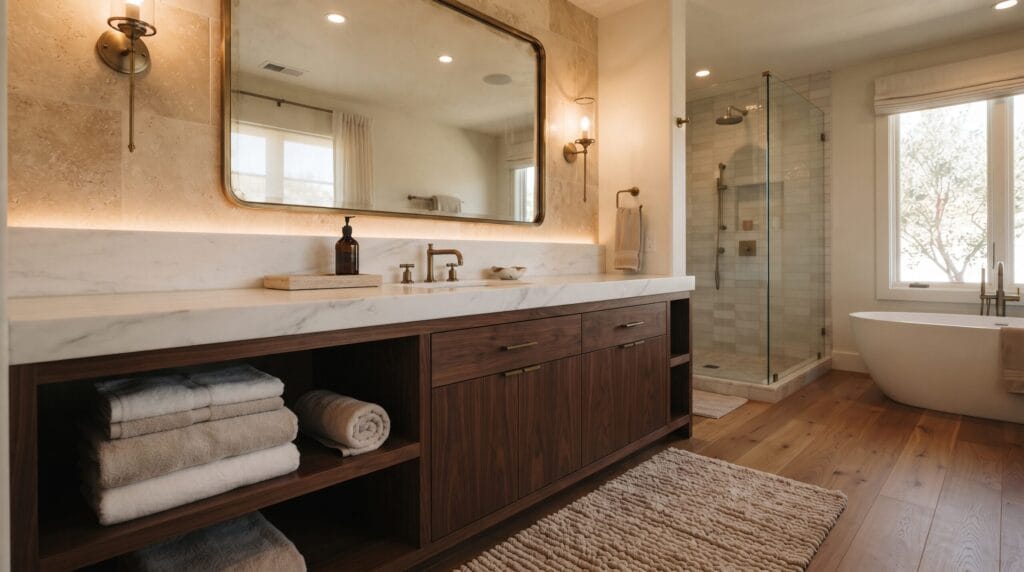
Bathrooms feel luxurious when visual clutter is reduced.
Use
- Framed mirror
- Layered lighting
- Coordinated towels
- Stone or ceramic tray
- Closed storage
- Simple dispenser
Keep Surfaces Clear
Store daily products whenever possible.
Add Texture
A wood stool, woven basket, or plush bath mat can soften hard surfaces.
22. Design a Strong Luxury Entryway
The entryway sets the tone for the rest of the home.
Use
- Console
- Mirror
- Lamp
- Tray
- Bench or basket
- Vase
Add One Focal Point
Choose:
- Large mirror
- Tall branches
- Sculptural lamp
- Artwork
Keep It Practical
Include storage for keys, shoes, bags, or mail.
23. Use Luxury Interior Design Ideas in Small Spaces
Small rooms can still feel luxurious.
Use
- Fewer furniture pieces
- One large mirror
- Full-length curtains
- Wall-mounted lighting
- Tall closed storage
- One substantial artwork
Avoid
Filling every corner.
Why It Works
Luxury in a small room comes from scale, material, and editing rather than quantity.
24. Create a Luxury Look on a Moderate Budget
You do not need expensive furniture everywhere.
Free Improvements
- Declutter
- Rearrange furniture
- Remove undersized decor
- Clear surfaces
- Improve symmetry where useful
Lower-Cost Upgrades
- Lampshades
- Cushion covers
- Secondhand mirrors
- Framed art
- Hardware
- Fresh branches
Spend More Carefully On
- Rug
- Sofa
- Mattress
- Dining table
- Lighting
These pieces affect daily comfort and visual scale.
25. Edit Before Buying More Decor
The final and most important of these luxury interior design ideas is editing.
Review
- Coffee tables
- Shelves
- Consoles
- Nightstands
- Dressers
- Kitchen counters
- Bathroom vanities
Ask
- Is this useful?
- Is it meaningful?
- Is the scale right?
- Does it support the palette?
- Does it compete with a stronger piece?
- Would the room feel more elegant without it?
Why It Works
Luxury interiors need breathing room.
A few substantial objects create more impact than many small accessories.
Luxury Interior Design Ideas by Room
| Room | Main Priority | Best Materials | High-Impact Upgrade |
| Living room | Scale and comfort | Wool, linen, wood, stone | Large rug and layered lighting |
| Bedroom | Softness and calm | Linen, cotton, wood, wool | Headboard and full curtains |
| Dining room | Focal point | Wood, upholstery, metal | Statement light |
| Kitchen | Material consistency | Stone, wood, metal | Cabinetry and lighting |
| Bathroom | Visual calm | Stone, ceramic, glass | Mirror and lighting |
| Entryway | First impression | Wood, metal, textile | Console, mirror, lamp |
| Home office | Order and warmth | Wood, leather, wool | Closed storage and task lighting |
Timeless Luxury Color Palettes
Warm Quiet Luxury
- Ivory
- Taupe
- Walnut
- Camel
- Antique brass
Natural Luxury
- Warm white
- Sage
- Natural oak
- Stone
- Charcoal
Classic Luxury
- Cream
- Navy
- Dark wood
- Brass
- Soft gray
Light Contemporary Luxury
- Warm white
- Beige
- Pale blue
- Light oak
- Soft black
Luxury Materials Comparison
| Material | Best Uses | Main Strength | Design Note |
| Wool | Rugs, upholstery | Soft and durable | Works well in neutral palettes |
| Linen | Curtains, cushions | Relaxed elegance | Natural texture softens rooms |
| Walnut | Furniture, cabinetry | Warm and rich | Strong contrast with cream |
| Marble | Tables, vanities | Visual permanence | Use selectively |
| Travertine | Tables, fireplaces | Warm stone texture | Suits modern organic rooms |
| Brass | Lighting, hardware | Refined warmth | Best used consistently |
| Glass | Lamps, tables | Visual lightness | Balances heavy materials |
| Ceramic | Lamps, decor | Handmade texture | Use fewer larger pieces |
Luxury Interior Design Ideas by Budget
| Budget | Best Upgrades | Typical Impact |
| $0 | Declutter, rearrange, edit surfaces | High when rooms feel crowded |
| Under $100 | Art, cushion covers, lampshades | Quick polish |
| $100-$500 | Mirror, curtains, lamps, side table | Strong visual change |
| $500-$2,000 | Rug, bed, dining table, lighting | Major transformation |
| $2,000+ | Built-ins, stone, custom drapery | Long-term architectural upgrade |
Costs vary by location, material, labor, room size, and brand.
How to Make Luxury Interior Design Feel Timeless
Choose Simple Furniture Silhouettes
Strong shapes age more slowly than novelty forms.
Use Natural Materials
Wood, wool, linen, stone, glass, and metal gain character over time.
Keep the Palette Controlled
A calm base allows rooms to evolve.
Add Vintage Pieces
Older furniture and art bring depth.
Avoid Overusing Trends
Use current trends through small accessories rather than permanent investments.
Prioritize Craftsmanship
Joinery, upholstery quality, drapery, and finishing details matter.
Luxury Interior Design Ideas for Renters
Renters can create a sophisticated interior through portable pieces.
Use
- Rugs
- Curtains
- Lamps
- Freestanding mirrors
- Furniture
- Artwork with approved mounting
- Plants
- Portable storage
Check the Lease Before
- Painting
- Drilling
- Changing fixtures
- Applying adhesives
Choose Portable Investments
A quality rug, lamp, mirror, table, or artwork can move with you.
Common Luxury Interior Design Mistakes
Buying Too Many Expensive Accessories
Cost does not guarantee cohesion.
Choosing Furniture That Is Too Small
Undersized furniture can make a room look less polished.
Using a Rug That Is Too Small
A small rug visually fragments the room.
Ignoring Lighting
Even high-quality furniture looks flat under poor lighting.
Matching Every Finish
Luxury rooms often feel more natural when finishes coordinate rather than match perfectly.
Overusing Marble or Brass
One strong material repeated thoughtfully is more effective than covering every surface.
Filling Every Surface
Negative space is part of luxury design.
Following Every Trend
Timeless homes evolve gradually.
Luxury Interior Design Ideas Checklist
Use this luxury interior design ideas checklist:
- The home has a controlled color palette.
- Furniture is comfortable and properly scaled.
- Rugs are large enough for furniture groups.
- Curtains are full length and generously sized.
- Lighting comes from multiple sources.
- Statement fixtures are used selectively.
- Lamps are substantial enough.
- Natural stone is used intentionally.
- Wood tones feel coordinated.
- Artwork is properly scaled.
- Mirrors reflect attractive views.
- Architectural details suit the room.
- Storage reduces visual clutter.
- Vintage and modern pieces feel connected.
- Kitchen counters remain mostly clear.
- Bathroom products are organized.
- Entryways balance style and function.
- Small spaces are not overfilled.
- New purchases solve a clear design problem.
- The home feels refined without feeling formal.
Frequently Asked Questions
What Are the Best Luxury Interior Design Ideas for Beginners?
Start with decluttering, a refined neutral palette, a properly sized rug, full-length curtains, layered lighting, larger artwork, and a few quality furniture pieces.
What Colors Make a Home Look Luxurious?
Ivory, cream, taupe, beige, navy, sage, walnut, charcoal, and aged brass can all create elegant results when used in a controlled palette.
What Materials Make an Interior Look Expensive?
Natural wood, wool, linen, stone, ceramic, glass, leather, brass, bronze, and quality upholstery can create depth and visual permanence.
How Can I Make My Home Look Luxurious on a Budget?
Improve furniture layout, edit clutter, upgrade lampshades, use full-length curtains, shop secondhand for mirrors and furniture, choose larger artwork, and save for a properly sized rug.
What Is Quiet Luxury Interior Design?
Quiet luxury focuses on subtle quality rather than obvious display. It uses refined materials, strong proportions, calm colors, craftsmanship, and minimal visual clutter.
Can Luxury Interior Design Work in a Small Home?
Yes. Use fewer substantial pieces, a larger mirror, full-length curtains, good lighting, tall closed storage, and one strong artwork instead of many small accessories.
How Do I Keep Luxury Decor From Looking Formal?
Mix tailored furniture with relaxed textiles, natural materials, modern art, books, greenery, and meaningful personal objects.
Conclusion
The best luxury interior design ideas create an elegant and timeless home through proportion, material, comfort, craftsmanship, and restraint.
Start with a controlled color palette, properly scaled furniture, a larger rug, full-length curtains, and layered lighting. Add depth through wood, stone, wool, linen, ceramic, glass, and carefully chosen metal finishes.
Use artwork, mirrors, vintage pieces, greenery, and architectural details to create character. Keep surfaces edited so every object has enough room to matter.
Most importantly, avoid confusing luxury with excess. A beautiful home does not need to display expensive objects everywhere. It needs strong proportions, good materials, practical comfort, and thoughtful decisions.
When light, scale, material, texture, storage, and careful editing work together, your home can feel sophisticated now and remain elegant for years.
Also Read: “Minimalist Interior Design: A Guide to Creating a Beautiful Home“