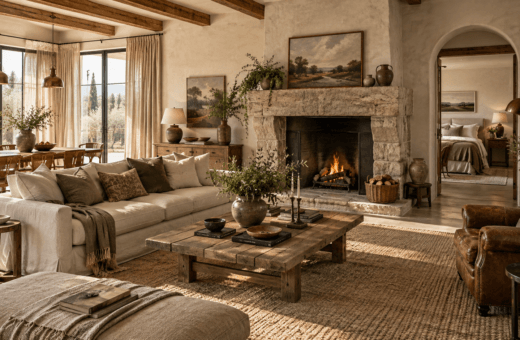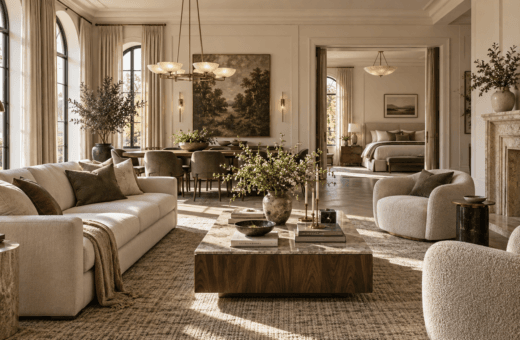
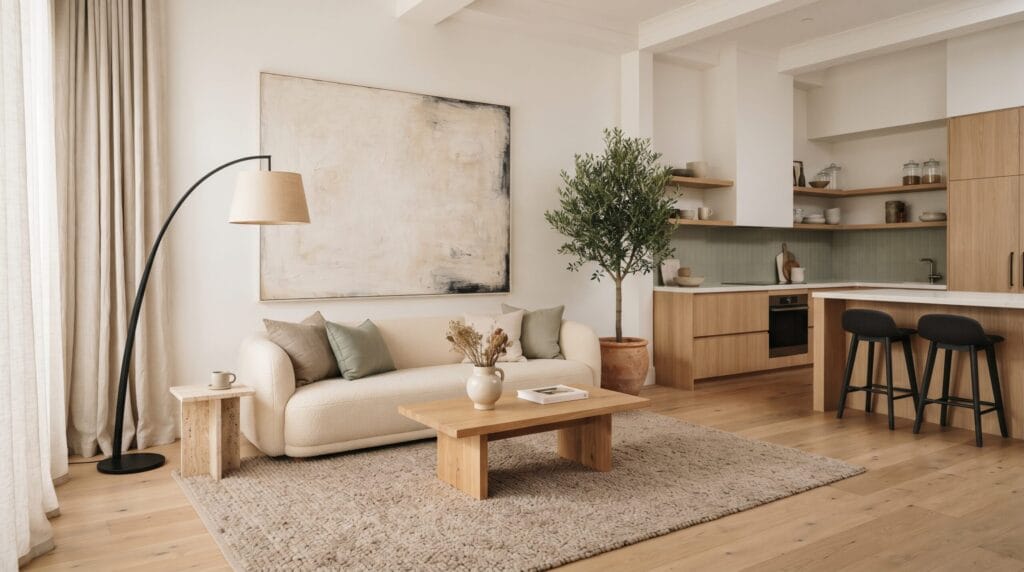
A beautiful home does not need to be filled with furniture, accessories, and decorative objects. In fact, many of the calmest and most memorable spaces are built around thoughtful editing. Minimalist interior design focuses on function, proportion, light, texture, storage, and a limited number of meaningful pieces so that every room feels clear and intentional.
Minimalism is often misunderstood as an all-white room with almost nothing in it. Good minimalist interiors are much warmer and more practical. They can include natural wood, soft textiles, plants, art, books, stone, warm lighting, and personal objects. The difference is that these elements are selected carefully instead of competing for attention.
The most successful minimalist interior design also supports everyday life. A living room still needs comfortable seating. A bedroom should still feel soft. A kitchen needs storage and easy work surfaces. Minimalism works when it removes unnecessary visual noise without removing comfort, personality, or function.
This guide explains how to use minimalist principles throughout your home. You will learn how to choose colors, furniture, lighting, materials, storage, artwork, and decor, plus practical ideas for living rooms, bedrooms, kitchens, bathrooms, dining rooms, home offices, entryways, and small spaces.
What Is Minimalist Interior Design?
Minimalist interior design is an approach that emphasizes simplicity, function, clean visual structure, and intentional use of space.
Common characteristics include:
- A limited color palette
- Fewer furniture pieces
- Clean lines
- Clear pathways
- Closed storage
- Natural materials
- Layered texture
- Large-scale rather than excessive decor
- Functional lighting
- Intentional negative space
The goal is not to own as little as possible. The goal is to make sure the things you keep contribute to the way the room looks or works.
Why Minimalist Interior Design Works
Minimalist rooms can feel easier to live in because they reduce visual competition.
Less Visual Noise
Fewer objects make it easier for the eye to understand the room.
Better Function
When furniture and storage are selected intentionally, daily routines become simpler.
More Flexible Style
A simple base can adapt as your taste changes.
Easier Maintenance
Fewer exposed objects usually mean less dusting, rearranging, and surface clutter.
Greater Focus on Quality
When there are fewer pieces, material, scale, and craftsmanship become more important.
Start With a Simple Minimalist Color Palette
Color is one of the easiest ways to create visual calm.
Warm Neutral Palette
Use:
- Warm white
- Cream
- Beige
- Taupe
- Soft black
Natural Minimalist Palette
Use:
- Ivory
- Sand
- Light oak
- Olive
- Charcoal
Soft Contemporary Palette
Use:
- Greige
- Mushroom
- Dusty blue
- Walnut
- Warm white
High-Contrast Minimalist Palette
Use:
- White
- Black
- Natural wood
- One muted accent
Keep the Palette Controlled
Choose one dominant color, one supporting color, and one darker accent.
Repeating the same tones throughout the room creates cohesion without requiring exact matching.
Choose Furniture for Function and Scale
Furniture is the foundation of minimalist interior design.
Prioritize Useful Pieces
Every major item should solve a practical need.
For example:
- Sofa for seating
- Coffee table for daily use
- Sideboard for storage
- Dining table for meals and work
- Bed with drawers in a small room
Choose Strong Silhouettes
Simple furniture can still be visually interesting.
Look for:
- Low-profile sofa
- Curved lounge chair
- Solid wood table
- Slim console
- Sculptural side table
Avoid Undersized Furniture
Minimalism does not mean choosing tiny furniture.
Correct scale makes a room feel calmer because the major pieces visually belong together.
Also Read: Minimalist Graphic Design Inspiration for Modern Brands
Use Natural Materials to Add Warmth
Minimalist rooms can feel flat when every surface is smooth and synthetic.
Add Natural Wood
Use wood on:
- Tables
- Shelves
- Bed frames
- Cabinetry
- Flooring
- Benches
Add Stone
Stone works well for:
- Coffee tables
- Side tables
- Trays
- Countertops
- Bathroom surfaces
Add Natural Textiles
Layer:
- Linen
- Cotton
- Wool
- Jute
- Boucle
Texture creates depth without adding visual clutter.
Create Layers of Minimalist Lighting
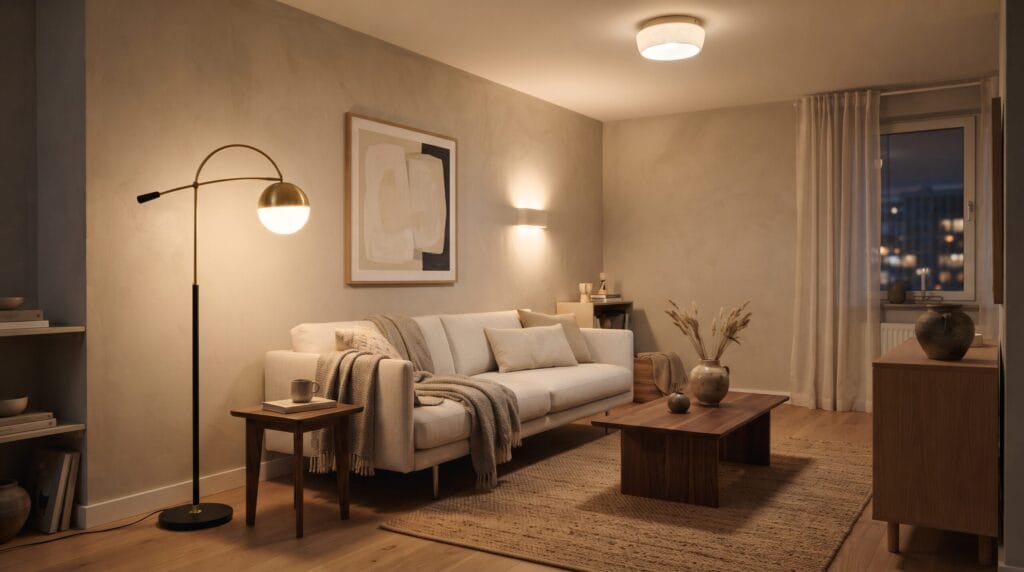
Lighting is essential to a calm home.
Ambient Lighting
This provides general illumination.
Examples:
- Ceiling fixture
- Recessed lighting
- Large pendant
Task Lighting
This supports specific activities.
Examples:
- Reading lamp
- Desk lamp
- Kitchen task light
- Bedside lamp
Accent Lighting
This adds atmosphere.
Examples:
- Small wall light
- Shelf light
- Art light
- Floor lamp
A minimalist room should not depend on one harsh overhead fixture.
Keep Storage Simple and Accessible
Minimalism becomes difficult when there is nowhere to put everyday items.
Use Closed Storage
Good options include:
- Cabinets
- Drawers
- Sideboards
- Wardrobes
- Storage beds
- Benches
- Media units
Organize the Interior
Hidden storage should not become a chaotic dumping area.
Use:
- Drawer dividers
- Baskets
- Boxes
- Labels
- Shelf zones
Keep Frequently Used Items Easy to Reach
Minimalist storage should improve function, not make daily life inconvenient.
Use Negative Space Intentionally
Empty space is part of the design.
Leave Room Around Furniture
Do not fill every wall and corner.
Edit Shelves
Leave gaps between groups of books, art, ceramics, and plants.
Avoid Decorating Every Surface
A coffee table, console, nightstand, and dresser do not all need several decorative objects.
Negative space gives the strongest pieces more visual impact.
Minimalist Living Room Design
The living room is a good place to apply minimalist interior design because layout and clutter strongly affect how calm the room feels.
Use a Clear Seating Group
Arrange the sofa and chairs around conversation rather than against every wall.
Choose One Larger Rug
The rug should visually connect the seating area.
Add One Strong Focal Point
Choose:
- Oversized artwork
- Fireplace
- Large window
- Sculptural light
- Feature wall
Keep the Coffee Table Simple
Use:
- One stack of books
- Bowl or vase
- One sculptural object
Leave part of the surface empty.
Minimalist Bedroom Design
Bedrooms benefit from visual simplicity.
Make the Bed the Main Feature
Use:
- Simple headboard
- Neutral bedding
- Soft bedside lighting
- One large artwork
- Full-length curtains
Layer the Bed Without Overdoing It
A practical formula is:
- Sheets
- Duvet or quilt
- Sleeping pillows
- Two decorative pillows
- One accent cushion
- Folded throw
Keep Nightstands Clear
Store chargers, cosmetics, and small clutter inside drawers or boxes.
Minimalist Kitchen Design
Kitchens can quickly become visually busy.
Simplify the Countertops
Keep out only frequently used items.
For example:
- Coffee maker
- Utensil container
- Oil
- Salt
- Fruit bowl
Group Small Items
Use one tray to organize cooking essentials.
Choose Simple Cabinetry
Popular minimalist options include:
- Flat-panel doors
- Handleless cabinetry
- Simple Shaker fronts
- Minimal bar pulls
Limit Open Shelving
A few open shelves can add warmth, but too much visible storage creates visual maintenance.
Also Read: Top 15 Best Clean Website Designs Inspiration
Minimalist Dining Room Design
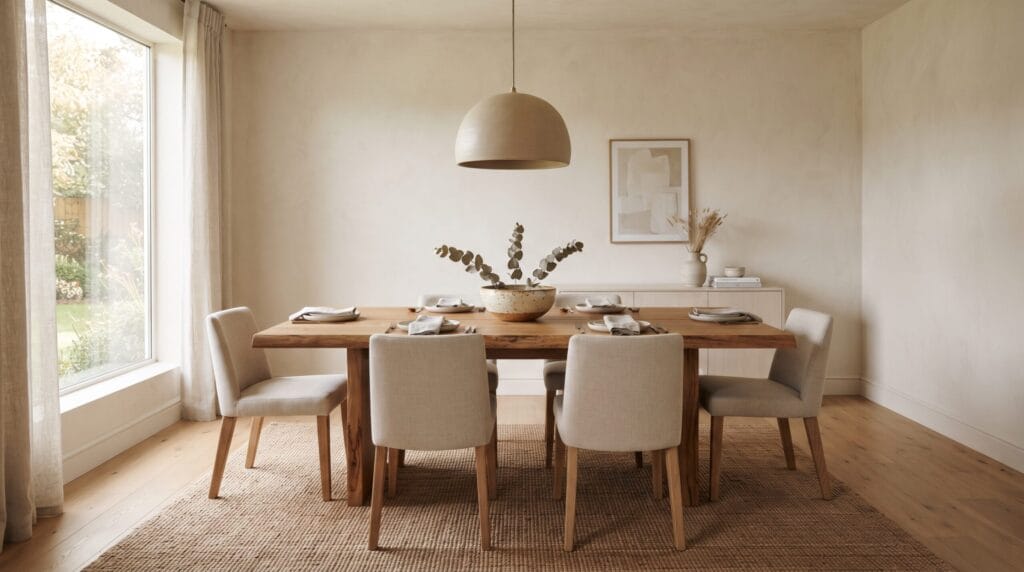
A minimalist dining room needs a strong central element.
Choose a Substantial Table
Options include:
- Solid wood
- Stone
- Oval table
- Round pedestal table
- Slim rectangular table
Keep Chairs Simple
Choose comfortable chairs with clean silhouettes.
Use One Pendant
A single well-scaled fixture can define the dining area.
Keep the Centerpiece Low
Use a bowl, vase, branch arrangement, or a few candles.
Minimalist Bathroom Design
Bathrooms benefit from controlled surfaces and hidden storage.
Keep the Material Palette Limited
For example:
- White tile
- Pale stone
- Warm wood
- Black metal
Choose a Simple Mirror
A large frameless or thin-frame mirror keeps the room visually open.
Store Daily Products
Use drawers or cabinets for extra toiletries.
Add Softness
Use:
- Neutral towels
- Bath mat
- Small stool
- Plant where appropriate
Minimalist Home Office Design
A minimalist office should support concentration.
Start With the Essentials
Use:
- Desk
- Comfortable chair
- Task lamp
- Closed storage
- One artwork
- Optional plant
Control Cables
Use approved cable organizers or trays.
Keep the Desk Surface Clear
Only frequently used tools should remain visible.
This makes the office feel calm and easier to reset after work.
Minimalist Entryway Design
Entryways often collect clutter because they lack designated storage.
Include
- Mirror
- Slim console
- Tray
- Hooks
- Shoe storage
- Basket
Small Entryway Version
Use:
- Wall mirror
- Narrow shelf
- Hooks
- Small basket
The goal is simple: every daily item should have a place.
Minimalist Interior Design for Small Spaces
Small rooms can benefit greatly from minimalist interior design.
Choose Multifunctional Furniture
Use:
- Storage ottoman
- Extendable table
- Bed with drawers
- Desk-console combination
- Nesting tables
Use Vertical Space
Tall shelving and cabinetry preserve floor space.
Use Mirrors Strategically
Place mirrors where they reflect natural light or a pleasing view.
Avoid Too Many Tiny Accessories
A few larger objects often look calmer than many small decorative items.
How to Decorate Minimalist Walls
Minimalist walls should not be completely empty.
Use Oversized Art
One large piece can create a stronger effect than several small frames.
Try a Gallery Grid
A simple symmetrical grid can work well.
Add Texture
Consider:
- Plaster-style finish
- Subtle wallpaper
- Wood panel detail
- Simple molding
Leave Breathing Room
Not every wall needs decoration.
Use Plants Without Creating Clutter
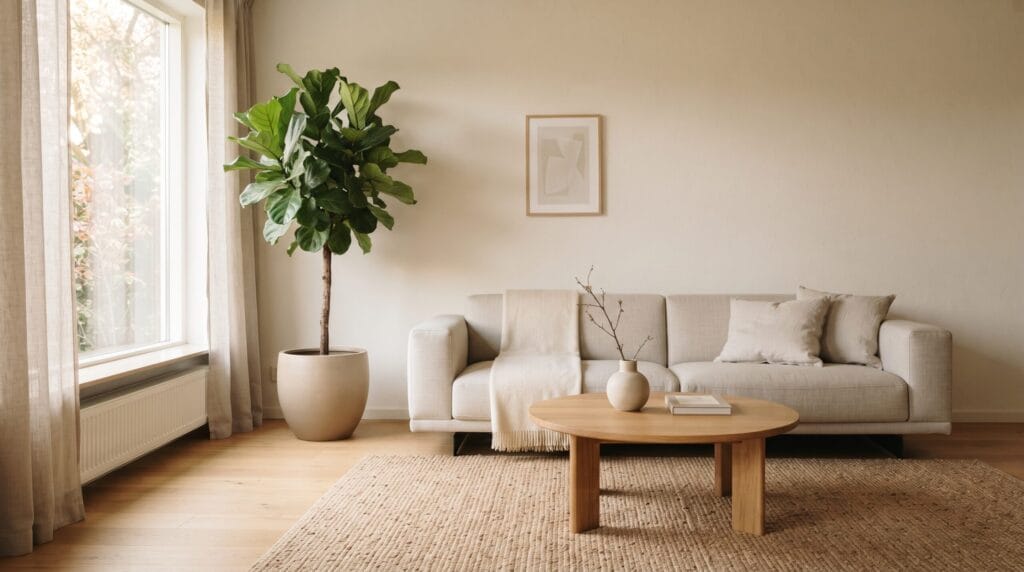
Greenery adds life and natural shape.
Good Options
- One tall floor plant
- Small shelf plant
- Herb pots
- Branches in a vase
Keep Planters Consistent
Use similar materials or colors.
Choose for the Light
Select plants according to actual room conditions rather than appearance alone.
Minimalist Decor – What to Keep and What to Remove
Decor still matters in minimalist interior design.
Keep
- Meaningful artwork
- Books you enjoy
- Handmade ceramics
- Personal photographs
- Plants
- Sculptural objects
- Useful trays
Remove or Store
- Duplicate decorations
- Random objects without purpose
- Excess packaging
- Empty containers
- Items that compete with a stronger focal point
Ask One Question
Would the room feel better if this object were not visible?
If the answer is yes, store or remove it.
Also Read: Modern Graphic Design Layout Ideas for Better Visual Balance
Minimalist Interior Design by Room
| Room | Main Priority | Best Materials | High-Impact Move |
| Living room | Layout and scale | Wood, wool, linen, stone | Larger rug and edited seating |
| Bedroom | Calm and comfort | Cotton, linen, wood | Simplify the bed wall |
| Kitchen | Visual order | Wood, stone, metal | Clear counters |
| Dining room | Strong focal point | Wood, stone, upholstery | One substantial table |
| Bathroom | Clean surfaces | Tile, stone, wood | Hidden storage and large mirror |
| Home office | Focus | Wood, metal, textile | Closed storage |
| Entryway | Organization | Wood, mirror, baskets | Give every item a place |
| Small spaces | Flexibility | Light wood, glass, textile | Multifunctional furniture |
How to Make Minimalist Interior Design Feel Cozy
Minimalism becomes uncomfortable when every surface is hard and every color is cool.
Add Warmth With
- Wool rugs
- Linen curtains
- Upholstered furniture
- Natural wood
- Plants
- Books
- Warm light
- Handmade ceramics
Use Layered Texture
Combine a smooth wall with a rough wood table and a soft rug.
You do not need more objects. You need better material contrast.
Minimalist vs Modern Interior Design
Minimalist and modern design overlap, but they are not identical.
Minimalist Design Adds
- More editing
- Less visual clutter
- Fewer decorative objects
- More negative space
- Tighter storage systems
Modern Design Often Uses
- Geometric furniture
- Architectural materials
- Strong contrast
- Mid-century influences
- Clean lines
A modern room can be highly decorated. A minimalist room is more intentionally reduced.
Common Minimalist Interior Design Mistakes
Making Everything White
White is not the only minimalist color.
Use warm neutrals, muted greens, browns, blues, and darker accents.
Removing Too Much
The room still needs comfort and personality.
Choosing Furniture That Is Too Small
Minimalism does not mean undersized furniture.
Ignoring Texture
Neutral rooms need layered materials.
Hiding Everything
Personal objects can still be displayed.
Buying Generic Minimalist Decor
A beige object is not automatically useful or beautiful.
Ignoring Storage
Visible clutter quickly weakens a minimalist room.
Minimalist Interior Design Checklist
Use this minimalist interior design checklist:
- The room has one clear focal point.
- The color palette is controlled.
- Furniture fits the room scale.
- Walkways remain clear.
- Storage supports daily routines.
- Surfaces are not overloaded.
- Open shelves contain negative space.
- Natural materials add warmth.
- Textiles add softness.
- Lighting comes from multiple sources.
- Artwork is correctly scaled.
- Wood tones are coordinated.
- Small spaces use vertical storage.
- Personal items are meaningful.
- New purchases solve a specific problem.
- The room still feels comfortable and lived in.
Frequently Asked Questions
What Is Minimalist Interior Design?
Minimalist design focuses on function, simplicity, clean visual structure, intentional storage, a controlled palette, and fewer but more meaningful objects.
Does Minimalist Interior Design Have to Be White?
No. Warm beige, taupe, mushroom, olive, walnut, charcoal, and muted blue can all work beautifully.
How Do I Make a Minimalist Home Feel Cozy?
Use natural wood, warm lighting, linen, wool, rugs, curtains, plants, books, and handmade objects.
Is Minimalism Good for Small Spaces?
Yes. Fewer objects, better storage, clear pathways, multifunctional furniture, and vertical organization can make small rooms feel calmer and more usable.
What Furniture Works Best in Minimalist Homes?
Choose comfortable, well-proportioned pieces with simple silhouettes, useful storage, and durable materials.
How Many Decorative Objects Should a Minimalist Room Have?
There is no fixed number. The important point is to avoid visual competition and leave enough negative space around the pieces you keep.
Can a Minimalist Home Still Feel Personal?
Yes. Personal artwork, books, photographs, inherited objects, and handmade pieces can make a minimalist space feel distinctive without adding clutter.
Conclusion
The best minimalist interior design creates beauty through intention rather than emptiness.
Start with function. Decide what each room needs to do, choose furniture that fits the space, and create storage for everyday clutter. Then build a simple color palette and add warmth through natural wood, stone, linen, wool, plants, and soft lighting.
Keep decorative objects meaningful and correctly scaled. Use one strong artwork instead of many small pieces. Leave parts of walls, tables, and shelves empty so the room has space to breathe.
Most importantly, make minimalism practical. A beautiful home should still be comfortable, personal, and easy to live in. When every visible element has a purpose and the room has enough visual calm, minimalist design becomes less about having less and more about living better with what you choose to keep.
Also Read: “21 Modern Home Decor Ideas for a Fresh and Stylish Interior“