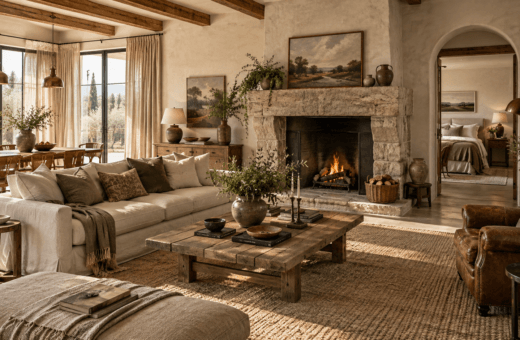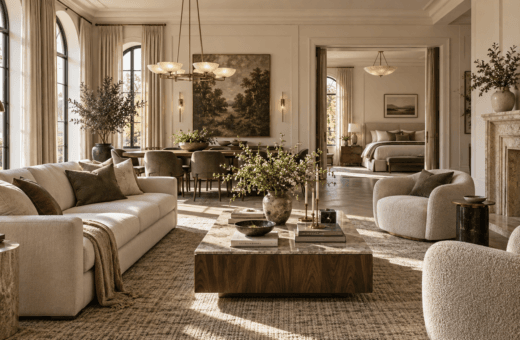
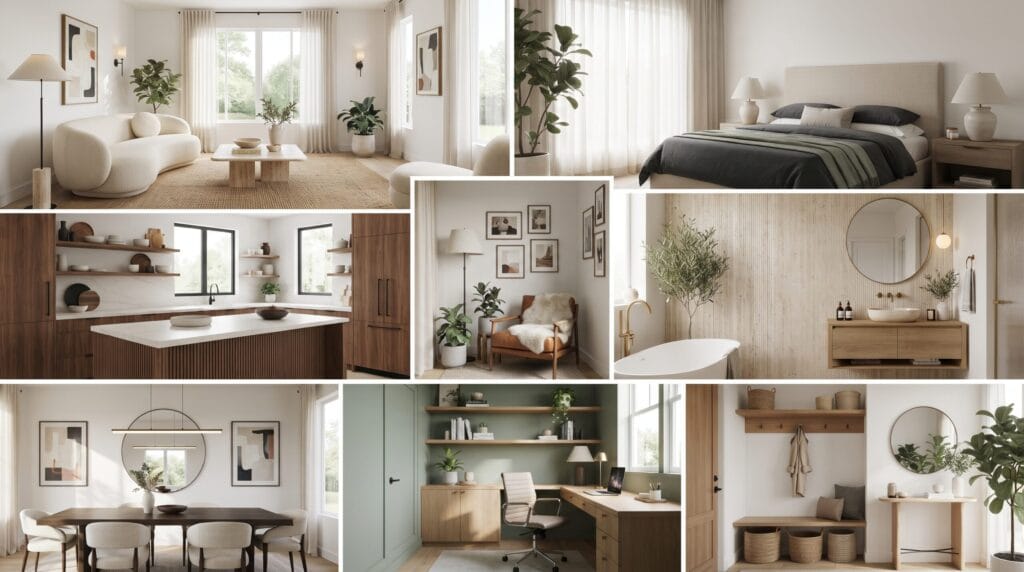
Modern interiors are often recognized by clean lines, practical layouts, thoughtful materials, and a sense of visual calm. Yet a modern home does not need to feel cold, empty, or identical from room to room. The best modern interior design ideas combine simplicity with warmth, comfort, personality, and everyday function.
A successful modern home also feels connected. The living room, kitchen, bedroom, bathroom, dining room, office, and entryway can each have their own purpose while sharing a common language of color, material, lighting, and proportion. Repeating a wood tone, metal finish, wall color, or textile family helps separate rooms feel like parts of the same home.
Modern design works especially well when decoration begins with the architecture and layout. Before buying accessories, consider how people move through the space, where natural light enters, which furniture pieces dominate the room, and where storage is needed. Once those fundamentals are clear, textiles, artwork, lighting, greenery, and decorative objects can add depth.
This guide explores practical modern interior design ideas for every major room in the home. It covers living rooms, bedrooms, kitchens, dining areas, bathrooms, home offices, entryways, hallways, laundry rooms, guest rooms, and small spaces, along with color, lighting, furniture, storage, and styling principles that create a cohesive modern interior.
What Defines Modern Interior Design?
Modern interiors usually share several characteristics.
Clean Lines
Furniture and architecture often use simple silhouettes instead of heavy ornament.
Functional Layouts
Every piece should support how the room is actually used.
Controlled Color Palettes
Modern rooms frequently use warm neutrals, natural tones, muted colors, and selective darker accents.
Layered Materials
Wood, stone, glass, metal, linen, wool, plaster, and ceramic create visual depth.
Purposeful Decor
Accessories are edited rather than scattered across every surface.
Strong Lighting
Natural light is supported by ambient, task, and accent lighting.
Integrated Storage
Clutter is controlled through cabinetry, drawers, shelving, and multifunctional furniture.
How to Create a Cohesive Modern Home
The strongest modern interior design ideas work across the entire house rather than treating each room as an unrelated project.
Repeat Three to Five Core Materials
For example:
- Light oak
- Warm white paint
- Brushed black metal
- Cream linen
- Soft gray stone
Use One Shared Color Family
You can vary the intensity from room to room while keeping the undertones related.
Repeat Shapes
If the living room includes soft curves, use rounded mirrors, dining chairs, or lighting elsewhere.
Keep Hardware Consistent
Cabinet pulls, door handles, curtain rods, and lighting finishes do not need to match exactly, but they should relate.
Modern Living Room Design Ideas
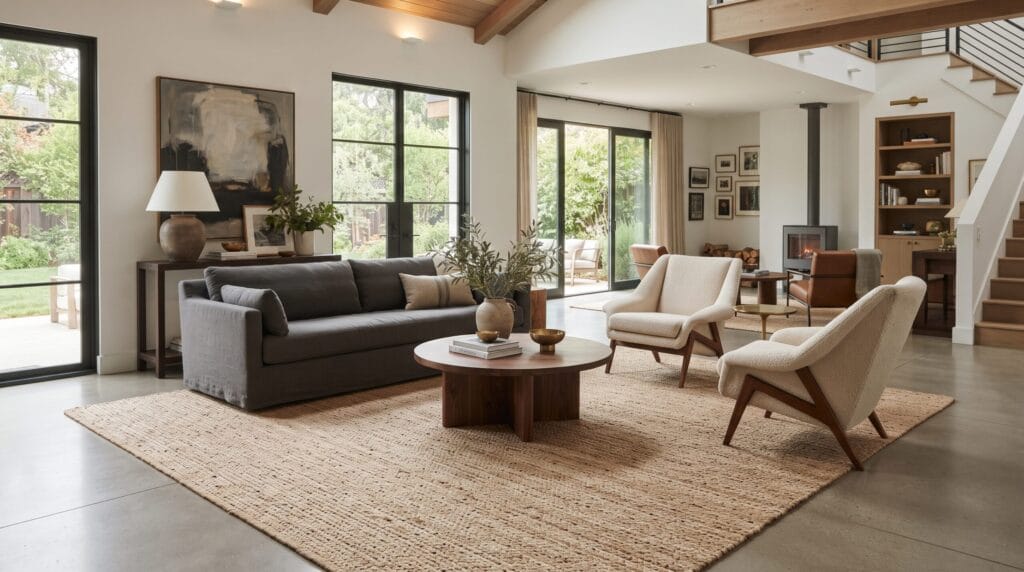
The living room usually has the most visual influence on the overall home.
1. Use a Strong Furniture Layout
Arrange seating around conversation and circulation rather than simply pushing everything against the walls.
A modern living room often works well with:
- One primary sofa
- One or two lounge chairs
- A central coffee table
- Side tables only where useful
- Open pathways
2. Choose One Sculptural Piece
Use a curved chair, unusual coffee table, large floor lamp, or strong artwork as the focal point.
Avoid making every object a statement piece.
3. Use a Larger Rug
A rug should visually connect the seating group.
In many rooms, placing at least the front legs of the sofa and chairs on the rug creates a more intentional composition.
4. Layer Modern Lighting
Combine:
- Ceiling fixture
- Floor lamp
- Table lamp
- Wall light
- Accent lighting
A room with only one overhead fixture often feels flat.
5. Mix Soft and Hard Materials
Pair:
- Linen sofa + stone table
- Wood console + metal lamp
- Wool rug + glass side table
- Plaster wall + ceramic decor
The contrast prevents modern design from feeling sterile.
Also Read: 30 Living Room Ideas for a Comfortable and Stylish Home
Modern Bedroom Interior Design Ideas
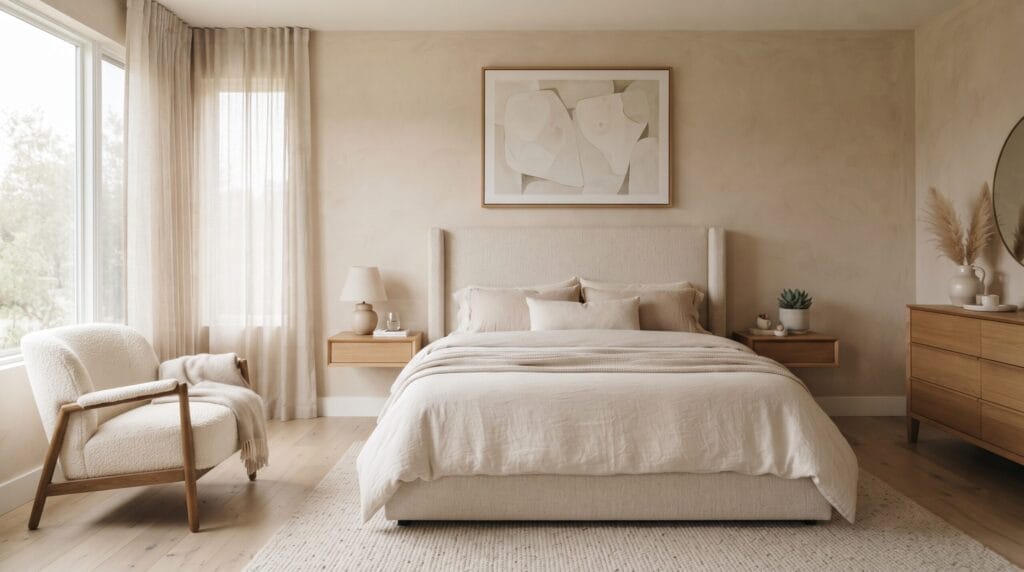
Bedrooms benefit from quieter colors and fewer visual interruptions.
1. Create a Calm Headboard Wall
Use:
- Upholstered headboard
- Wood panel detail
- Large artwork
- Subtle paint color
- Textured wall finish
The bed should remain the primary focal point.
2. Use Layered Bedding
A simple modern bed can include:
- Neutral sheets
- Duvet or quilt
- Two sleeping pillows
- Two decorative pillows
- One smaller accent cushion
- Throw at the foot
Keep the palette controlled.
3. Replace Matching Furniture Sets
Modern bedrooms often feel more sophisticated when the bed, nightstands, dresser, and bench coordinate without being identical.
4. Add Bedside Lighting
Use lamps, wall sconces, or pendants depending on the room.
Mounted lighting can free nightstand space, but electrical installation should be completed by a qualified professional when wiring is required.
5. Hide Visual Clutter
Use drawers, baskets, closed wardrobes, and under-bed storage.
A calm bedroom depends heavily on clear surfaces.
Modern Kitchen Design Ideas
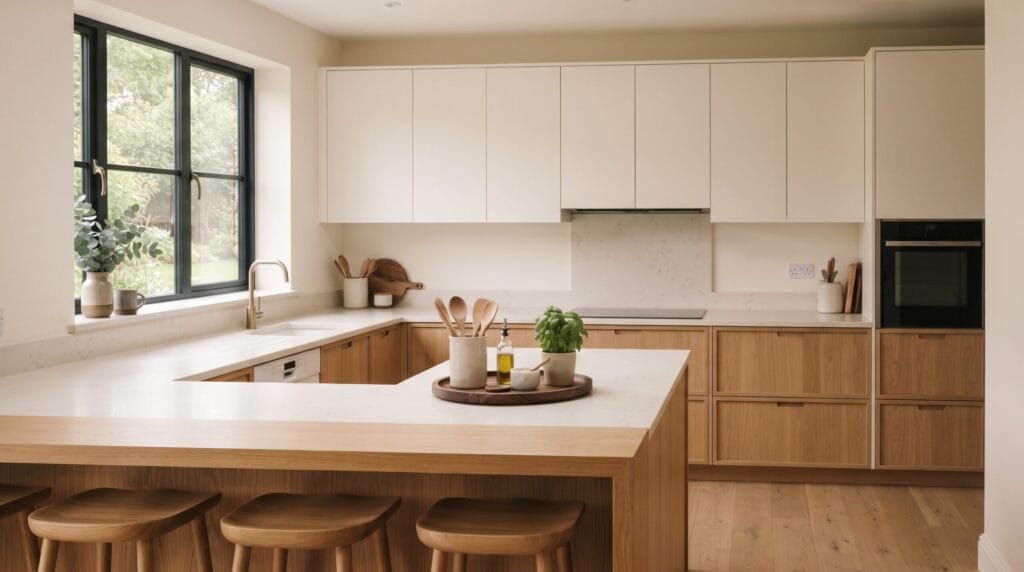
Modern kitchens balance efficiency with visual simplicity.
1. Use Flat or Simple Cabinet Fronts
Clean cabinet profiles create a modern foundation.
Popular approaches include:
- Flat slab fronts
- Simple Shaker-inspired doors
- Handleless systems
- Minimal bar pulls
2. Combine Warm Wood With Stone
A modern kitchen can feel more inviting when smooth surfaces are balanced with natural wood.
For example:
- Oak cabinets + pale stone
- Walnut island + warm white cabinetry
- Dark wood + light quartz
3. Keep Counters Visually Calm
Leave out only frequently used items.
Group everyday essentials on one tray rather than spreading them across the entire counter.
4. Add Statement Lighting Carefully
Pendant lights over an island can create a focal point.
Choose fixtures that relate to the scale of the island and surrounding architecture.
5. Use Open Shelving Selectively
One or two open shelves can add warmth, but too much open storage creates visual maintenance.
Display only objects that are useful or attractive.
Modern Dining Room Ideas
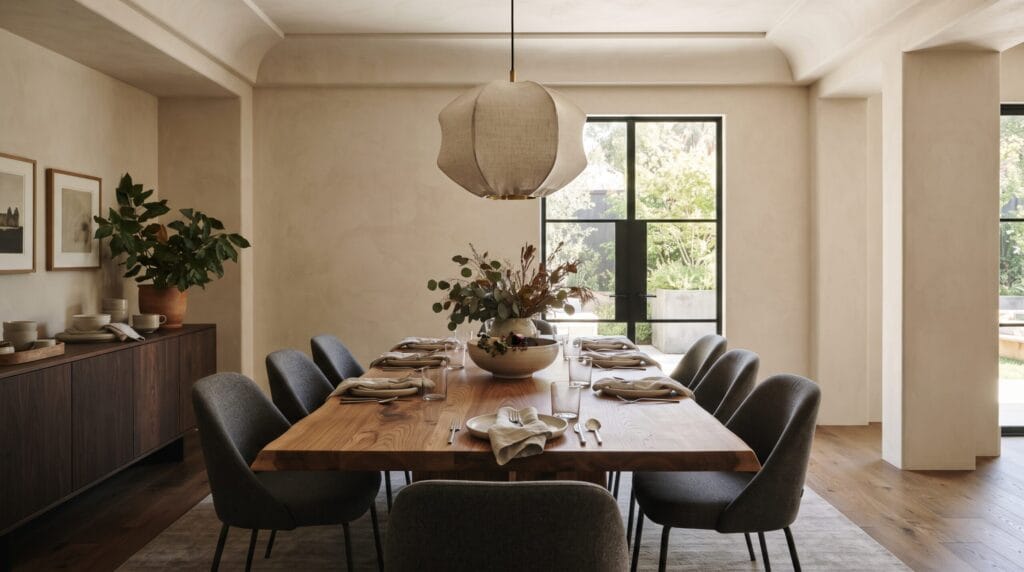
Dining rooms can be simple while still feeling memorable.
1. Choose a Strong Dining Table
The table often provides the visual anchor.
Modern options include:
- Solid wood
- Stone
- Oval tables
- Round pedestal tables
- Slim rectangular forms
2. Mix Dining Chair Materials
Consider upholstered chairs with a wood table or timber chairs with a stone table.
Material contrast makes the composition feel more considered.
3. Use One Large Pendant
A single oversized fixture can look more modern than several small decorative lights.
Scale it to the table.
4. Keep the Centerpiece Low
Use:
- Bowl
- Low vase
- Branches
- Candles
- Seasonal fruit
The centerpiece should not block conversation.
Modern Bathroom Interior Design Ideas
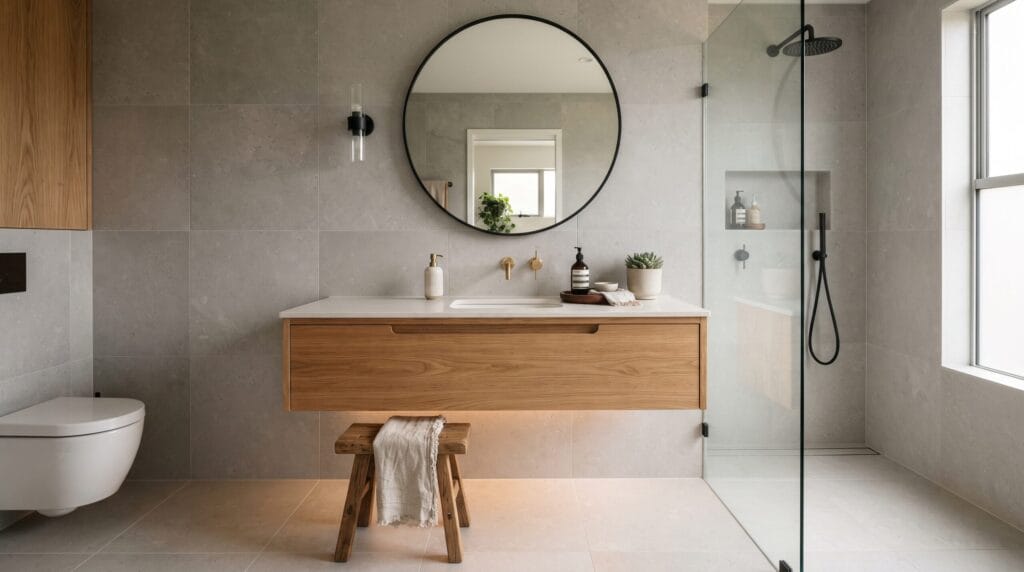
Modern bathrooms benefit from clean surfaces and strong material choices.
1. Use Large-Format Surfaces
Larger tiles or continuous-looking materials can reduce visual fragmentation.
2. Add Warm Wood Accents
Wood-look cabinetry, stools, trays, or shelving can soften stone and tile.
3. Choose a Simple Mirror
A large frameless mirror or thin metal frame works well in modern bathrooms.
4. Improve Lighting Around the Vanity
Good bathroom lighting should support grooming without relying only on a ceiling fixture.
Electrical installations should be designed for wet environments and completed according to local requirements.
5. Keep Everyday Products Organized
Use:
- Drawers
- Cabinet inserts
- Small trays
- Matching containers where practical
The room should look calm without making daily routines inconvenient.
Modern Home Office Design Ideas
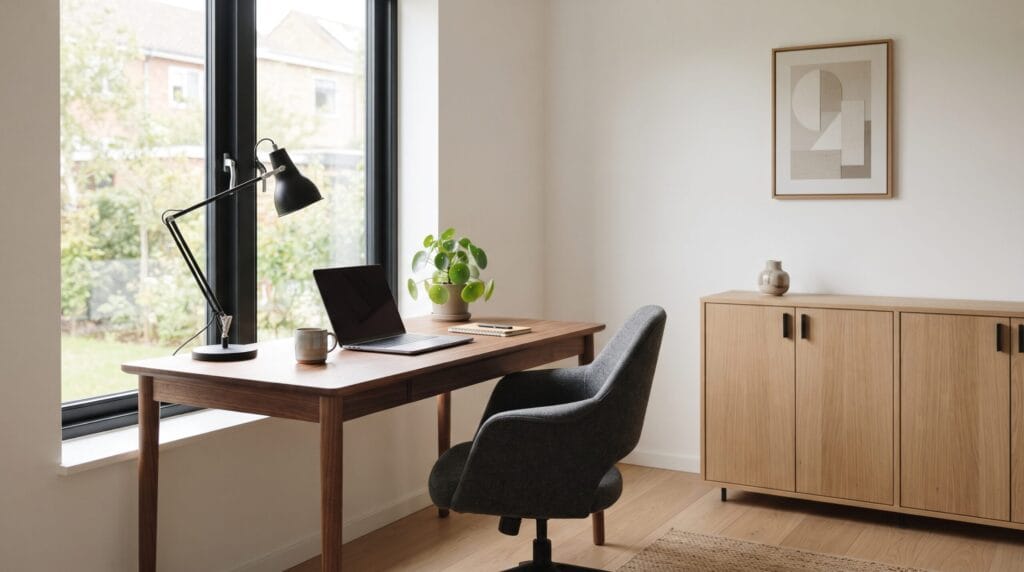
A modern office should support concentration first.
1. Position the Desk Intentionally
When possible, avoid facing a blank wall at extremely close range.
Consider:
- Window view
- Side light
- Artwork
- Open room view
2. Use Closed Storage for Supplies
Files, cables, stationery, and electronics create visual noise quickly.
3. Add Task Lighting
A focused desk lamp can improve usability and create a visual anchor.
4. Use One Strong Background
For video calls, keep the visible background simple.
Use:
- Art
- Shelf
- Plant
- Cabinet
- Textured wall
Avoid over-styling every shelf.
Modern Entryway Ideas
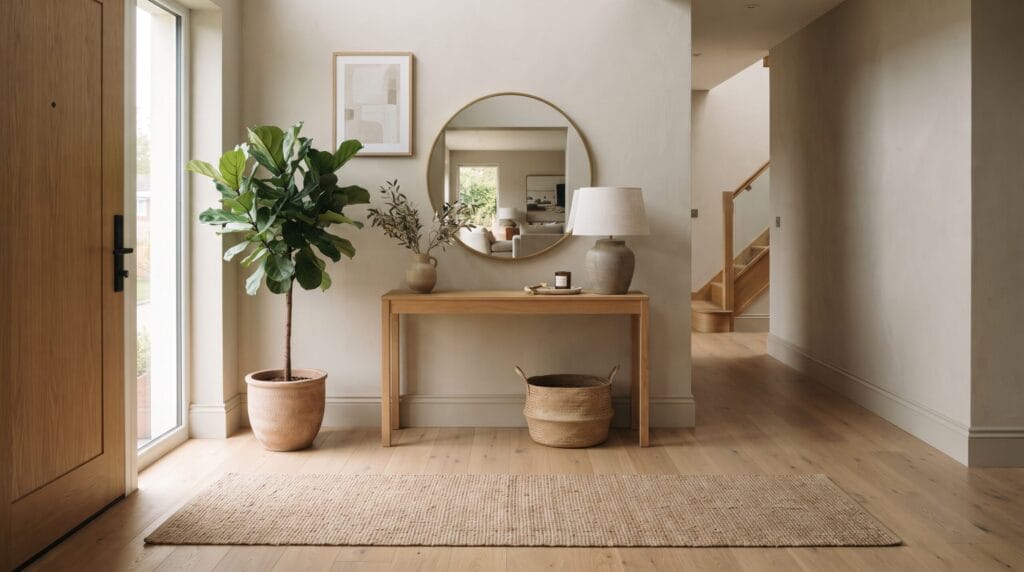
The entryway should set the tone while managing everyday items.
1. Use a Narrow Console
A slim console provides a landing zone without blocking movement.
2. Add a Large Mirror
A mirror can brighten the area and provide a practical last-minute check before leaving.
3. Give Every Item a Place
Use:
- Hooks
- Tray
- Shoe storage
- Basket
- Drawer
- Bench
4. Add One Decorative Layer
A lamp, artwork, or vase is often enough.
Also Read: 15 Popular Interior Design Styles and How to Choose One
Modern Hallway Design Ideas
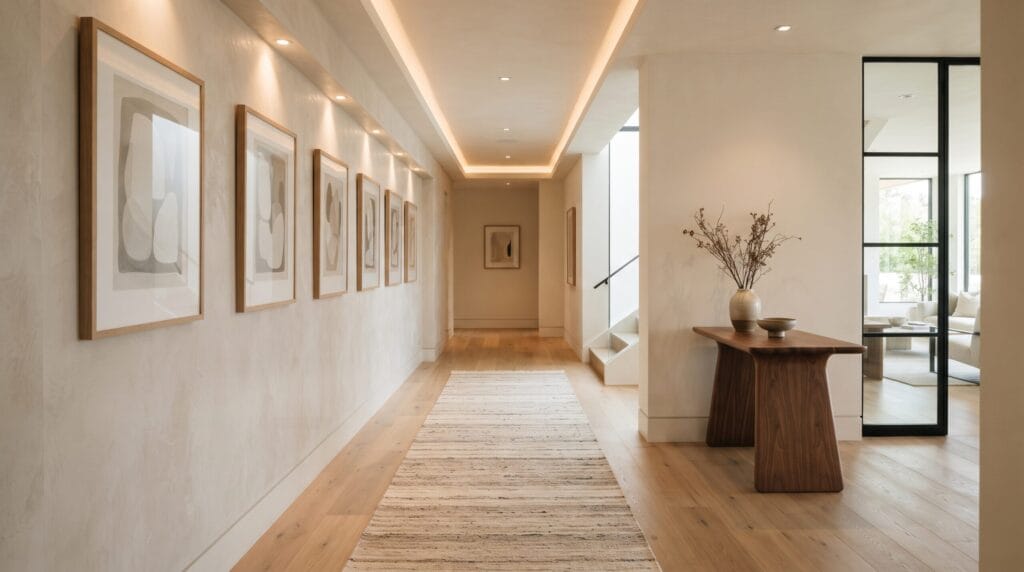
Hallways are often overlooked.
1. Use Repetition
Repeat similar frames, lights, or colors along the passage.
2. Keep Furniture Narrow
Use slim consoles or wall-mounted shelves only where circulation remains comfortable.
3. Add One Long Runner
A runner can introduce texture and visually connect adjacent rooms.
Modern Guest Room Ideas
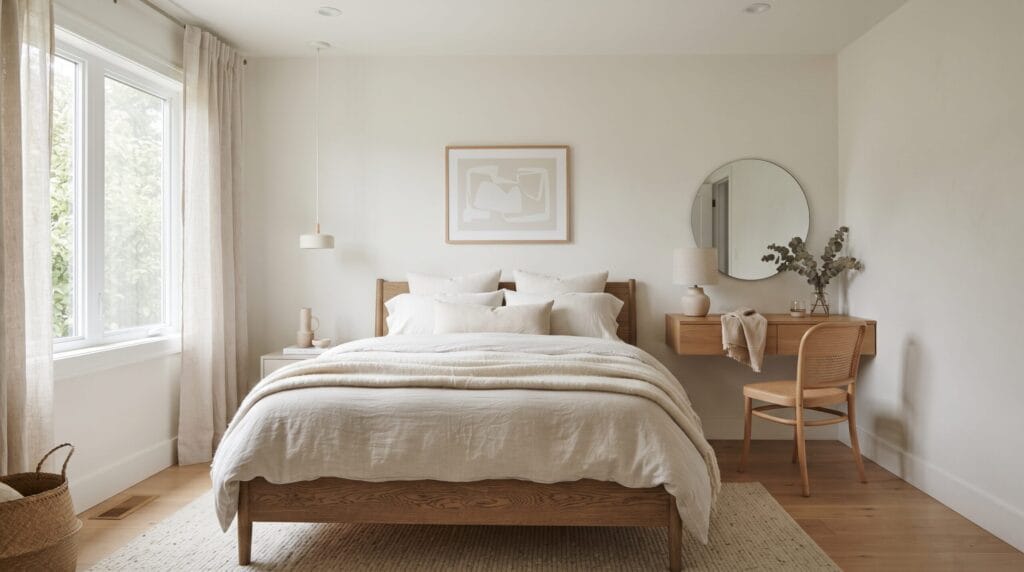
A guest room should feel simple, comfortable, and easy to maintain.
1. Use Flexible Furniture
A small desk can double as a vanity or luggage surface.
2. Keep Storage Available
Leave at least one clear drawer, shelf, or hanging area for visitors.
3. Provide Layered Lighting
Use bedside lighting plus a general room light.
4. Keep Decor Calm
One piece of artwork, a small plant, and simple textiles are usually enough.
Modern Laundry Room Ideas
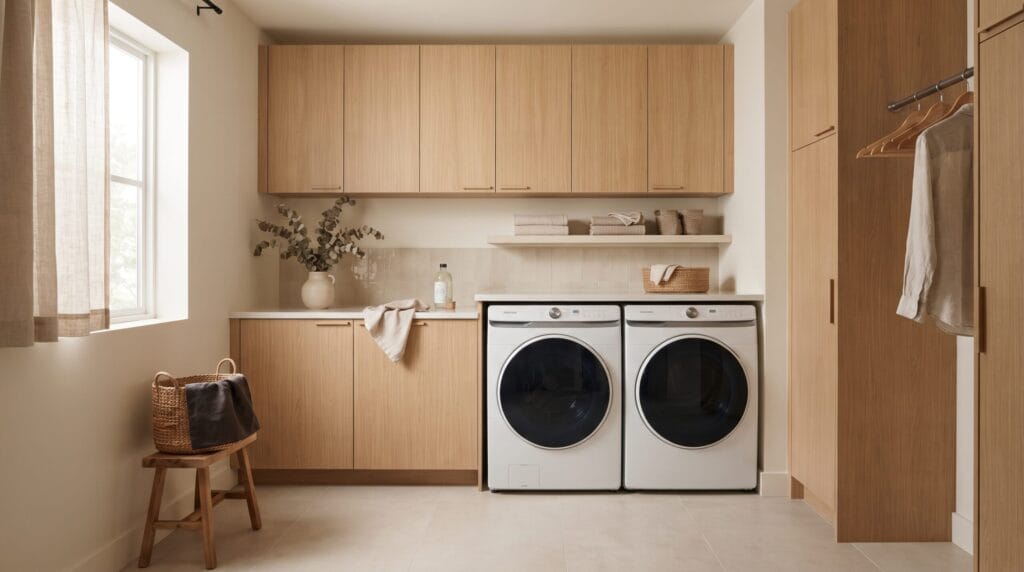
Even utility spaces benefit from design consistency.
1. Use Closed Storage Above Appliances
Cabinets can hide cleaning products and supplies.
2. Add a Folding Surface
Where space allows, install or place a worktop suitable for folding laundry.
3. Use Matching Storage Containers
Consistent storage reduces visual clutter.
4. Add a Small Decorative Detail
A simple framed print, basket, or plant can make the room feel connected to the rest of the home.
Modern Small-Space Interior Design Ideas
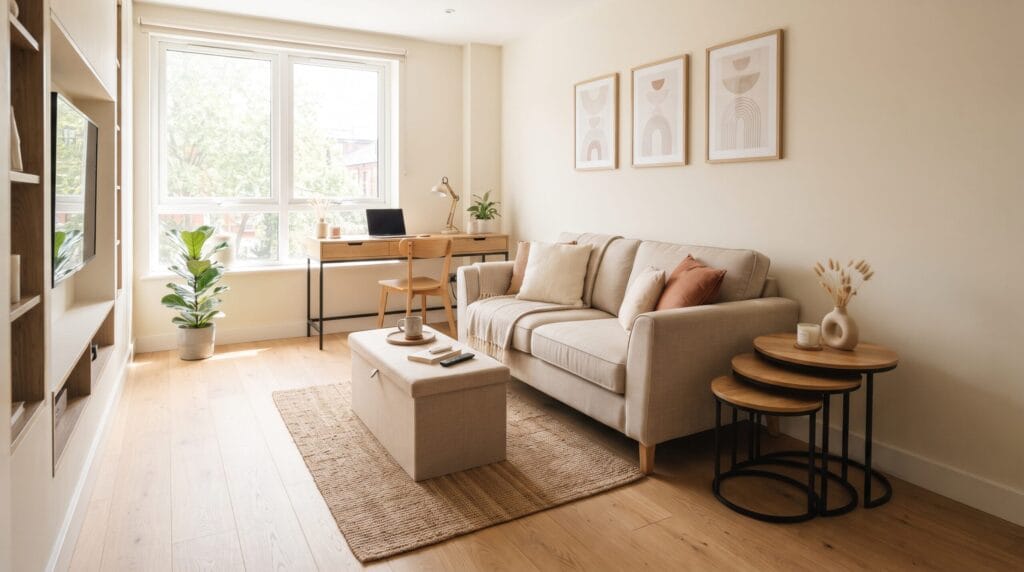
Small rooms need stronger editing.
1. Choose Furniture With More Than One Function
Examples include:
- Storage ottoman
- Desk-console combination
- Extendable dining table
- Bed with drawers
- Nesting tables
2. Use Vertical Space
Add tall shelving or cabinetry where appropriate.
3. Use Mirrors Strategically
Place mirrors where they reflect light or visually extend the room.
4. Avoid Too Many Tiny Objects
A few larger pieces often look calmer than many small decorative accessories.
5. Keep Pathways Clear
Space feels larger when movement is easy.
Modern Interior Design Ideas by Room
| Room | Main Priority | Key Materials | High-Impact Upgrade |
| Living room | Layout and comfort | Linen, wood, stone, wool | Larger rug and layered lighting |
| Bedroom | Calm and storage | Upholstery, wood, cotton | Strong headboard wall |
| Kitchen | Function and surfaces | Stone, wood, metal | Counter edit and lighting |
| Dining room | Focal point and scale | Wood, stone, upholstery | Statement pendant |
| Bathroom | Clean surfaces | Tile, stone, wood | Better mirror and vanity lighting |
| Home office | Focus and organization | Wood, metal, textile | Closed storage |
| Entryway | Function and first impression | Wood, mirror, woven storage | Console and mirror |
| Hallway | Continuity | Paint, runner, art | Repeated wall elements |
| Guest room | Flexibility | Cotton, wood, upholstery | Layered bedding and storage |
| Laundry | Organization | Cabinetry, baskets | Closed storage |
| Small spaces | Scale and flexibility | Light wood, glass, textile | Multifunctional furniture |
Modern Interior Color Palette Ideas
Modern color does not have to mean gray.
Warm Neutral Palette
Use:
- Cream
- Beige
- Taupe
- Light oak
- Soft black
Earthy Modern Palette
Use:
- Warm white
- Olive
- Terracotta
- Walnut
- Charcoal
Soft Contemporary Palette
Use:
- Greige
- Mushroom
- Dusty blue
- Brown
- Ivory
High-Contrast Modern Palette
Use:
- Warm white
- Black
- Natural wood
- One muted accent
How to Mix Materials in a Modern Home
A room becomes more interesting when different surface qualities are balanced.
Use a Simple Formula
Choose:
- One main wood tone
- One stone or hard surface
- One metal finish
- Two or three soft textiles
Example
A living room might use:
- Oak
- Travertine
- Black metal
- Linen
- Wool
This provides variation without visual confusion.
Modern Interior Lighting Strategy
Strong modern interior design ideas treat lighting as a flexible system that should work at different times of day.
Ambient Lighting
Provides general illumination.
Task Lighting
Supports reading, cooking, working, or grooming.
Accent Lighting
Highlights art, architecture, shelves, or textured surfaces.
Practical Rule
Aim for more than one light source in major rooms.
This creates flexibility and reduces dependence on harsh overhead lighting.
Modern Decor Without Clutter
Modern rooms still need personality.
Good Decorative Choices
- Large artwork
- Sculptural lamp
- Ceramic vase
- Books
- Plant
- Bowl
- Textile
- Personal photograph
Group Small Objects
Use trays or small shelf arrangements so individual items read as one composition.
Also Read: 25 Cozy Home Decor Ideas for a Warm and Inviting Space
Common Modern Interior Design Mistakes
Making Everything Neutral
Modern spaces still need contrast.
Buying Furniture That Is Too Small
Undersized furniture can make a large room feel fragmented.
Using Only Ceiling Lights
Layered lighting creates depth.
Overusing Open Shelving
Visible storage requires constant editing.
Matching Every Piece
Coordination is more sophisticated than perfect matching.
Ignoring Texture
Smooth surfaces alone can make a room feel flat.
Copying Trends Without Considering the Home
Architecture and lifestyle should guide the design.
Modern Interior Design Ideas Checklist
Use this modern interior design ideas checklist:
- The home has a consistent color family.
- Major furniture fits the room scale.
- Walkways remain clear.
- Lighting is layered.
- Storage supports daily routines.
- One or two wood tones repeat through the home.
- Hardware finishes are coordinated.
- Textures prevent neutral rooms from feeling flat.
- Artwork is correctly scaled.
- Open shelving is edited.
- Surfaces are not overloaded.
- Small rooms use vertical space.
- Decorative objects have a purpose.
- Each room has a focal point.
- The home feels connected without making every room identical.
Frequently Asked Questions
What Are the Best Modern Interior Design Ideas for Beginners?
Start with furniture layout, a controlled color palette, layered lighting, larger rugs, simple storage, and a few well-scaled decorative pieces.
What Colors Work Best in Modern Interiors?
Warm white, beige, taupe, charcoal, olive, muted blue, terracotta, walnut, and natural wood all work well in modern homes.
How Can I Make a Modern Interior Feel Warmer?
Add natural wood, linen, wool, rugs, curtains, warm lighting, plants, and handmade ceramics.
Does Modern Interior Design Have to Be Minimalist?
No. Modern design can be layered and expressive as long as the layout, furniture, color, and materials remain intentional.
How Do I Make Different Rooms Feel Connected?
Repeat selected colors, materials, hardware finishes, shapes, and lighting styles across the home.
What Is the Most Important Modern Interior Design Principle?
Function comes first. A modern room should support how people actually live before decorative decisions are added.
Can Modern Design Work in Small Homes?
Yes. Modern design is especially effective in small spaces because it emphasizes efficient layouts, multifunctional furniture, storage, and visual simplicity.
Conclusion
The strongest modern interior design ideas create a home that feels connected, functional, comfortable, and visually calm.
Start with layout and scale. Choose a limited palette, repeat materials across rooms, and layer lighting instead of relying on one fixture. Use storage to reduce visual clutter, then add personality through artwork, textiles, greenery, books, and a few meaningful objects.
Each room should still serve its own purpose. The living room needs comfortable conversation. The bedroom needs calm. The kitchen needs efficiency. The bathroom needs clear surfaces. The office needs focus. The entryway needs organization.
A modern home does not need to look like a showroom. It should feel considered and easy to live in. When color, material, furniture, lighting, and storage work together, every room can feel distinct while still belonging to one cohesive home.