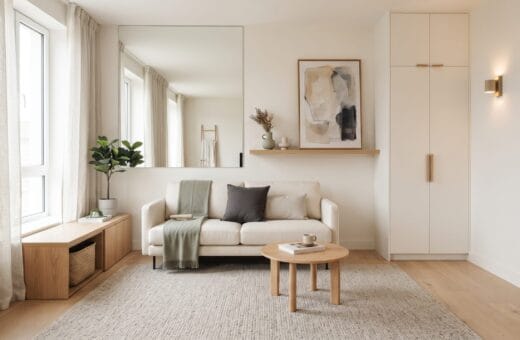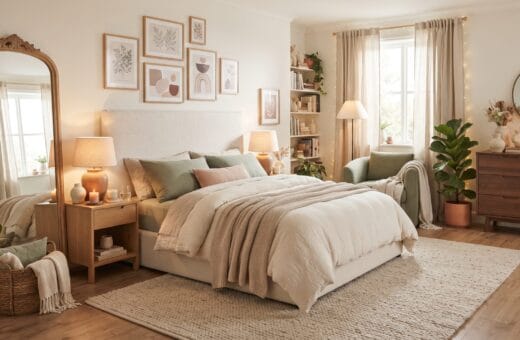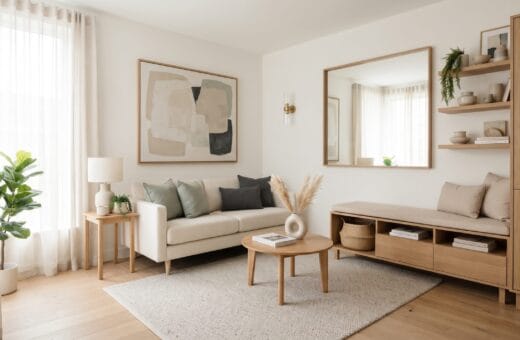
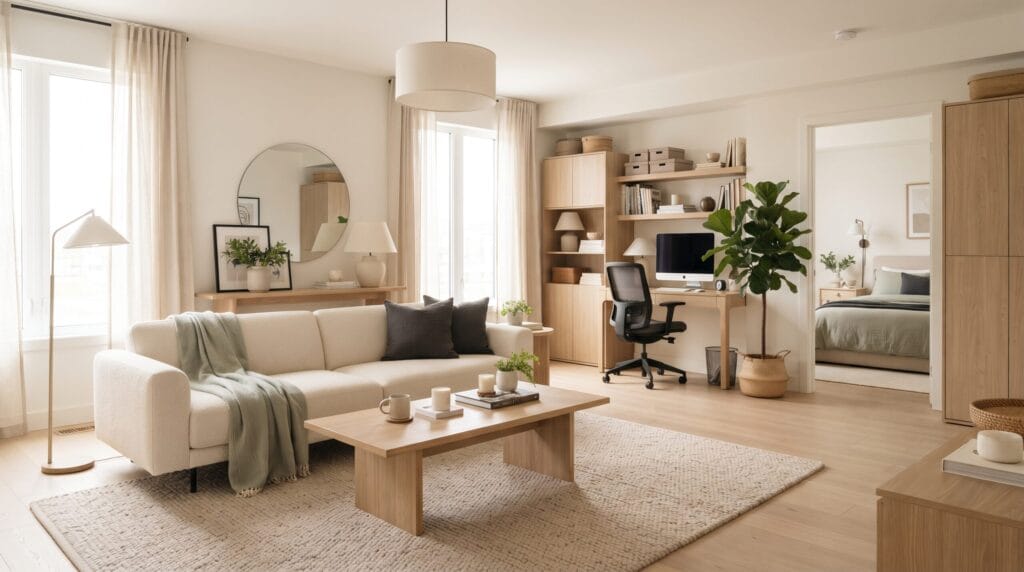
A room does not need a complete renovation to feel noticeably better. The most effective simple room ideas focus on the things that shape everyday comfort, layout, light, scale, storage, color, texture, and how much visual clutter is competing for attention.
Many rooms feel unfinished because one or two elements are working against the space. The rug may be too small, the curtains may stop too short, the lighting may be harsh, the furniture may block movement, or every surface may be filled with small decor. Fixing those problems can make a bigger difference than buying more furniture.
Simple changes also work because they are easier to maintain. A room with clear walkways, useful storage, layered lighting, and a restrained palette usually stays calmer than a room built around constant decorative updates. The goal is not to create a showroom. It is to make the space more comfortable, attractive, and useful.
This guide shares 25 practical simple room ideas for living rooms, bedrooms, dining areas, kitchens, bathrooms, entryways, home offices, rentals, and small spaces. You will also find budget guidance, room-by-room priorities, common mistakes, and a final checklist for improving almost any room.
What Makes a Room Feel Better?
Most successful rooms share a few basic qualities.
Clear Circulation
People should be able to move through the room without weaving around furniture.
Balanced Scale
Furniture, rugs, lamps, artwork, and curtains should feel appropriately sized for the room.
Layered Lighting
A mix of overhead, task, and accent lighting creates a more comfortable atmosphere.
Useful Storage
Closed storage reduces visual clutter and helps surfaces remain clear.
A Controlled Palette
Repeating a few colors and materials makes the room feel cohesive.
Personal Details
Books, art, photographs, and meaningful objects keep a simple room from feeling generic.
How to Use Simple Room Ideas Without Making the Space Feel Plain
Simple does not mean empty.
Add Texture
Use:
- Wool
- Linen
- Cotton
- Wood
- Ceramic
- Woven fibers
Keep One Focal Point
A room can feel interesting with one strong artwork, mirror, light fixture, or furniture piece.
Add Personal Objects Selectively
Display fewer items, but choose pieces that matter to you.
Use Contrast
A small amount of black, dark wood, or metal can give a light room definition.
1. Remove One Unnecessary Piece of Furniture
One of the easiest simple room ideas is to create more breathing room.
Look For
- Extra side tables
- Unused chairs
- Oversized ottomans
- Duplicate storage
- Furniture blocking windows
Why It Works
Removing one piece can improve circulation and make the remaining furniture feel more intentional.
Free Test
Move the item out of the room for a week before deciding whether to keep it.
2. Create One Clear Main Walkway
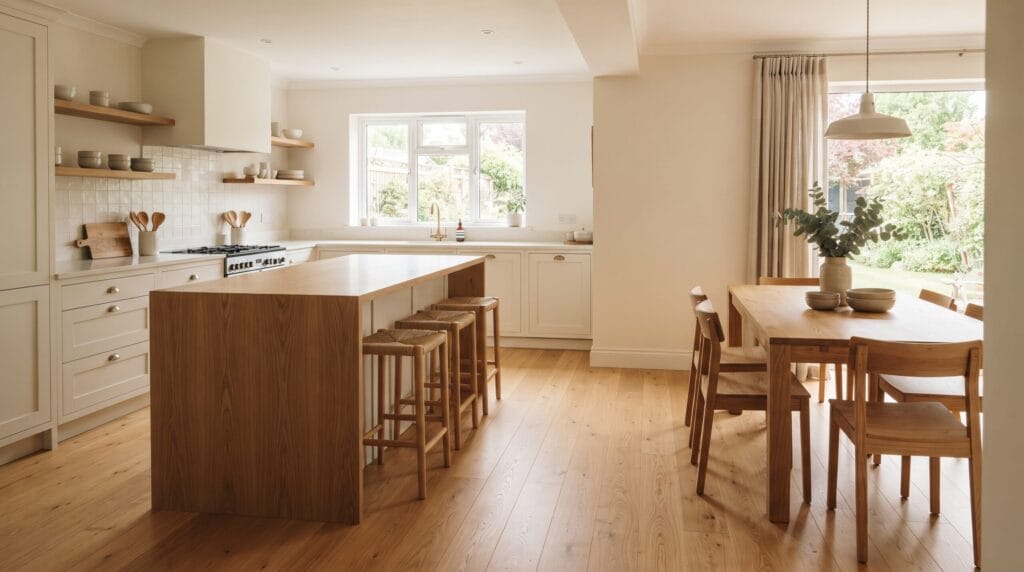
Every room needs an obvious path.
Check
- Door to seating
- Bed to closet
- Kitchen to dining area
- Entryway to living room
Move Furniture
Avoid placing tables, stools, or chairs directly in the route.
Why It Works
Clear circulation makes a room feel larger and easier to use.
3. Rearrange Furniture Around One Main Purpose
A room should support its most important activity.
Living Room
Arrange seating for conversation or media viewing.
Bedroom
Prioritize the bed and easy access to storage.
Home Office
Prioritize the desk, light, and comfortable work position.
Why It Works
A room feels calmer when the layout has a clear purpose.
4. Use Fewer, Better-Scaled Furniture Pieces
Too many small pieces can make a room look fragmented.
Instead of
- Three tiny tables
- Several narrow shelves
- Multiple small chairs
Try
- One substantial side table
- One larger cabinet
- One correctly scaled lounge chair
Why It Works
Larger pieces create stronger visual structure.
5. Choose Furniture With Visible Legs
Raised furniture can make a room feel visually lighter.
Good Options
- Sofa with visible legs
- Open-leg desk
- Raised nightstand
- Slim dining chairs
Why It Works
Seeing more floor creates visual continuity.
Keep It Practical
Do not let the open space underneath become storage clutter.
6. Use a Properly Sized Rug
A correctly scaled rug is one of the strongest simple room ideas.
Living Room
Use a rug large enough to connect the seating group.
Bedroom
Let it extend beyond the sides and foot of the bed.
Dining Room
Chairs should remain on the rug when pulled back.
Why It Works
A larger rug makes separate furniture pieces feel like one composition.
7. Hang Curtains High and Full
Curtains have a major effect on room proportions.
Use
- Floor-length panels
- Linen-look fabric
- Cotton
- Sheer panels
Hang Them Higher
Mounting curtains above the window can make the room feel taller.
Avoid
Short curtains that stop awkwardly above the floor unless the window requires a specific functional solution.
8. Let More Natural Light In
Daylight can make almost any room feel better.
Try
- Opening curtains fully
- Removing furniture that blocks windows
- Cleaning glass
- Using lighter window treatments
- Moving tall decor away from the window
Why It Works
Natural light makes color, texture, and materials easier to appreciate.
9. Layer Lighting Instead of Using One Bright Fixture
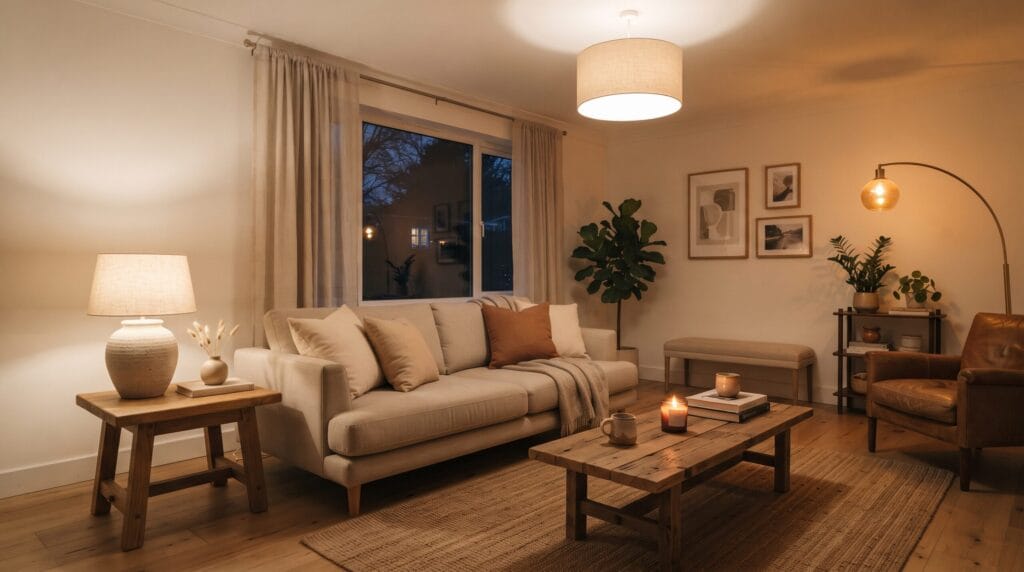
Lighting is essential to comfortable simple room ideas.
Combine
- Ceiling light
- Table lamp
- Floor lamp
- Task light
- Small accent lamp
Use Different Heights
This creates depth and makes the room feel softer in the evening.
Safety
Hardwired electrical work should be handled by a qualified professional.
10. Upgrade a Lampshade
You may not need a new lamp.
Replace
- Yellowed shade
- Undersized shade
- Dated patterned shade
With
- Linen-look shade
- Pleated neutral shade
- Simple tapered shade
Why It Works
A better shade can improve both light quality and proportion.
11. Use a Large Mirror Strategically
Mirrors can increase visual depth.
Good Locations
- Entryway
- Bedroom
- Dining room
- Living room
- Dark hallway
Check the Reflection
Position the mirror to reflect:
- Daylight
- Greenery
- Artwork
- Open space
Why It Works
A mirror can brighten the room without adding clutter.
12. Choose One Larger Artwork Piece
Artwork helps establish a focal point.
Good Locations
- Above sofa
- Above bed
- Dining wall
- Entry console
- Home office
Why It Works
One larger piece often looks more intentional than many tiny frames.
Budget Option
Use a large print, personal photography, textile art, or simple DIY abstract work.
13. Keep the Color Palette Controlled
Color is easier to manage when there is a clear system.
Simple Formula
Choose:
- One main neutral
- One supporting color
- One darker accent
Example
- Warm white
- Sage
- Charcoal
Why It Works
A limited palette makes mixed furniture and decor feel more connected.
14. Repeat One Material Across the Room
Material repetition creates cohesion.
Repeat
- Oak
- Walnut
- Brass
- Black metal
- Ceramic
- Linen
Example
A wood coffee table, picture frame, and side table can connect without matching exactly.
Why It Works
The room feels coordinated without becoming overly uniform.
15. Add Texture Instead of More Decor
Texture is one of the easiest simple room ideas for making a neutral room feel richer.
Add
- Woven cushion
- Linen curtains
- Wool rug
- Wood furniture
- Ceramic lamp
- Soft throw
Why It Works
Texture adds visual depth without increasing clutter.
16. Clear the Main Surfaces
Busy surfaces can make an otherwise attractive room feel stressful.
Review
- Coffee table
- Nightstands
- Dresser
- Kitchen counters
- Bathroom vanity
- Desk
Keep
Only useful or meaningful items.
Why It Works
Clear surfaces create visual calm immediately.
17. Use Closed Storage for Everyday Clutter
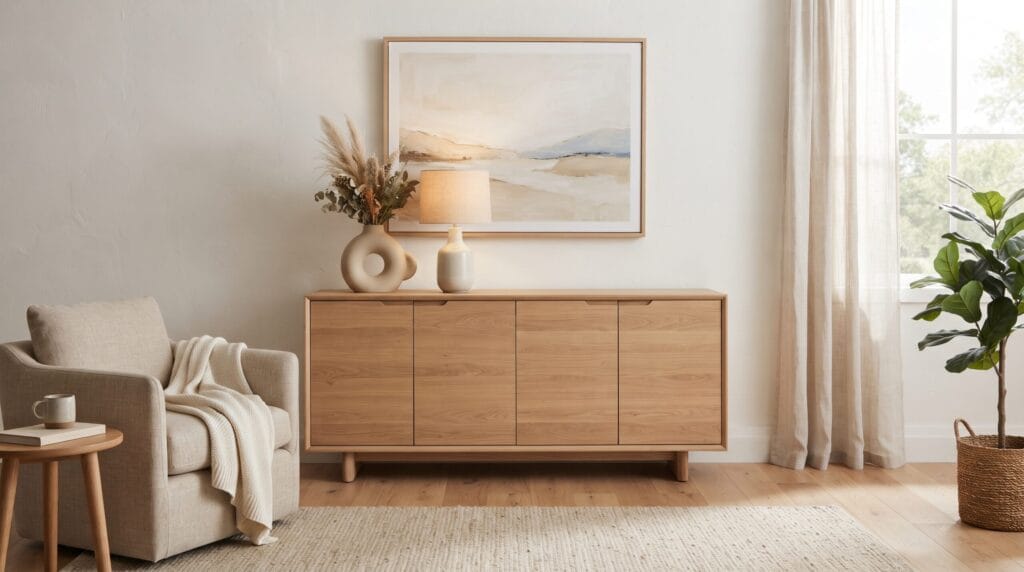
Not everything needs to be displayed.
Store
- Electronics
- Papers
- Toys
- Chargers
- Beauty products
- Extra textiles
- Office supplies
Good Storage
- Sideboard
- Drawer unit
- Cabinet
- Storage bench
- Boxes inside shelving
Why It Works
Closed storage allows decorative objects to stand out.
18. Edit Open Shelves
Open shelving should feel deliberate.
Display
- Books
- Ceramics
- One plant
- Small artwork
- Useful objects
Leave Empty Space
Do not fill every shelf edge to edge.
Why It Works
A few larger objects look calmer than many small items.
19. Add One Healthy Plant
Greenery can make a room feel more alive.
Try
- One tall floor plant
- One leafy plant
- Simple branch arrangement
- Small plant on a shelf
Choose for the Light
Select plants based on the actual conditions of the room.
Why It Works
A single well-scaled plant can soften corners and add natural color.
20. Restyle the Bed for a Calmer Bedroom
Bedrooms benefit from simpler layers.
Use
- Neutral duvet
- Two sleeping pillows
- A few decorative cushions
- One throw
Avoid
Excessive pillow arrangements that make daily use inconvenient.
Why It Works
A relaxed bed feels comfortable and visually clean.
21. Simplify the Living Room Coffee Table
A coffee table should remain functional.
Simple Formula
Use:
- Tray
- Two or three books
- Bowl
- Vase or greenery
Leave Space
Keep room for drinks, remotes, and everyday use.
Why It Works
The table feels styled without becoming crowded.
22. Make the Entryway More Functional
An entryway should reduce clutter from the moment you walk in.
Add
- Tray for keys
- Mirror
- Basket
- Hooks
- Small console or bench
Keep It Simple
Use only what supports daily routines.
Why It Works
A functional entryway keeps clutter from spreading into the rest of the home.
23. Use Simple Room Ideas in Small Spaces
Compact rooms need editing even more than large ones.
Prioritize
- One clear focal point
- Larger mirror
- Full-length curtains
- Tall closed storage
- Wall-mounted lighting
- Multifunctional furniture
Avoid
Filling every corner.
Why It Works
Open sightlines make a small space feel less crowded.
24. Refresh a Room on a Budget
A better room does not require a major purchase.
Free Improvements
- Declutter
- Rearrange furniture
- Clear surfaces
- Open curtains
- Remove one extra furniture piece
Low-Cost Upgrades
- Cushion covers
- Lampshade
- Paint
- Framed art
- Basket
- Secondhand mirror
Save For
- Rug
- Sofa
- Mattress
- Dining table
- Lighting
25. Edit Before Buying Anything Else
The final and most important of these simple room ideas is to pause before adding more.
Before Buying, Ask
- What problem does this solve?
- Is the scale right?
- Does it fit the palette?
- Do I already own something similar?
- Will it improve function?
- Would the room feel better with less instead?
Why It Works
Intentional rooms usually come from better decisions, not more purchases.
Simple Room Ideas by Room
| Room | Main Problem to Solve | Simple Upgrade | High-Impact Priority |
| Living room | Fragmented layout | Rearrange seating | Larger rug |
| Bedroom | Visual clutter | Simplify bedding | Better lighting |
| Dining room | Empty or disconnected | Add artwork | Correct table lighting |
| Kitchen | Busy counters | Store small items | Better task lighting |
| Bathroom | Product clutter | Use closed storage | Mirror and lighting |
| Entryway | Daily clutter | Add tray and basket | Functional console |
| Home office | Distraction | Clear desk | Task light and storage |
Simple Room Ideas by Budget
| Budget | Best Improvements | Typical Impact |
| $0 | Declutter, rearrange, edit | High when room feels crowded |
| Under $50 | Art, cushion covers, baskets | Quick refresh |
| $50-$150 | Lamps, curtains, small furniture | Noticeable change |
| $150-$500 | Rug, mirror, storage, bedding | Strong transformation |
| $500+ | Sofa, mattress, dining table, major lighting | Long-term investment |
Costs vary by location, brand, material, labor, and whether items are new or secondhand.
Simple Color Palettes That Work in Almost Any Room
Warm Neutral
- Warm white
- Beige
- Pale oak
- Camel
- Charcoal
Soft Natural
- Cream
- Sage
- Natural wood
- Stone
- Soft black
Calm Blue
- Ivory
- Dusty blue
- Pale gray
- Oak
- Navy
Earthy
- Sand
- Terracotta
- Olive
- Walnut
- Cream
How to Make a Simple Room Look More Expensive
Improve Scale
Use a larger rug, mirror, lamp, or artwork.
Choose Fewer Accessories
A few substantial objects usually look more polished.
Use Full-Length Curtains
Long curtains make rooms feel more finished.
Layer Lighting
Table and floor lamps add depth.
Hide Clutter
Closed storage improves the appearance of the entire room.
Repeat Materials
Coordinated wood and metal finishes create cohesion.
Simple Room Ideas for Renters
Renters can create major visual changes with portable pieces.
Use
- Rugs
- Curtains
- Lamps
- Freestanding mirrors
- Furniture
- Plants
- Portable storage
- Artwork with approved mounting
Check the Lease Before
- Painting
- Drilling
- Changing fixtures
- Applying adhesives
Choose Portable Investments
Spend more on items you can take to a future home.
Common Simple Room Mistakes
Buying Before Measuring
Scale problems are expensive and frustrating.
Using a Rug That Is Too Small
Small rugs can make furniture look disconnected.
Using Only One Light Source
One overhead fixture often creates flat or harsh lighting.
Adding Too Many Tiny Accessories
Small objects create visual noise quickly.
Filling Every Wall
Empty wall space can help larger art and furniture stand out.
Ignoring Storage
Visible clutter competes with every design choice.
Matching Everything
A room usually feels more natural when materials coordinate rather than match exactly.
Trying to Finish the Room in One Day
Rooms often improve when they evolve gradually.
Simple Room Ideas Checklist
Use this simple room ideas checklist:
- The room has one clear main purpose.
- Main walkways are open.
- Unnecessary furniture has been removed.
- Furniture scale suits the room.
- Rugs connect furniture groups.
- Curtains are full length where appropriate.
- Natural light is not unnecessarily blocked.
- Lighting comes from multiple sources.
- Lamps are correctly scaled.
- Mirrors reflect attractive views.
- Artwork is large enough for the wall.
- The color palette is controlled.
- Materials repeat naturally.
- Texture adds depth.
- Main surfaces remain mostly clear.
- Closed storage hides everyday clutter.
- Open shelves are edited.
- Plants suit the room’s light.
- Small spaces preserve sightlines.
- New purchases solve a clear problem.
Frequently Asked Questions
What Are the Best Simple Room Ideas for Beginners?
Start by decluttering, improving the furniture layout, clearing the main walkway, adding layered lighting, using a larger rug, and simplifying surfaces.
How Can I Make a Room Feel Better Without Spending Money?
Remove unnecessary furniture, rearrange the layout, open curtains, clear surfaces, move decor between rooms, and create one strong focal point.
What Is the Fastest Way to Make a Room Look More Finished?
Full-length curtains, a correctly sized rug, larger artwork, better lamps, and a controlled color palette can create a strong visual improvement quickly.
How Do I Make a Small Room Feel Bigger?
Use fewer furniture pieces, preserve clear sightlines, add a larger mirror, use full-length curtains, choose tall closed storage, and avoid filling every corner.
How Can I Make a Simple Room Feel Cozy?
Add texture through a rug, throw, curtains, cushions, wood, warm lighting, books, and one or two personal objects.
How Do I Make a Room Look Expensive on a Budget?
Improve scale, use fewer accessories, shop secondhand for mirrors and furniture, upgrade lampshades, use full-length curtains, and hide clutter.
Can Renters Use These Simple Room Ideas?
Yes. Rugs, lamps, curtains, mirrors, portable furniture, storage, plants, and approved artwork can make a large difference without permanent renovation.
Conclusion
The best simple room ideas improve how a space feels by solving basic problems before adding more decoration.
Start with layout. Remove what is unnecessary, open the main walkway, and arrange furniture around the room’s primary purpose. Then improve scale with a larger rug, properly sized lighting, full-length curtains, and artwork that fits the wall.
Use storage to hide everyday clutter and keep the main surfaces clear. Add texture through wood, linen, wool, cotton, ceramic, and greenery rather than filling the room with more accessories.
Most importantly, edit before shopping. A room often needs fewer better choices, not more objects.
When layout, light, scale, storage, color, and thoughtful styling work together, almost any space can feel calmer, more comfortable, and more complete.
Also Read: “Room Makeover Ideas: Simple Ways to Refresh Any Space“