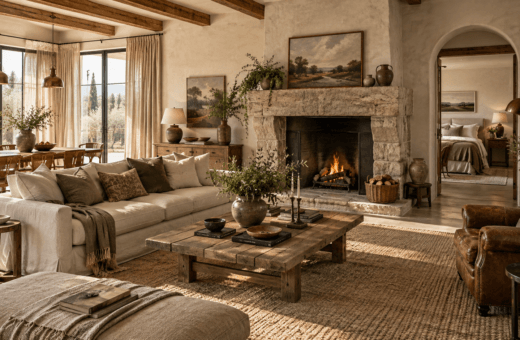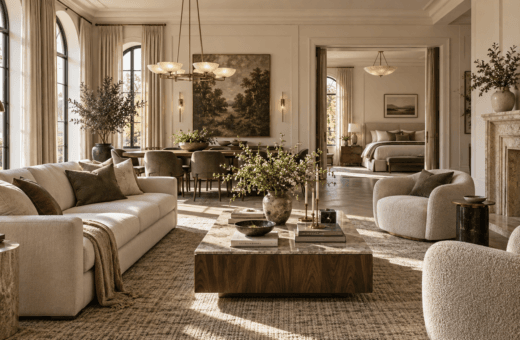
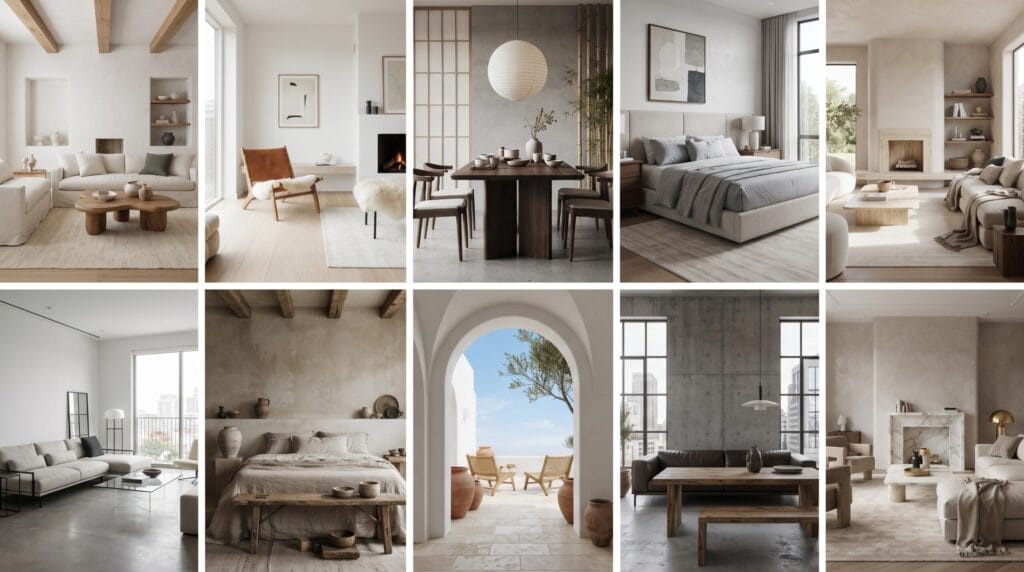
Minimalism is often described as a style built around less, but the most successful minimalist rooms are not simply empty. They are carefully edited spaces where proportion, light, materials, storage, texture, and function work together. Understanding different minimalist interior design styles makes it easier to create a calm home without ending up with a space that feels cold, unfinished, or generic.
Modern minimalism has also become more varied. One home may use pale Scandinavian woods and crisp white walls, while another relies on warm plaster, linen, stone, and handmade ceramics. Japandi interiors combine Japanese restraint with Scandinavian comfort. Wabi-sabi celebrates imperfection. Organic minimalism adds rounded forms and natural materials. Quiet-luxury minimalism focuses on craftsmanship, subtle materials, and visual restraint.
The common thread is intentionality. Each object should have a role, every material should contribute to the atmosphere, and visual noise should be controlled rather than eliminated at the expense of personality.
This guide explores ten minimalist interior design styles for calm, modern spaces. It explains the defining characteristics, color palettes, furniture choices, materials, lighting, decor, and practical ways to apply each style in real homes.
What Defines Minimalist Interior Design?
Minimalist interiors usually share several principles.
Clear Visual Hierarchy
The room has a few strong focal points instead of many competing objects.
Functional Furniture
Furniture earns its place through comfort, usefulness, or strong visual form.
Controlled Color
Most minimalist palettes use a limited number of related tones.
Negative Space
Empty space is treated as part of the composition.
Thoughtful Storage
Daily items are easy to access without overwhelming visible surfaces.
Quality Over Quantity
Fewer materials and objects place more attention on proportion, craftsmanship, and finish.
How to Choose Between Minimalist Interior Design Styles
The best minimalist interior design styles depend on the atmosphere you want.
Ask yourself:
- Do you prefer warm or cool colors?
- Do you like crisp geometry or organic shapes?
- Should the room feel refined, rustic, soft, or architectural?
- Do you prefer handmade objects or polished finishes?
- How much visible texture feels comfortable?
- Do you want the room to feel highly modern or quietly timeless?
Use your answers to choose one primary direction, then borrow small elements from compatible styles.
1. Warm Minimalism
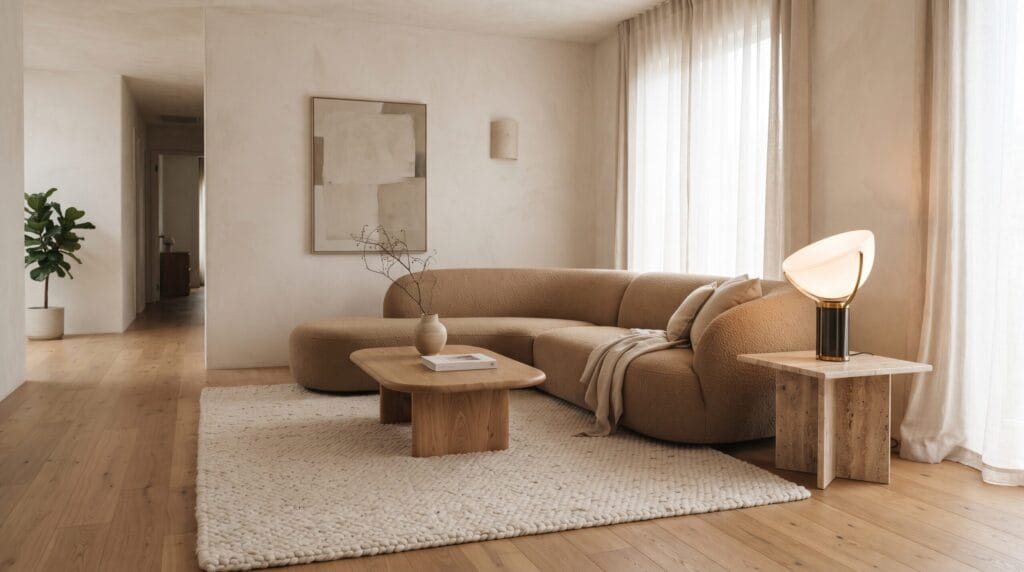
Warm minimalism keeps the visual restraint of classic minimalism but replaces cold finishes with soft colors and tactile materials.
Key Characteristics
- Warm white and cream walls
- Beige, sand, taupe, and soft brown
- Natural wood
- Linen and wool
- Rounded furniture
- Soft, indirect lighting
- A few sculptural objects
Best Materials
Use:
- Oak
- Travertine
- Linen
- Wool
- Clay
- Boucle
- Plaster
Furniture Direction
Choose low-profile seating with simple forms. A curved sofa, solid wood coffee table, and one sculptural lamp may be enough to define a living room.
Why It Feels Calm
Warm colors reduce visual harshness while the limited object count keeps the room uncluttered.
Common Mistake
Do not fill every surface with beige accessories. Warm minimalism still needs contrast and empty space.
2. Scandinavian Minimalism
Scandinavian minimalism combines functionality, light, simplicity, and everyday comfort.
Key Characteristics
- Pale wood
- White or soft gray walls
- Simple furniture
- Functional storage
- Natural textiles
- Practical lighting
- Small touches of black or muted color
Typical Color Palette
- White
- Soft gray
- Oatmeal
- Pale oak
- Muted blue
- Sage
- Black accents
Furniture Direction
Look for furniture with clean lines, tapered legs, and practical proportions.
Decor Approach
Add personality through:
- Woven textiles
- Ceramics
- Books
- Small plants
- Simple artwork
Best For
Scandinavian minimalism works especially well in apartments and small homes because it values light and efficient use of space.
Also Read: 15 Popular Interior Design Styles and How to Choose One
3. Japandi Minimalism
Japandi blends Japanese design principles with Scandinavian simplicity and comfort.
It is one of the most recognizable minimalist interior design styles because it combines restraint with warmth.
Key Characteristics
- Low furniture
- Natural materials
- Handmade objects
- Neutral colors
- Strong craftsmanship
- Simple silhouettes
- Visual quiet
Color Palette
Use:
- Warm white
- Mushroom
- Stone
- Charcoal
- Light oak
- Walnut
- Muted green
Materials
Japandi interiors commonly use:
- Wood
- Paper
- Linen
- Ceramic
- Stone
- Woven fibers
Furniture Direction
Choose pieces with visible construction and balanced proportions rather than decorative detail.
Decor Approach
One handmade vessel on a console may be more appropriate than a collection of small objects.
Best Practice
Avoid treating Japandi as simply beige Scandinavian design. The style depends heavily on craftsmanship, natural material expression, and restraint.
4. Soft Contemporary Minimalism
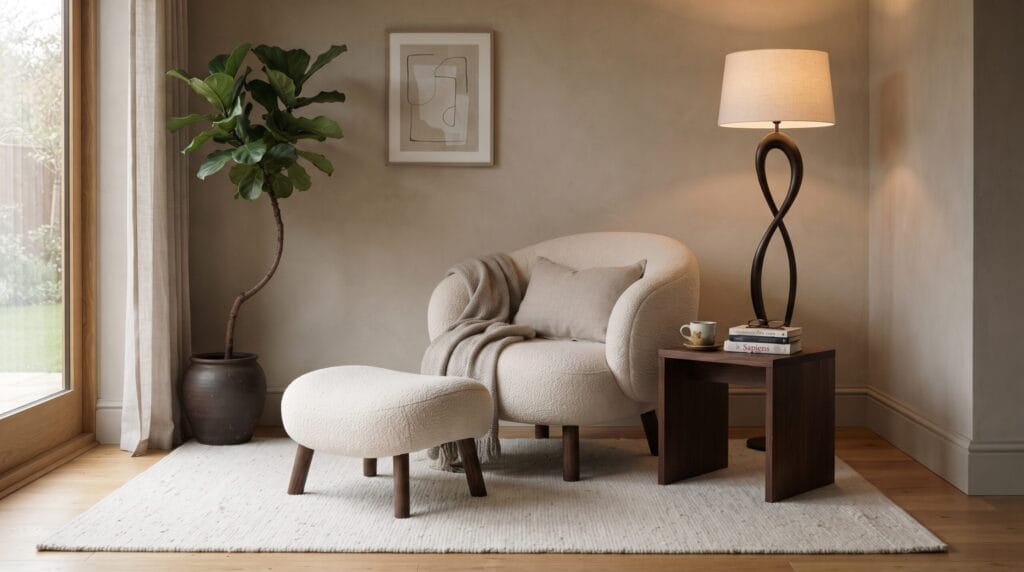
Soft contemporary minimalism uses modern architecture and furniture while introducing curved forms and comfortable materials.
Key Characteristics
- Smooth curves
- Minimal ornament
- Soft neutral colors
- Sculptural lighting
- Large-scale furniture
- Clean surfaces
- Subtle contrast
Ideal Palette
- Cream
- Warm gray
- Taupe
- Greige
- Chocolate brown
- Black
- Muted terracotta
Furniture Direction
Use:
- Curved sofa
- Oval dining table
- Rounded lounge chair
- Sculptural side table
- Simple console
Why It Works
The curves prevent modern minimalism from feeling severe.
Common Mistake
Too many rounded objects can make the room feel themed. Mix curves with straight architectural lines.
5. Organic Minimalism
Organic minimalism emphasizes natural form, texture, and materials.
Key Characteristics
- Irregular natural shapes
- Stone and wood
- Neutral earth tones
- Plants
- Textured plaster
- Woven elements
- Handmade ceramics
Color Palette
Use:
- Sand
- Cream
- Warm gray
- Clay
- Olive
- Brown
- Charcoal
Furniture Direction
Choose furniture with subtle organic shapes rather than extreme sculptural forms.
Good Decorative Elements
- Large branch in a vase
- Handmade bowl
- Stone object
- Woven basket
- Textured textile
- One large plant
Why It Feels Calm
Organic materials bring visual richness without requiring many decorative objects.
Also Read: 25 Cozy Home Decor Ideas for a Warm and Inviting Space
6. Minimalist Modern
Minimalist modern interiors are cleaner, sharper, and more architectural.
Key Characteristics
- Straight lines
- Flat surfaces
- Built-in storage
- Integrated lighting
- Limited color
- Minimal visual clutter
- Precise detailing
Typical Palette
- White
- Gray
- Black
- Charcoal
- Natural wood
- One controlled accent color
Materials
- Glass
- Steel
- Concrete
- Smooth wood
- Stone
- Matte cabinetry
Furniture Direction
Use geometric pieces with restrained profiles.
Best For
This style works well in:
- Modern apartments
- New-build homes
- Urban lofts
- Home offices
- Open-plan interiors
Common Mistake
Avoid making the room look like a showroom. Add one or two personal elements such as books, art, or a meaningful object.
7. Wabi-Sabi Minimalism
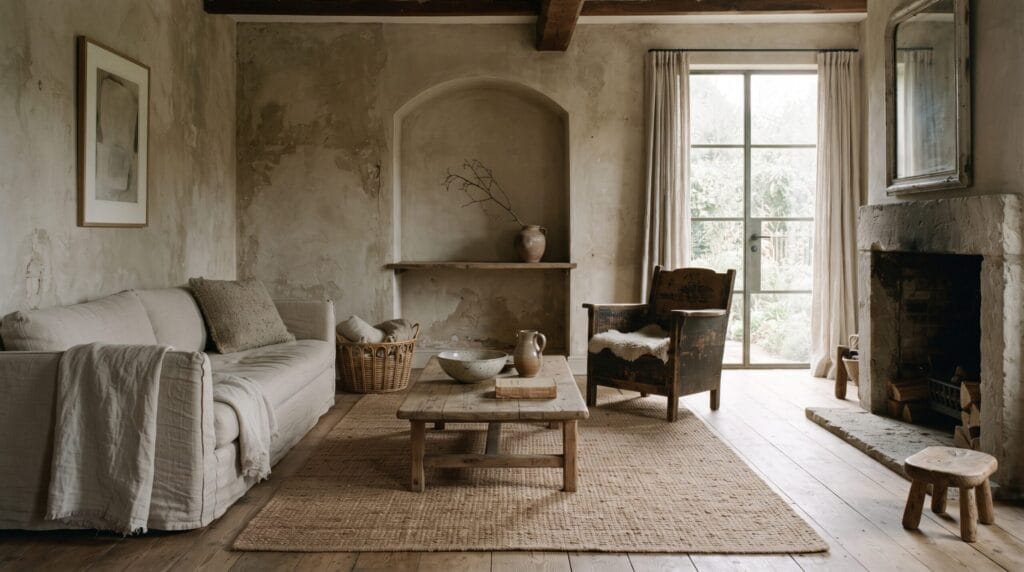
Wabi-sabi values imperfection, age, natural variation, and simplicity.
Key Characteristics
- Uneven surfaces
- Weathered materials
- Handmade objects
- Natural patina
- Muted colors
- Simple forms
- Imperfect symmetry
Materials
Use:
- Rough plaster
- Aged wood
- Linen
- Stone
- Handmade pottery
- Woven fibers
Furniture Direction
Furniture can feel slightly irregular or handcrafted.
Decor Approach
A single vessel with a visible handmade texture may become the room’s focal point.
Why It Feels Calm
Wabi-sabi reduces the pressure for everything to look perfectly new or identical.
Important Distinction
Do not confuse intentional imperfection with poor maintenance. Damaged or unsafe objects are not automatically wabi-sabi.
8. Mediterranean Minimalism
Mediterranean minimalism combines restrained interiors with warm regional materials.
Key Characteristics
- Limewashed or plaster-like walls
- Arches
- Stone
- Warm wood
- Linen
- Handmade tile used selectively
- Strong daylight
Color Palette
Use:
- Chalk white
- Warm cream
- Sand
- Terracotta
- Olive
- Natural wood
- Muted blue accents
Furniture Direction
Choose simple furniture with natural materials and relaxed proportions.
Decor Approach
Use a few objects with craft value:
- Ceramic bowl
- Woven basket
- Olive branches
- Linen curtains
- Clay vessel
Best For
This style works beautifully in homes with strong natural light.
Common Mistake
Avoid filling the room with coastal symbols. Mediterranean minimalism is more about materials and light than decorative themes.
9. Industrial Minimalism
Industrial minimalism uses architectural materials but edits them carefully.
Key Characteristics
- Concrete
- Steel
- Dark metal
- Exposed structure
- Large windows
- Simple furniture
- Limited decor
Color Palette
- Concrete gray
- Black
- Charcoal
- Brown
- Natural wood
- Off-white
Furniture Direction
Use simple, strong pieces that complement rather than compete with the architecture.
How to Keep It Comfortable
Balance harder materials with:
- Wool rugs
- Linen curtains
- Upholstered seating
- Warm wood
- Soft lighting
Best For
Industrial minimalism works especially well in lofts, converted buildings, and contemporary spaces with exposed architectural elements.
Common Mistake
Too much black metal and concrete can make the room feel commercial.
10. Quiet-Luxury Minimalism
Quiet-luxury minimalism focuses on material quality, proportion, and craftsmanship rather than visible status symbols.
Among minimalist interior design styles, it is one of the most refined and subtle.
Key Characteristics
- Tailored furniture
- Natural stone
- Fine wood
- Soft textiles
- Custom-looking details
- Hidden storage
- Restrained color
- Few but substantial objects
Color Palette
Use:
- Ivory
- Mushroom
- Camel
- Warm gray
- Walnut
- Deep brown
- Soft black
Furniture Direction
Choose timeless forms and durable materials.
The room should feel considered rather than trendy.
Decorative Approach
Use a small number of high-impact elements:
- Large artwork
- Sculptural lamp
- Stone table
- Handmade vessel
- High-quality rug
What Makes It Feel Luxurious?
Scale, finish, material consistency, and careful spacing matter more than expensive brand names.
Minimalist Interior Design Styles Comparison Table
| Style | Main Feeling | Key Materials | Color Direction | Best For |
| Warm minimalism | Soft and inviting | Oak, linen, wool, plaster | Cream, beige, taupe | Living rooms, bedrooms |
| Scandinavian | Light and functional | Pale wood, cotton, ceramic | White, gray, muted accents | Apartments, small homes |
| Japandi | Quiet and crafted | Wood, paper, stone, linen | Mushroom, stone, charcoal | Calm whole-home schemes |
| Soft contemporary | Refined and comfortable | Upholstery, stone, glass | Greige, cream, brown | Modern living areas |
| Organic minimalism | Natural and tactile | Wood, stone, clay | Sand, olive, earth tones | Relaxed modern homes |
| Minimalist modern | Crisp and architectural | Glass, steel, concrete | White, gray, black | New builds, offices |
| Wabi-sabi | Imperfect and soulful | Aged wood, plaster, pottery | Muted earth tones | Bedrooms, quiet spaces |
| Mediterranean | Sun-washed and warm | Plaster, stone, linen | Cream, terracotta, olive | Bright homes |
| Industrial | Urban and structured | Steel, concrete, wood | Gray, black, brown | Lofts, studios |
| Quiet luxury | Refined and timeless | Stone, fine wood, wool | Ivory, camel, walnut | Premium interiors |
How to Mix Minimalist Interior Design Styles
You do not have to use only one style.
Compatible combinations include:
Japandi + Warm Minimalism
Use Japandi furniture with warmer textiles and softer lighting.
Scandinavian + Organic Minimalism
Combine pale woods with natural stone, plants, and woven textures.
Minimalist Modern + Quiet Luxury
Keep the architecture crisp while introducing better materials and tailored furniture.
Mediterranean + Wabi-Sabi
Use textured plaster, handmade pottery, aged wood, and warm neutral colors.
Mixing Rule
Choose one dominant style and one supporting influence.
A room becomes confusing when every furniture piece represents a different design philosophy.
How to Build a Calm Minimalist Color Palette
A minimalist palette does not have to be white.
Start With a Base
Choose:
- Warm white
- Cream
- Pale gray
- Greige
- Soft beige
Add a Secondary Tone
Choose:
- Taupe
- Olive
- Clay
- Brown
- Charcoal
- Muted blue
Add a Small Accent
Use black, dark wood, brass, or another stronger tone sparingly.
Repeat the Palette
Repeat colors in textiles, artwork, and objects so the room feels connected.
Minimalist Furniture Rules
Prioritize Scale
Furniture should fit the room.
Choose Strong Silhouettes
One well-shaped chair can provide more character than several accessories.
Keep Pathways Clear
Minimalism feels calm when movement through the room is easy.
Use Closed Storage Strategically
Store visual clutter while keeping frequently used items accessible.
Avoid Furniture Sets
A coordinated room does not require every piece to match exactly.
Texture Is Essential in Minimalist Interiors
Without texture, minimal rooms can feel flat.
Layer
- Linen curtains
- Wool rug
- Wood grain
- Stone
- Ceramic
- Woven baskets
- Soft upholstery
Contrast Smooth and Rough
For example:
- Smooth plaster wall + rough wood table
- Linen sofa + stone side table
- Pale wood cabinet + handmade ceramic
Texture creates depth without adding clutter.
Minimalist Lighting Design
Lighting strongly affects whether minimalism feels warm or severe.
Use Multiple Sources
Combine:
- Ceiling light
- Floor lamp
- Table lamp
- Wall light
- Accent lighting
Choose Simple Fixtures
Minimalist lighting can still be sculptural, but it should support the room rather than dominate it.
Use Dimmers When Appropriate
Adjustable lighting helps a room transition from daytime function to evening comfort.
Minimalist Decor Without Making the Room Feel Empty
Use fewer objects with stronger scale.
Good Choices
- Large artwork
- One substantial vase
- Stack of books
- Sculptural bowl
- Plant
- Textile wall piece
- Handmade ceramic
Group Small Items
If several small objects are necessary, group them on a tray or shelf.
Also Read: 30 Living Room Ideas for a Comfortable and Stylish Home
Common Minimalist Interior Design Mistakes
Removing Too Much
A room still needs comfort, function, and personality.
Making Everything White
Minimalism can use warm neutrals, darker tones, and natural colors.
Buying Generic Minimalist Decor
Avoid filling a room with objects simply because they are beige or simple.
Ignoring Storage
Visible clutter quickly weakens a minimalist design.
Choosing Furniture That Is Too Small
Tiny furniture can make a room feel fragmented.
Using Only One Texture
A room of smooth white surfaces often feels flat.
Copying Trends Too Literally
Use trends as references, then adapt them to your architecture and lifestyle.
Minimalist Interior Design Styles Checklist
Use this minimalist interior design styles checklist:
- One primary style has been chosen.
- The color palette is limited and consistent.
- Furniture fits the scale of the room.
- Pathways are clear.
- Storage supports everyday routines.
- Surfaces are not overloaded.
- Natural or tactile materials add depth.
- Lighting comes from more than one source.
- Artwork is correctly scaled.
- Decorative objects have a clear role.
- The room includes some personal character.
- Empty space is intentional.
- Colors repeat across the room.
- Materials feel coordinated.
- Comfort has not been sacrificed for appearance.
Frequently Asked Questions
What Are the Most Popular Minimalist Interior Design Styles?
Common options include warm minimalism, Scandinavian minimalism, Japandi, organic minimalism, minimalist modern, wabi-sabi, and quiet-luxury minimalism.
Which Minimalist Style Feels the Warmest?
Warm minimalism, Japandi, organic minimalism, Mediterranean minimalism, and wabi-sabi generally use warmer colors and natural textures.
Is Scandinavian Design the Same as Minimalism?
No. Scandinavian design often uses minimalist principles, but it also emphasizes everyday comfort, light, practical furniture, and Nordic material traditions.
What Is Japandi Interior Design?
Japandi combines Japanese restraint, craftsmanship, and natural materials with Scandinavian simplicity and comfort.
How Do I Make a Minimalist Room Feel Cozy?
Use layered lighting, textiles, natural wood, rugs, curtains, tactile upholstery, and a few meaningful objects.
Can Minimalist Interiors Use Dark Colors?
Yes. Charcoal, black, walnut, deep brown, and muted green can work well when balanced with light, texture, and negative space.
Is Minimalism Good for Small Spaces?
Yes. Clear pathways, efficient storage, controlled color, and fewer furniture pieces can make compact spaces easier to use and visually calmer.
Conclusion
The best minimalist interior design styles are not about creating empty homes. They are about choosing what deserves attention.
Warm minimalism emphasizes comfort. Scandinavian interiors focus on light and function. Japandi values craftsmanship and quiet restraint. Organic minimalism uses natural form and texture. Wabi-sabi embraces imperfection. Minimalist modern interiors celebrate architecture, while quiet-luxury minimalism focuses on subtle quality and proportion.
Choose the style that fits your home and lifestyle rather than copying a perfectly staged room. Begin with a clear palette, edit unnecessary furniture, improve storage, and layer natural materials and lighting.
A calm modern home should still feel personal. When every piece has a purpose and the room has enough visual space to breathe, minimalism becomes less about having less and more about living with greater intention.