
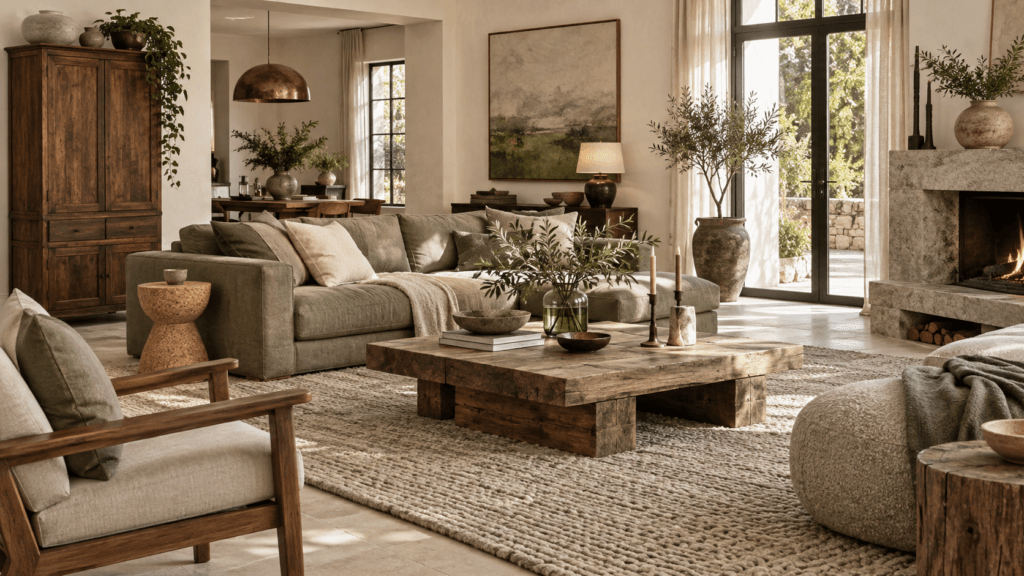
A more sustainable home does not have to look rustic, unfinished, or overly minimal. The best sustainable home decor materials combine long-lasting performance with natural texture, timeless color, and materials that can be repaired, reused, recycled, or sourced more responsibly.
The most important principle is durability. A material that lasts for decades, can be refinished, and remains useful through changing trends may be a better choice than a supposedly eco-friendly product that wears out quickly. This is why solid wood, wool, linen, stone, metal, cork, recycled glass, and well-made vintage furniture continue to work so well in sustainable interiors.
Material choice also affects the feeling of a room. Reclaimed timber adds warmth and history. Linen softens windows and bedding. Wool brings comfort underfoot. Cork adds quiet texture. Recycled glass creates light and color, while metal can provide structure and contrast. When these materials are selected carefully, sustainability and style support each other.
This guide explores practical sustainable home decor materials for furniture, textiles, flooring, lighting, accessories, storage, and room-by-room decorating. It also covers durability, maintenance, sourcing questions, budget priorities, common mistakes, and a final checklist for choosing materials that look beautiful and last.
What Makes a Home Decor Material Sustainable?
There is no single feature that makes every material sustainable. A better way to evaluate a product is to consider its entire useful life.
Durability
Long-lasting materials reduce how often items need to be replaced.
Repairability
Furniture that can be sanded, repaired, reupholstered, or refinished can remain useful much longer.
Responsible Sourcing
Look for credible sourcing information, including recognized forestry or material certifications where relevant.
Recycled or Reclaimed Content
Reclaimed wood, recycled glass, and recycled metal can reduce demand for newly extracted materials.
Lower-Toxicity Finishes
Low-VOC paints, finishes, and adhesives may help reduce unnecessary indoor chemical exposure.
End-of-Life Potential
Materials that can be reused, recycled, composted where appropriate, or safely repurposed may offer a better long-term path than difficult mixed-material products.
How to Compare Sustainable Home Decor Materials Before Buying
Before choosing a material, ask several practical questions.
Ask the Seller or Manufacturer
- What is the material made from?
- Where was it sourced?
- Is any recycled or reclaimed content used?
- Is the product repairable?
- Can the cover, cushion, or hardware be replaced?
- What finish or adhesive is used?
- How should it be maintained?
- What is the expected lifespan?
- Can the material be recycled or reused later?
The strongest sustainability claims are specific and verifiable rather than vague.
1. Reclaimed Wood
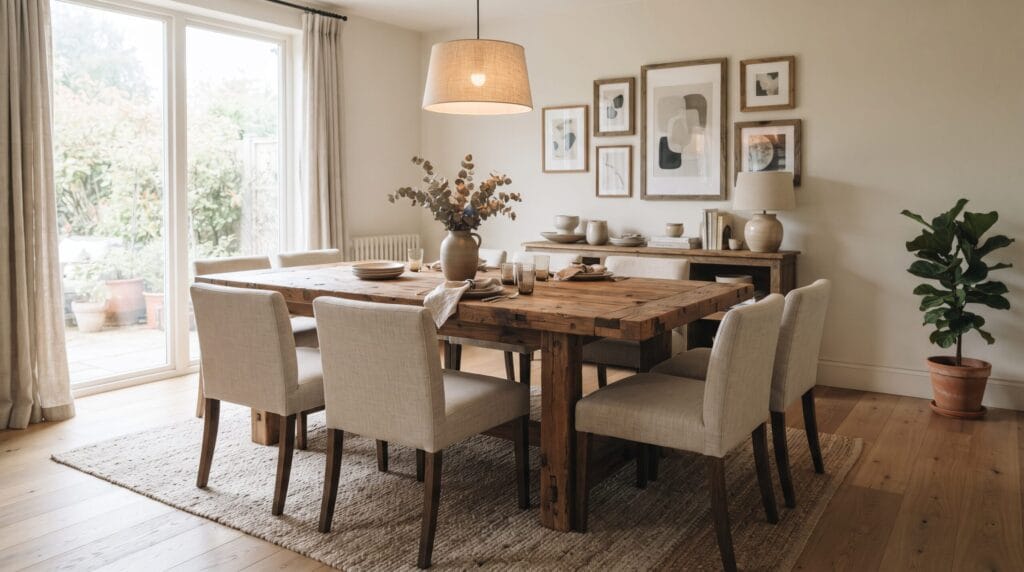
Reclaimed wood is one of the most visually distinctive sustainable home decor materials.
Common Uses
- Dining tables
- Coffee tables
- Shelves
- Benches
- Consoles
- Wall panels
Why It Works
Existing timber is reused rather than discarded, and the material often has unique marks, grain, nail holes, and patina.
Design Advantage
Reclaimed wood can make a new interior feel collected and established.
Check Before Buying
Confirm that the wood has been properly cleaned, dried, treated where necessary, and made structurally suitable for its intended use.
2. FSC-Certified or Responsibly Sourced Wood
New wood can still be a strong option when sourcing is transparent.
Good Uses
- Furniture
- Cabinetry
- Shelving
- Flooring
- Frames
What to Look For
Recognized forest-management certification can help provide more information about sourcing.
Durability Matters
Choose solid, repairable construction when possible.
Why It Works
Well-made wood furniture can be refinished many times and remain useful for decades.
3. Bamboo
Bamboo can create a light, modern look.
Use It For
- Small furniture
- Storage
- Blinds
- Decorative trays
- Screens
- Accessories
Design Style
Bamboo works especially well in:
- Scandinavian interiors
- Japandi spaces
- Boho homes
- Tropical-inspired rooms
- Minimal interiors
Check Construction
Quality varies significantly.
Look at the adhesive, finish, joinery, and overall durability rather than assuming every bamboo product performs the same way.
4. Cork
Cork is one of the most versatile sustainable home decor materials for warm modern interiors.
Use Cork For
- Flooring
- Wall panels
- Pinboards
- Trays
- Side tables
- Decorative objects
Visual Qualities
Cork adds:
- Warmth
- Natural pattern
- Soft texture
- Acoustic softness
Practical Benefit
It can feel comfortable underfoot and works well in rooms where a softer surface is useful.
Maintenance
Follow the manufacturer’s recommendations because sealing and moisture resistance vary by product.
5. Linen
Linen is a timeless textile that suits many interior styles.
Use It For
- Curtains
- Cushion covers
- Bedding
- Table linens
- Slipcovers
Why It Works
Linen has a relaxed texture that becomes softer with use.
Good Colors
- Ivory
- Natural flax
- Stone
- Sage
- Dusty blue
- Warm gray
Design Advantage
Linen does not need to look perfectly pressed to feel elegant.
6. Hemp Textiles
Hemp can provide strong, natural-looking textile options.
Use It For
- Cushion covers
- Curtains
- Upholstery blends
- Throws
- Table textiles
Look and Feel
Hemp often has an earthy texture that works well in organic, minimalist, rustic, and boho interiors.
Buying Tip
Check fiber blends and care instructions.
A product labeled with hemp may also contain other fibers, which affects performance and end-of-life options.
7. Wool
Wool is one of the strongest sustainable home decor materials for rugs and soft furnishings because quality wool can wear well for years.
Use Wool For
- Area rugs
- Throws
- Blankets
- Upholstery
- Felt accessories
Why It Works
Wool adds:
- Warmth
- Texture
- Resilience
- Acoustic softness
Choose Quality Over Trend
A neutral wool rug in the correct size can outlast several inexpensive trend-driven replacements.
Care
Vacuum and clean according to the manufacturer’s instructions.
8. Organic or Responsibly Produced Cotton
Cotton is widely used in interiors.
Use It For
- Bedding
- Towels
- Cushion covers
- Curtains
- Table linens
Look For
Clear information about fiber sourcing, processing, and certification when sustainability is a priority.
Best Strategy
Choose versatile colors and durable weaves that can stay in use for years.
9. Recycled Glass
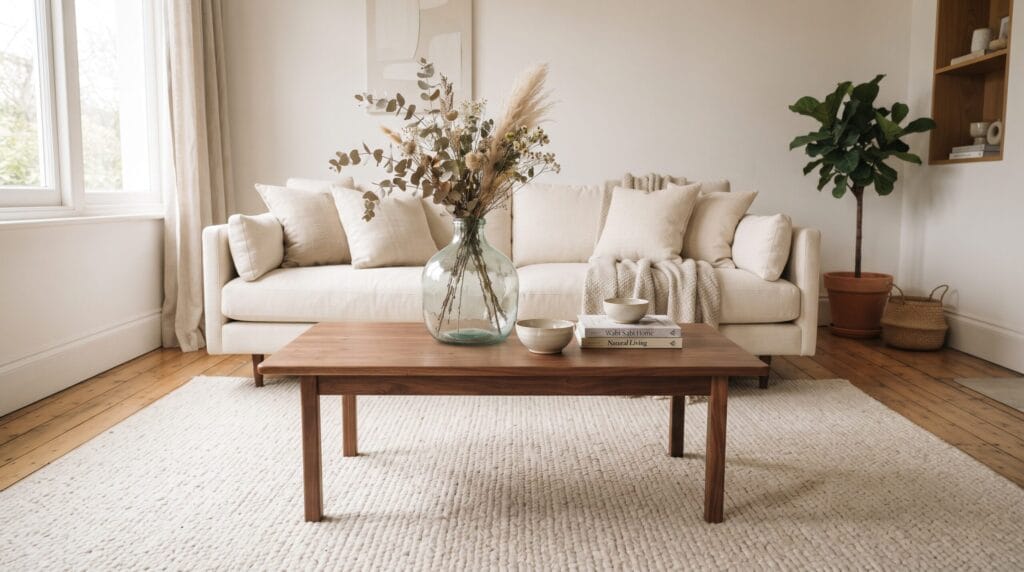
Recycled glass brings color and light into a room.
Use It For
- Vases
- Bowls
- Lamps
- Glassware
- Decorative objects
- Tiles
Why It Works
Glass can create a refined finish without adding visual heaviness.
Color Direction
Try:
- Clear
- Amber
- Smoke
- Pale green
- Deep blue
Styling Tip
Use one or two larger glass objects rather than many tiny accessories.
10. Recycled Metal
Metal can be durable and highly reusable.
Use It For
- Lighting
- Table bases
- Shelving frames
- Hardware
- Mirrors
- Decorative objects
Finishes
Try:
- Brushed steel
- Blackened metal
- Brass-tone finishes
- Bronze-tone finishes
Why It Works
Metal provides contrast against wood, linen, cork, and wool.
Buying Tip
Look for clear recycled-content information when available rather than relying only on marketing language.
11. Natural Stone
Stone is durable and visually timeless.
Use It For
- Tabletops
- Trays
- Side tables
- Flooring
- Fireplace surrounds
- Decorative objects
Common Looks
- Marble
- Travertine
- Slate
- Granite
- Limestone
Sustainability Consideration
Stone is heavy and extraction can be resource-intensive, so longevity, local sourcing where possible, and reuse are especially important.
Best Use
Choose stone when you expect to keep the piece for a long time.
12. Salvaged Stone and Tile
Reused architectural materials can create distinctive interiors.
Use
- Fireplace details
- Small flooring areas
- Tabletop accents
- Garden-room transitions
- Decorative surfaces
Why It Works
Salvaged materials keep existing resources in use.
Check Condition
Inspect for cracks, damage, and suitability for the intended installation.
13. Clay and Terracotta
Clay-based decor brings natural warmth.
Use It For
- Vases
- Planters
- Lamps
- Bowls
- Tiles
- Decorative objects
Color Direction
Clay works beautifully with:
- Cream
- Olive
- Walnut
- Sand
- Charcoal
Why It Works
Handmade pottery can add character without relying on synthetic decorative finishes.
14. Ceramic
Ceramic is useful because it can be both practical and decorative.
Use It For
- Lamps
- Tableware
- Vases
- Planters
- Bathroom accessories
Buy Fewer, Better Pieces
A substantial ceramic lamp or vase usually creates more impact than several small accessories.
Look for Repairability
Some damaged ceramics can be creatively repaired or repurposed rather than immediately discarded.
15. Rattan and Woven Plant Fibers
Woven materials add texture and warmth.
Use Them For
- Baskets
- Chair details
- Cabinet panels
- Lampshades
- Storage
Why They Work
They pair naturally with linen, wood, wool, and clay.
Quality Matters
Check the frame construction and weave tension.
A well-made woven chair is more sustainable than a fragile decorative version that needs early replacement.
16. Vintage and Secondhand Furniture
Existing furniture is one of the most effective sustainable home decor materials strategies because the product already exists.
Good Secondhand Finds
- Solid wood tables
- Dressers
- Sideboards
- Mirrors
- Chairs
- Cabinets
- Lamps in safe condition
Look Past the Finish
Scratches, outdated stain, and old hardware can often be changed.
Focus On
- Structure
- Proportion
- Joinery
- Storage
- Repairability
17. Reupholstered Furniture
A strong frame does not need to be discarded because fabric is worn.
Good Candidates
- Dining chairs
- Accent chairs
- Benches
- Ottomans
- Quality sofas
Benefits
Reupholstery can extend the useful life of furniture while letting you update color and texture.
Before Investing
Check whether the frame and springs are worth restoring.
Choose Durable Fabric
A longer-lasting upholstery fabric may be more practical than a delicate trend-driven option.
18. Recycled or Reclaimed Fabrics
Textile waste can sometimes be redirected into new home products.
Look For
- Recycled cotton
- Recycled wool blends
- Recycled polyester where appropriate
- Deadstock fabrics
- Reclaimed textile products
Best Uses
- Throws
- Rugs
- Cushion covers
- Upholstery
- Decorative textiles
Read the Label
Blends affect durability, care, and recyclability.
19. Low-VOC Paint and Finishes
Finishes matter as much as the main material.
Use Low-VOC Options For
- Walls
- Furniture
- Cabinets
- Trim
Why It Matters
Lower-VOC products may reduce some indoor emissions compared with higher-VOC alternatives.
Check Product Guidance
Follow manufacturer instructions for ventilation, application, drying, and curing.
20. Water-Based Wood Finishes
Water-based finishes can be useful for furniture and wood surfaces.
Use On
- Tables
- Shelves
- Cabinets
- Decorative wood pieces
Benefits
Depending on the product, they may offer lower odor and easier cleanup than some solvent-heavy finishes.
Important
Choose the finish based on the required durability, not only the label.
A dining table needs stronger protection than a decorative shelf.
21. Durable Leather or Leather Alternatives Chosen Carefully
Leather can be controversial from a sustainability perspective, so longevity and sourcing matter.
When Leather Can Make Sense
A durable, repairable leather chair or sofa that stays in use for decades may offer a long service life.
Alternatives
Consider:
- Durable woven upholstery
- Recycled-content fabrics
- Plant-fiber textiles
Avoid Assumptions
“Vegan” does not automatically mean low-impact, because some alternatives rely heavily on plastics.
Evaluate the actual material composition.
22. Recycled Plastic Used Selectively
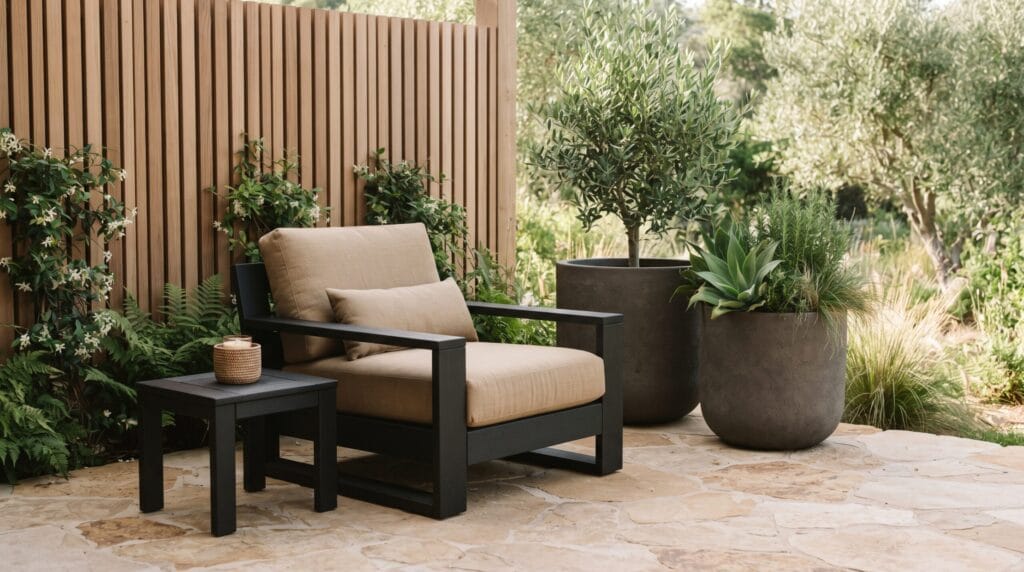
Plastic is not usually the first material associated with timeless interiors, but recycled plastic can be useful in certain products.
Good Uses
- Outdoor furniture
- Storage
- Durable planters
- Utility accessories
What Matters
Look for:
- Recycled content
- Long expected lifespan
- Repairable construction
- Clear end-of-life guidance
Avoid Disposable Decor
The best use is durable function rather than short-lived novelty products.
23. Natural Fiber Rugs
Natural fiber rugs can add texture with a simple palette.
Materials
- Jute
- Sisal
- Seagrass
- Wool
Best Uses
Choose based on room conditions.
Some fibers handle moisture, stains, and heavy wear differently.
Layering
A natural fiber rug can serve as a neutral base under a smaller vintage rug.
24. Reclaimed or Recycled Decorative Accessories
Small decor can also follow a reuse-first approach.
Look For
- Vintage glass
- Secondhand ceramics
- Reclaimed wood bowls
- Repurposed metal trays
- Antique frames
Why It Works
The room gains character while existing objects remain in circulation.
Styling Rule
Use fewer pieces with stronger form.
25. Buy for Longevity Before Buying for Trend
The final and most important of these sustainable home decor materials principles is longevity.
Before Buying, Ask
- Will I still like this in five years?
- Can it be repaired?
- Can the finish be renewed?
- Is the material durable enough for the room?
- Can the piece move to another room later?
- Is the construction strong?
- Does the manufacturer explain the material clearly?
Why It Works
The most sustainable decor is often the decor you do not need to replace.
Sustainable Home Decor Materials Comparison
| Material | Best Uses | Main Strength | Main Consideration |
| Reclaimed wood | Furniture, shelves | Character and reuse | Condition and treatment |
| Certified wood | Furniture, flooring | Durable and repairable | Verify sourcing |
| Cork | Floors, accessories | Warm and lightweight | Moisture protection varies |
| Linen | Curtains, bedding | Timeless texture | Wrinkles naturally |
| Wool | Rugs, throws | Durable and resilient | Care requirements |
| Recycled glass | Vases, tiles | Light and color | Can be breakable |
| Recycled metal | Lighting, hardware | Strong and recyclable | Verify recycled content |
| Stone | Tables, flooring | Very durable | Weight and extraction impact |
| Clay/ceramic | Decor, lamps | Natural texture | Breakability |
| Vintage furniture | All rooms | Extends product life | Condition varies |
Sustainable Home Decor Materials by Room
| Room | Best Material Priorities | High-Impact Choice |
| Living room | Wool, wood, linen, vintage furniture | Durable sofa and rug |
| Bedroom | Linen, cotton, wool, wood | Bedding and solid bed frame |
| Dining room | Solid or reclaimed wood, ceramic, linen | Long-lasting table |
| Kitchen | Wood, metal, ceramic, stone | Durable surfaces and storage |
| Bathroom | Stone, ceramic, metal, cotton | Long-lasting fixtures and textiles |
| Entryway | Wood, wool, metal, woven fiber | Repairable storage furniture |
| Home office | Wood, metal, wool, secondhand furniture | Durable desk and chair |
Sustainable Materials by Budget
| Budget | Smart Priorities | Example |
| $0 | Reuse and rearrange | Repurpose existing decor |
| Under $100 | Secondhand accessories | Ceramic, glass, baskets |
| $100-$500 | Rugs, curtains, small furniture | Wool blend rug or vintage table |
| $500-$2,000 | Major furniture | Solid wood table or quality chair |
| $2,000+ | Long-term surfaces | Flooring, custom cabinetry, stone |
Costs vary by location, material quality, sourcing, labor, and whether pieces are new, reclaimed, or secondhand.
How to Make Sustainable Materials Look More Luxurious
Use Fewer Materials
Repeat three or four main materials throughout the room.
Improve Scale
Choose larger rugs, mirrors, lamps, and artwork.
Mix Rough and Refined Texture
Pair reclaimed wood with linen, stone with wool, or recycled glass with metal.
Use a Controlled Palette
Natural materials look more intentional when colors repeat.
Restore Before Replacing
Refinished wood and reupholstered furniture can look highly custom.
Leave Space
Natural materials need visual breathing room to show texture and grain.
Sustainable Home Decor Materials for Small Spaces
Small homes benefit from durable multifunctional pieces.
Prioritize
- Solid wood storage bench
- Tall cabinet
- Wool rug
- Linen curtains
- Recycled glass lighting
- Vintage mirror
Choose Multipurpose Furniture
One high-quality storage piece can replace several small units.
Avoid Overbuying
A small home is usually more sustainable when it contains fewer, better pieces.
Sustainable Home Decor Materials for Renters
Renters can prioritize portable materials.
Choose
- Wool or natural-fiber rugs
- Linen curtains
- Solid wood furniture
- Vintage mirrors
- Ceramic lamps
- Baskets
- Recycled-glass accessories
Avoid Permanent Waste
Invest in pieces that can move to a future home.
Check the Lease Before
Painting, drilling, changing fixtures, or applying permanent finishes.
Common Sustainable Decor Mistakes
Assuming “Natural” Always Means Sustainable
Extraction, processing, transport, durability, and sourcing all matter.
Buying Trend-Driven Eco Products
A sustainable label does not help if the item is quickly discarded.
Ignoring Durability
Short lifespan creates repeat purchasing.
Ignoring Repairability
Look for replaceable parts and repairable construction.
Trusting Vague Green Claims
Prefer specific information about materials, sourcing, recycled content, and certifications.
Replacing Useful Furniture Too Early
The most sustainable option may be the furniture you already own.
Buying Too Many Decorative Objects
Sustainability and visual calm often improve together when you buy less.
Sustainable Home Decor Materials Checklist
Use this sustainable home decor materials checklist:
- Existing items are reused before new ones are purchased.
- Durability is considered before trend.
- Furniture can be repaired or refinished.
- Wood sourcing is clearly explained.
- Reclaimed materials are considered.
- Recycled content is verified where possible.
- Linen, wool, hemp, and cotton are selected for appropriate uses.
- Fabric blends are checked.
- Finishes and adhesives are considered.
- Stone is chosen for longevity.
- Metal pieces are durable and repairable.
- Vintage furniture is structurally sound.
- Upholstery can be renewed.
- Materials suit the room conditions.
- Care instructions are realistic for daily life.
- Products are not purchased only because of vague green marketing.
- Portable items are prioritized for rentals.
- Small spaces use fewer multifunctional pieces.
- End-of-life reuse or recycling is considered.
- The home feels beautiful without relying on constant replacement.
Frequently Asked Questions
What Are the Best Sustainable Home Decor Materials?
Reclaimed or responsibly sourced wood, cork, linen, hemp, wool, recycled glass, recycled metal, durable stone, clay, ceramic, and well-made vintage furniture can all be strong options depending on the application.
Is Reclaimed Wood Better Than New Wood?
Reclaimed wood keeps existing material in use, but condition and suitability matter. Responsibly sourced new wood can also be a durable, repairable choice.
Is Bamboo Always Sustainable?
Not automatically. Bamboo can be a useful material, but adhesives, manufacturing, transport, finish, and construction quality all affect the overall product.
What Is the Most Sustainable Way to Decorate?
Reuse what you already own first. Then consider secondhand, repaired, refinished, reclaimed, and durable products before buying new decorative items.
Which Sustainable Materials Are Best for Rugs?
Wool, jute, sisal, seagrass, recycled fibers, and other durable materials can work, but the best choice depends on traffic, moisture, cleaning needs, and comfort.
How Can I Tell if a Sustainable Decor Claim Is Real?
Look for specific material percentages, sourcing information, recognized certifications, manufacturing details, durability guidance, and clear end-of-life information.
Can Sustainable Home Decor Look Modern and Luxurious?
Yes. Natural stone, reclaimed wood, linen, wool, recycled glass, metal, ceramic, and vintage furniture can create refined modern interiors when the palette and scale are well controlled.
Conclusion
The best sustainable home decor materials balance environmental considerations with durability, beauty, repairability, and everyday function.
Start by keeping useful furniture in service. Refinish wood, reupholster quality frames, reuse existing decor, and shop secondhand before replacing everything. When new materials are needed, look for transparent sourcing, durable construction, appropriate certifications, recycled or reclaimed content, and finishes that suit the application.
Reclaimed wood, cork, linen, hemp, wool, recycled glass, recycled metal, stone, clay, ceramic, woven fibers, and vintage furniture can all create a warm, polished interior.
Most importantly, choose materials that fit your real life. A product that looks sustainable but cannot handle daily use may need replacement too quickly.
When durability, sourcing, maintenance, repairability, and timeless design work together, sustainable decorating becomes less about buying more eco-labeled products and more about creating a home that remains useful and beautiful for years.
Also Read: “25 Cozy Home Decor Ideas for a Warm and Inviting Space“