Also Read: “25 Cozy Home Decor Ideas for a Warm and Inviting Space“
Japandi Interior Ideas That Feel Calm and Timeless
Introduction
The most successful Japandi interior ideas create quiet without making a home feel empty. Japandi design blends the restraint and natural beauty associated with Japanese interiors with the warmth, comfort, and practicality of Scandinavian spaces. The result is a home that feels balanced, useful, and deeply calming.
Japandi is often described as minimalist, but it is not about removing personality or living with almost nothing. It is about choosing fewer, better objects and giving each one enough space to be appreciated. Natural materials, soft contrast, low furniture, warm light, and visible craftsmanship create an atmosphere that feels refined without becoming formal.
This guide explains how to apply Japandi principles throughout the home. You will learn how to build the right color palette, select furniture and materials, reduce visual noise, and create rooms that remain timeless long after short-lived decorating trends have changed.
What Is Japandi Interior Design?
Japandi combines two design traditions that share a respect for simplicity, function, nature, and craftsmanship.
The Japanese influence brings wabi-sabi, negative space, low profiles, organic irregularity, and an appreciation for materials that age gracefully. The Scandinavian influence adds hygge, pale woods, practical comfort, soft textiles, and bright, livable interiors.
Together, these ideas create rooms that are:
- Simple but not sterile
- Warm but not cluttered
- Natural but still polished
- Comfortable without excessive decoration
- Modern while remaining connected to traditional craft
The best Japandi interior ideas avoid copying visual symbols. Instead, they apply deeper principles: thoughtful use, honest materials, visual balance, and respect for the daily rituals that take place in the home.
Core Principles Behind Calm Japandi Interior Ideas
| Principle | How It Appears | Why It Feels Calm |
|---|---|---|
| Simplicity | Limited furniture and edited surfaces | Reduces visual competition |
| Function | Every object has a clear purpose | Makes daily routines easier |
| Natural materials | Wood, linen, wool, clay, stone | Adds warmth and sensory depth |
| Negative space | Open walls, floors, and surfaces | Allows the eye to rest |
| Craftsmanship | Handmade and durable objects | Creates character without clutter |
| Soft contrast | Warm neutrals with charcoal accents | Adds definition without harshness |
| Connection to nature | Daylight, plants, organic forms | Creates a restorative atmosphere |
25 Japandi Interior Ideas That Feel Calm and Timeless
1. Start With a Warm Neutral Foundation
Use warm white, ivory, oatmeal, sand, mushroom, greige, or pale clay as the main background. These colors reflect light while feeling softer than bright white.
Choose one dominant neutral and support it with two or three related tones. Japandi rooms feel cohesive because the palette changes gently rather than jumping between unrelated colors.
2. Add Controlled Dark Contrast
Charcoal, ink black, deep brown, or muted forest green can give a pale room structure. Use darker tones on a slim chair frame, pendant, vase, artwork, or cabinet hardware.
The contrast should guide the eye rather than dominate the room. A few dark lines often make natural wood and light textiles appear warmer.
3. Choose Natural Wood With Visible Grain
Oak, ash, beech, walnut, and other natural woods are central to Japandi interior ideas. Select finishes that allow the grain to remain visible instead of covering it with thick paint or glossy coatings.
Mixing wood tones can work when the undertones relate. Use one primary wood across larger furniture and introduce a darker or lighter tone through smaller accents.
4. Select Low-Profile Furniture
Low sofas, platform beds, benches, and simple coffee tables create a grounded, horizontal feeling. They also leave more open wall area, which can make a room appear larger and quieter.
Comfort still matters. Test seat depth, support, and table height before buying. Japandi furniture should be calm in appearance and practical in daily use.
5. Favor Clean, Softened Lines
Choose furniture with simple silhouettes, but avoid making every piece sharply geometric. Rounded corners, curved chair backs, oval tables, and tapered legs soften the overall composition.
This balance between structure and organic form prevents minimalism from feeling rigid.
6. Use Linen, Wool, and Cotton Textiles
Natural textiles add warmth without visual heaviness. Linen curtains, wool rugs, cotton throws, and woven cushion covers create subtle texture in a limited palette.
Select fabrics that show their weave and feel pleasant to touch. Slight wrinkles and irregular fibers support the relaxed, imperfect quality of Japandi design.
7. Introduce Handmade Ceramics
A hand-thrown bowl, cup, or vase brings character through small variations in shape and glaze. Matte, speckled, and earthy finishes work especially well.
Display ceramics in small groups or as a single focal object. Their impact comes from shape and material, not from filling every shelf.
8. Keep Surfaces Intentionally Edited
Leave portions of tables, counters, and shelves empty. Group useful or meaningful objects rather than distributing accessories across every available surface.
A simple arrangement might include a lamp, a ceramic vessel, and one book. Negative space allows each object to register clearly.
9. Hide Everyday Visual Clutter
Use drawers, cabinets, baskets, and concealed cable management for practical items. Closed storage is essential because Japandi rooms depend on visual calm.
Do not confuse hidden storage with keeping unnecessary possessions. Declutter first, then create accessible homes for the items that remain.
10. Make Storage Part of the Architecture
Built-in cabinets, wall-to-wall low units, recessed shelves, and simple wardrobes can feel quieter than many separate storage pieces.
When built-ins are not possible, choose freestanding storage with flat fronts, minimal hardware, and proportions that align with the room.
11. Let Natural Light Lead the Design
Keep windows open visually and use lightweight curtains or simple blinds. Arrange seating and work areas to benefit from daylight.
Avoid blocking windows with tall furniture. Japandi interiors often feel peaceful because changing natural light becomes part of the room’s character.
12. Layer Warm Artificial Lighting
Combine a paper pendant, shaded table lamp, floor lamp, and subtle wall light instead of relying on one bright ceiling fixture.
Choose warm light and use dimmers where possible. Pools of light make a simple room feel intimate while preserving the gentle contrast central to Japandi interior ideas.
13. Add a Paper or Fabric Lantern
Lantern-style lighting creates a soft glow and a sculptural focal point. Rice-paper forms are especially effective because they appear light even at a generous scale.
Balance a rounded lantern with more linear furniture. The contrast adds interest without requiring strong color.
14. Use One or Two Organic Sculptural Pieces
A curved wooden stool, stone bowl, branch arrangement, or irregular vessel can interrupt straight architectural lines.
Choose objects with strong silhouettes and give them space. One distinctive form has more impact than many small decorations.
15. Bring Nature Indoors Sparingly
Use one tall plant, a small bonsai-inspired form, a simple branch, or a restrained arrangement of greenery. Plants should support the composition rather than turn the room into a dense indoor garden.
Select containers in clay, stone, woven fiber, or muted ceramic to maintain the natural palette.
16. Choose Art With Quiet Visual Energy
Abstract ink work, muted landscapes, handmade prints, textile art, or minimalist photography can complement a Japandi room.
Use a large piece or a carefully spaced pair instead of an overcrowded gallery wall. Natural frames and generous margins reinforce visual breathing room.
17. Embrace Wabi-Sabi Imperfection
Wabi-sabi values age, irregularity, and natural change. A weathered bench, repaired ceramic, uneven glaze, or handwoven textile can add depth.
Imperfection should feel authentic rather than manufactured. Choose objects that show honest use or craftsmanship, not artificial distressing added only for appearance.
18. Create a Grounded Living Room Layout
Arrange seating around conversation, daylight, or a calm focal point. Keep the center open enough for movement and avoid placing unnecessary furniture against every wall.
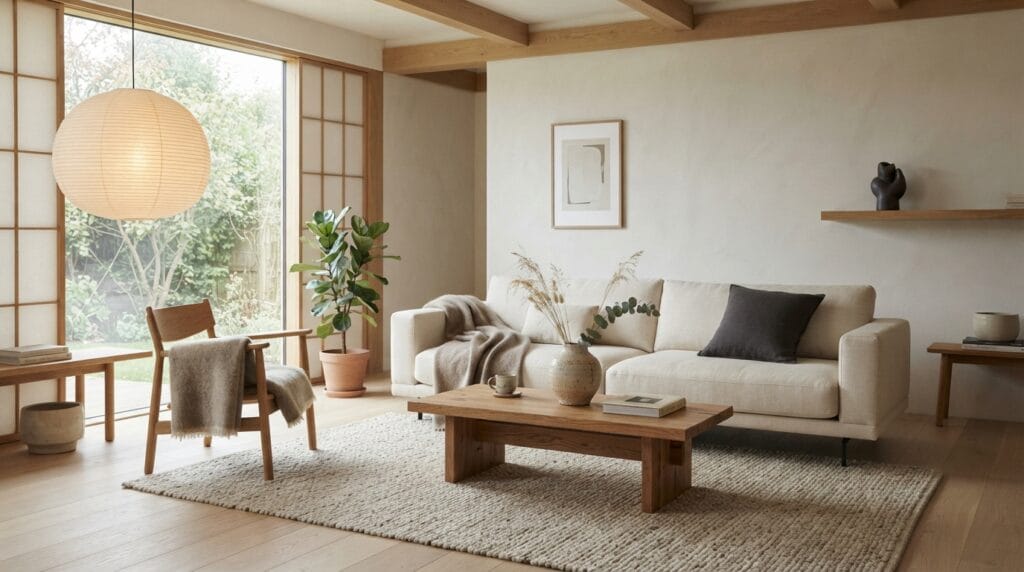
A low sofa, woven rug, timber table, and one light chair can create a complete living room without crowding the floor.
19. Design a Quiet Japandi Bedroom
Use a low bed, simple bedding, soft curtains, and uncluttered bedside surfaces. Layer cream, taupe, and muted brown through texture instead of dramatic pattern.
Keep electronics and work items contained. The bedroom should support rest through low contrast, warm lighting, and visual order.
20. Simplify the Dining Area
Choose a solid wood table with a clear silhouette and comfortable chairs that show craftsmanship. Avoid an oversized centerpiece that interferes with conversation.
A ceramic bowl, branch arrangement, or small pendant cluster can provide enough decoration. The beauty should come primarily from materials and proportion.
21. Warm Up the Kitchen With Natural Details
Balance simple cabinetry with wooden cutting boards, linen towels, handmade ceramics, and a small lamp. Keep useful objects visible only when they contribute to a calm arrangement.
Open shelving should be limited and carefully edited. Uniform everyday dishes are easier to style than many unrelated items.
22. Create a Spa-Like Bathroom
Use wood accents, stone, warm white towels, simple containers, and soft lighting. Transfer everyday products into a closed cabinet or a small set of consistent dispensers.
A stool, woven basket, or single branch can add warmth without reducing the room’s functional clarity.
23. Keep the Entryway Simple and Useful
A Japandi entry may include a slim bench, wall hooks, mirror, tray, and concealed shoe storage. Each item should solve a real need.
Leave enough open space to enter comfortably. A calm entrance makes the transition from outside to inside feel more intentional.
24. Use Rugs to Define Without Overdecorating
Choose plain or subtly textured rugs in wool, jute, or natural blends. The rug should connect the furniture while remaining quieter than the room’s architecture and craftsmanship.
Select a generous size. A rug that is too small can fragment the layout and undermine the grounded feeling.
25. Buy Less and Choose for Longevity
The most timeless Japandi interior ideas depend on restraint. Wait for furniture and objects that fit the space, function well, and can age gracefully.
Prioritize durable construction, repairable materials, and forms that are not tied to a short trend cycle. A slowly built room often feels more authentic and coherent.
How to Build a Japandi Color Palette
Start with three levels of color:
- A light foundation such as warm white, cream, or pale greige
- A natural middle tone such as oak, camel, taupe, or muted clay
- A grounding accent such as charcoal, walnut, black, or deep green
Then repeat each level at least twice. For example, warm white may appear on walls and curtains, oak on furniture and frames, and charcoal on lighting and artwork.
Patterns should remain subtle. Fine stripes, woven checks, irregular hand-drawn marks, and tonal textures usually work better than high-contrast prints.
Also Read: [Brand Mood Board Ideas: How to Create + Free Templates](https://dmletterstudio.com/brand-mood-board-ideas/)
Japandi Materials and Where to Use Them
| Material | Best Applications | Effect |
|---|---|---|
| Light oak or ash | Tables, shelving, beds, cabinetry | Bright warmth and visible grain |
| Walnut or dark timber | Accent furniture, frames, details | Grounding contrast |
| Linen | Curtains, bedding, cushions | Relaxed texture and softness |
| Wool | Rugs, throws, upholstery | Comfort and acoustic warmth |
| Clay and ceramic | Vases, bowls, lamps | Handmade character |
| Stone | Tables, trays, bathroom details | Quiet visual weight |
| Paper | Lanterns, shades, screens | Soft diffusion and lightness |
| Rattan or woven fiber | Baskets, chair details, storage | Natural texture |
Japandi Interior Ideas for Small Spaces
Japandi works especially well in small homes because it values function and visual breathing room.
- Choose furniture with more than one purpose
- Use low pieces to preserve open wall area
- Install concealed vertical storage
- Keep the floor visible around furniture
- Use one large artwork instead of many small frames
- Select a light, warm palette with limited dark accents
- Repeat materials to create continuity between zones
In a studio apartment, use a rug, low shelf, or open timber screen to define areas without blocking light. Avoid filling the room with miniature furniture. A few properly scaled pieces usually feel calmer and more generous.
Common Japandi Decorating Mistakes
Japandi can become flat, cold, or overly staged when its principles are reduced to beige color and empty surfaces.
- Using bright white and cool gray without warm materials
- Buying decorative objects that imitate Japanese culture superficially
- Removing so much that the home loses comfort and personality
- Using too many pale woods without darker contrast
- Choosing rigid furniture that looks minimal but feels uncomfortable
- Filling open shelves with coordinated but meaningless accessories
- Ignoring storage and allowing everyday clutter to interrupt the design
- Using only one overhead light source
- Treating every natural material as interchangeable
- Following a trend instead of designing around real habits
A successful room should feel calm during ordinary life, not only after everything has been removed for a photograph.
Also Read: [Minimalist Graphic Design Inspiration for Modern Brands](https://lettercrafted.com/minimalist-graphic-design-inspiration-modern-brands/)
Japandi Interior Checklist
- Use a warm neutral base rather than stark white
- Repeat one main wood tone across the room
- Add a limited dark accent for definition
- Choose low, comfortable furniture
- Keep walking paths and sightlines open
- Layer linen, wool, cotton, and woven textures
- Include one or two handmade objects
- Use closed storage for visual clutter
- Leave deliberate negative space
- Layer warm lighting at different heights
- Bring in greenery or branches sparingly
- Choose art with quiet color and strong composition
- Keep surfaces useful and edited
- Prioritize durable pieces over trend-driven purchases
Frequently Asked Questions
What colors are used in Japandi interiors?
Japandi palettes commonly use warm white, cream, beige, taupe, greige, muted clay, pale wood, walnut, charcoal, and soft green. The palette is restrained, but contrast is important. Dark details prevent a neutral room from appearing washed out.
Is Japandi the same as minimalism?
Japandi uses minimalist principles, but it is warmer and more tactile than many forms of strict minimalism. It values comfort, natural materials, craftsmanship, and imperfect beauty in addition to simplicity.
Can Japandi interiors include color?
Yes. Muted green, rust, dusty blue, ochre, and earthy red can work well when used carefully. Color should connect to nature and support the calm palette rather than compete with it.
What furniture works best for Japandi style?
Look for simple, durable furniture with visible craftsmanship, natural wood, clean lines, soft curves, and low profiles. Comfort and function are essential. Avoid pieces that appear minimal but are difficult to use.
Is Japandi suitable for family homes?
Yes. Closed storage, washable natural-look textiles, durable wood, rounded furniture, and clear circulation make Japandi practical for families. The design should adapt to real routines instead of requiring perfect surfaces at all times.
How can I make a rental feel Japandi?
Use linen curtains, warm lighting, a neutral rug, natural wood furniture, removable wall hooks, baskets, handmade ceramics, and a limited palette. These additions create the atmosphere without permanent architectural changes.
Conclusion
The strongest Japandi interior ideas are built around calm function rather than a decorative theme. Warm neutrals, honest materials, low furniture, soft contrast, and edited surfaces create a home that feels quiet without becoming lifeless.
Begin by improving one room. Remove visual clutter, identify what the space must support, and choose a restrained palette. Add natural wood, tactile textiles, layered lighting, and one meaningful handcrafted object. Leave enough space for each element to breathe.
Japandi feels timeless because it does not depend on novelty. When a home is comfortable, useful, connected to nature, and filled with carefully chosen objects, it can remain relevant for many years.