
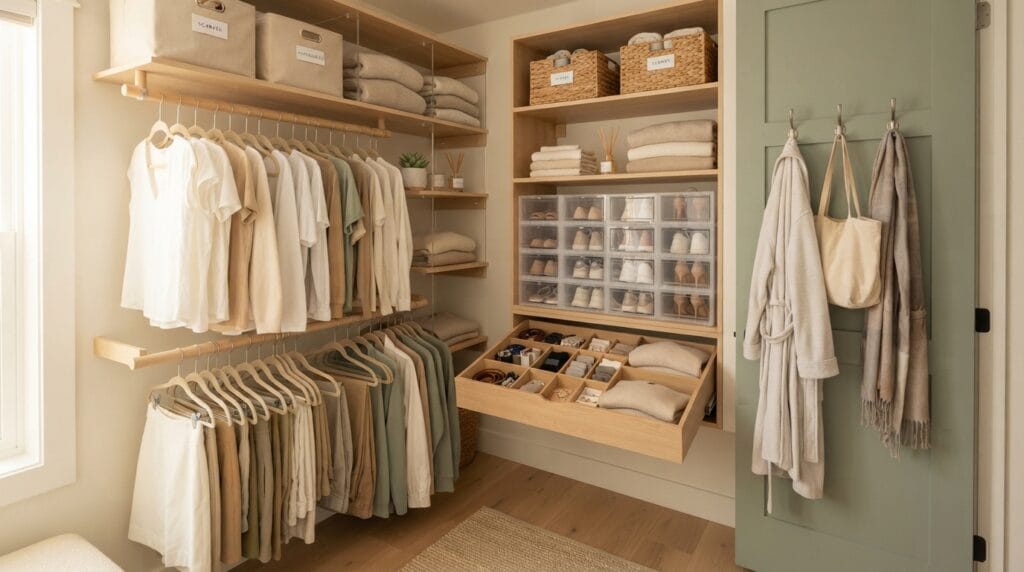
Small Closet Organization Ideas That Maximize Space
Introduction
A compact closet can hold far more than it appears to when every shelf, wall, door, and vertical gap has a clear purpose. The best small closet organization ideas do not depend on expensive custom cabinetry. They rely on thoughtful editing, accurate measurements, practical storage zones, and systems that are easy to maintain.
Small closets become frustrating when clothing, shoes, bags, and accessories compete for the same limited space. Items get hidden behind one another, shelves become unstable piles, and the floor turns into overflow storage. The problem is often not the closet size alone. It is the absence of a system.
This guide explains how to organize a small reach-in, wardrobe, linen closet, coat closet, or apartment closet. You will learn how to reduce clutter, use vertical space, improve visibility, and create storage that supports your daily routine.
Why Small Closet Organization Ideas Work
An organized closet reduces the time spent searching, sorting, and putting things away. A strong system gives every category a defined location and makes frequently used items easy to reach.
Effective small closet organization ideas usually share five principles:
Keep only items that fit the closet’s purpose
Use the full height of the space
Match storage tools to the items being stored
Make categories visible and easy to return
Leave enough breathing room for the system to function
Organization should make daily life simpler. A closet that looks perfect but requires complicated folding, frequent rearranging, or several steps to access one item will be difficult to maintain.
30 Small Closet Organization Ideas That Maximize Space
1. Empty the Closet Before Organizing
Remove everything before buying containers or moving shelves. An empty closet makes it easier to see unused space, damaged hardware, awkward corners, and items that do not belong. Place the contents into broad categories such as clothing, shoes, accessories, linens, bags, and seasonal items.
2. Declutter by Category
Review similar items together instead of making decisions one shelf at a time. Compare all shirts, coats, shoes, or towels at once. Keep items that fit, function, and support your current life. Repair, donate, recycle, or discard the rest. Reducing volume is the fastest way to create useful space.
3. Measure Every Usable Surface
Record the closet width, depth, height, shelf spacing, door clearance, rod length, and floor area. Measure any storage products before purchasing them. A bin that is slightly too deep can block the door, while an oversized shoe rack may eliminate a necessary walking or hanging zone.
4. Divide the Closet Into Zones
Assign a clear area to each category. For example, everyday clothing can occupy the central hanging space, shoes can stay near the floor, bags can sit on an upper shelf, and accessories can use the door. Zoning prevents unrelated items from spreading across the entire closet.
5. Add a Second Hanging Rod
Most shirts, skirts, and folded trousers do not require full-height hanging space. Install a second rod below the existing one to create two levels. Keep longer dresses and coats in one narrow section. This simple change can nearly double usable hanging capacity.
6. Use Slim Matching Hangers
Bulky plastic and wooden hangers consume valuable rod space. Slim velvet or compact metal hangers allow more garments to fit while creating a cleaner line. Matching hangers also prevent clothing from sitting at uneven heights, which makes the closet easier to scan.
7. Group Clothing by Type
Arrange garments in a predictable sequence such as jackets, shirts, trousers, skirts, and dresses. Then sort each category by color or frequency of use. This system makes outfits easier to assemble and reveals duplicate items. Keep the most frequently worn clothing in the easiest-to-reach section.
8. Use Shelf Dividers
Stacks of sweaters, jeans, towels, and handbags often collapse into one another. Shelf dividers create vertical boundaries that keep piles upright. They work especially well on long upper shelves where several categories need to share the same surface.
9. Add Adjustable Shelving
Fixed shelves often leave large gaps above short items. Adjustable shelves allow you to change spacing based on folded clothing, shoes, containers, or linens. Use smaller intervals for compact items and reserve taller openings only where they are truly necessary.
10. Use Clear or Labeled Bins
Bins create structure, but closed containers can hide their contents. Choose clear bins or add simple labels to opaque baskets. Labels such as scarves, swimwear, belts, guest linens, or winter accessories reduce searching and make it easier for everyone in the household to return items correctly.
11. Use the Top Shelf for Low-Frequency Items
Upper shelves are best for seasonal clothing, formal accessories, travel items, extra bedding, or keepsakes. Store these items in lightweight containers that are easy to lift. Avoid placing heavy boxes overhead, and keep a stable step stool nearby if the shelf is difficult to reach.
12. Maximize the Closet Door
The inside of the door can hold shoes, scarves, jewelry, cleaning supplies, hats, or small bags. Use an over-the-door organizer, shallow rack, pegboard, or hooks. Check door clearance first so the organizer does not collide with shelves or prevent the door from closing.
13. Add Hooks to Empty Wall Space
Hooks are ideal for items that are awkward to fold or easy to misplace. Use them for belts, necklaces, handbags, robes, caps, reusable totes, or tomorrow’s outfit. Install several small hooks vertically rather than one large hook that becomes overloaded.
14. Store Shoes Vertically
Floor-level shoe piles waste space and make pairs difficult to find. Use a narrow tiered rack, vertical cubbies, stackable clear boxes, or an over-door system. Store everyday shoes at eye or waist level and less frequently used pairs higher or lower.
15. Turn the Floor Into a Defined Zone
The closet floor should not become an unplanned drop area. Use it for one specific purpose, such as a low shoe rack, laundry basket, rolling drawer unit, or labeled storage bins. Leave enough open floor space to access the back of the closet.
16. Add Pull-Out Drawers or Baskets
Deep shelves make small items disappear. Pull-out baskets and drawer units bring the contents forward, making socks, underwear, workout clothing, and accessories easier to reach. Choose ventilated baskets for textiles and smooth-sided drawers for items that may snag.
17. Use Drawer Dividers
Dividers stop small categories from mixing together. Create sections for socks, undergarments, belts, jewelry, ties, or folded T-shirts. The compartments should match the amount you own. Oversized sections often encourage unrelated items to accumulate.
18. Fold Clothing Vertically
Vertical folding allows each item to remain visible instead of being buried in a stack. Use it for T-shirts, leggings, sleepwear, and lightweight sweaters inside drawers or bins. Keep folds simple and consistent so clothing can be returned without turning organization into a time-consuming task.
19. Use Hanging Shelf Organizers Carefully
Fabric hanging shelves can provide quick storage for sweaters, shoes, or bags, but they also take up rod space. Use one only when the shelf capacity is more valuable than hanging capacity. Reinforce the organizer with lightweight items to prevent sagging.
20. Store Bags Upright
Handbags and totes lose shape when stacked. Store them upright with shelf dividers, magazine files, or narrow cubbies. Fill delicate bags with tissue or soft fabric and place smaller bags inside larger ones only when visibility will not be compromised.
21. Create a Small Accessories Station
Dedicate one drawer, hanging panel, tray, or section of the door to accessories. Keep sunglasses, watches, jewelry, scarves, belts, and hair accessories together. A focused station prevents these small items from spreading across dressers, bathroom counters, and closet shelves.
22. Use Vacuum Bags for Bulky Seasonal Textiles
Vacuum bags can reduce the volume of spare comforters, puffy jackets, and seasonal blankets. Use them only for clean, fully dry textiles and avoid compressing delicate natural fibers for long periods. Store the bags on a high shelf or under the bed rather than crowding daily clothing.
23. Rotate Clothing by Season
Seasonal rotation reduces the number of garments competing for prime space. Move off-season pieces to upper shelves, under-bed containers, or another storage area. Before returning a season, review the items again and remove anything that was not worn.
24. Use Uniform Containers for Visual Calm
Different boxes, bags, and baskets create visual noise and often waste shelf space. Choose containers with compatible dimensions and a consistent shape. Uniform storage makes stacking safer and allows the closet to look organized even when the contents are varied.
25. Keep a Donation Bag in the Closet
Place a small labeled bag or bin in an accessible corner for clothing you no longer want. When it becomes full, remove it from the home. This habit prevents unwanted items from returning to shelves and makes decluttering an ongoing process rather than a major annual project.
26. Add Lighting
Dark closets feel smaller and make colors or labels difficult to see. Add a battery-powered motion light, rechargeable LED strip, or plug-in fixture where appropriate. Place the light so shelves do not block it. Better visibility helps maintain organization because every category remains easy to identify.
27. Use the Back Corners
Closet corners often contain narrow gaps that standard storage ignores. Use a vertical hook rail, slim basket tower, umbrella stand, or narrow shelving unit. Store only items that can be removed without disturbing everything in front of them.
28. Create a Weekly Outfit Section
Reserve several hangers, one hook, or a narrow rod section for planned outfits. This reduces morning decisions and prevents clean clothes from being draped over doors or chairs. Return unused items to their normal zones at the end of the week.
29. Keep a Small Step Stool Nearby
Upper storage is useful only when it can be reached safely. A folding step stool makes high shelves practical and reduces the temptation to climb on unstable furniture. Store it beside the closet, behind the door, or on a wall hook when not in use.
30. Schedule a Monthly Reset
Spend ten minutes each month returning misplaced items, clearing the floor, refolding unstable stacks, and removing empty hangers. Small resets protect the system from gradual clutter. The best small closet organization ideas are maintained through short, regular habits rather than occasional complete overhauls.
Small Closet Storage Tools Compared
| Storage Tool | Best Use | Main Advantage | Watch For |
|---|---|---|---|
| Slim hangers | Shirts, jackets, trousers | Creates more rod space | Very heavy garments may need stronger hangers |
| Shelf dividers | Sweaters, jeans, bags | Prevents piles from collapsing | Measure shelf thickness first |
| Clear bins | Seasonal clothing, accessories | Contents remain visible | Can look busy without consistent sizes |
| Fabric baskets | Linens, soft accessories | Soft, lightweight, attractive | Labels are necessary |
| Over-door organizer | Shoes and small accessories | Uses overlooked space | May affect door clearance |
| Drawer unit | Folded clothing and small items | Creates contained categories | Requires accurate floor measurements |
| Hooks | Belts, bags, hats, outfits | Uses narrow wall areas | Too many items can create clutter |
How to Organize a Small Closet in One Afternoon
Use this sequence to make the project manageable:
Remove everything and clean the closet.
Sort items into keep, relocate, donate, repair, and discard groups.
Measure the closet and identify unused vertical or door space.
Create zones for hanging, folded clothing, shoes, accessories, and seasonal storage.
Install rods, shelves, hooks, or lighting before returning items.
Place daily items between shoulder and knee height.
Move occasional items to the highest and lowest zones.
Label containers and leave a small amount of open space.
Photograph the finished closet as a reference for future resets.
Work with the storage you already own before purchasing additional products. After the closet is arranged, identify the specific gaps that remain. This prevents buying containers that create more clutter than they solve.
Small Closet Organization Ideas for Renters
Renters can improve storage without permanent construction. Use tension rods, over-door organizers, freestanding drawer units, removable hooks, shelf risers, and stackable bins.
Before using adhesive products, review the wall surface and removal instructions. Place felt pads under freestanding units and avoid overloading tension-mounted systems.
Portable solutions have another advantage: they can move with you. Choose modular pieces that can be rearranged for a different closet rather than products that fit only one exact opening.
Common Small Closet Organization Mistakes
Buying containers before decluttering
Using the entire rod for long garments
Stacking folded clothing too high
Placing daily items on hard-to-reach shelves
Keeping empty boxes and shopping bags without limits
Using deep bins without labels
Filling every inch and leaving no room for change
Creating systems that require too many steps
Ignoring lighting and door clearance
Treating the floor as overflow storage
A practical closet should have a small amount of unused capacity. Empty space allows hangers to move, drawers to open, and new items to be added without immediately breaking the system.
Small Closet Organization Checklist
Remove items that do not belong in the closet
Measure shelves, rods, doors, walls, and floor space
Create clearly defined storage zones
Use the full closet height
Install a second rod where possible
Replace bulky hangers with slim versions
Add labels to closed containers
Keep daily items easy to reach
Use doors and narrow walls for accessories
Limit the floor to one defined storage purpose
Store seasonal items outside prime zones
Leave room for hangers and drawers to move
Complete a short reset every month
Frequently Asked Questions
How can I make a small closet hold more clothes?
Declutter first, then add a second hanging rod, use slim hangers, fold suitable items vertically, and move seasonal clothing out of the main zone. Increasing capacity is most effective when the remaining items are divided by type and frequency of use.
What should go on the top shelf of a small closet?
Use the top shelf for lightweight, low-frequency items such as seasonal clothing, spare linens, formal accessories, keepsakes, or travel gear. Store them in labeled containers and avoid heavy boxes that are difficult to lift safely.
Are closet organizers worth the cost?
Organizers are valuable when they solve a specific storage problem and fit the closet accurately. Simple rods, shelf dividers, hooks, and bins often deliver better results than a complicated system that does not match the items you own.
How do I organize a closet with no shelves?
Add a freestanding drawer unit, hanging shelf organizer, stackable bins, or narrow bookcase if the dimensions allow. Use the door and side walls for hooks or pockets, and consider a tension shelf where permanent installation is not possible.
How often should a small closet be reorganized?
Perform a quick reset every month and a deeper seasonal review two to four times a year. Frequent short maintenance is easier than waiting until the closet becomes completely disorganized.
Should shoes be stored in boxes?
Boxes protect shoes and allow vertical stacking, but they should be clear or labeled. Everyday shoes may be easier to use on an open rack, while formal or seasonal pairs benefit from enclosed storage.
Conclusion
The most effective small closet organization ideas begin with fewer items and a clear plan. Once the closet has defined zones, vertical storage, visible categories, and accessible daily essentials, the available space becomes much more useful.
Do not try to solve every problem with a new container. Start by removing what no longer belongs, measuring the space, and deciding which categories deserve the easiest access. Then add only the storage tools that support those decisions.
A small closet does not need to feel restrictive. With a second rod, better shelves, door storage, simple labels, and regular resets, it can become an efficient part of the home rather than a source of daily frustration.
Also Read: “15 Popular Interior Design Styles and How to Choose One“