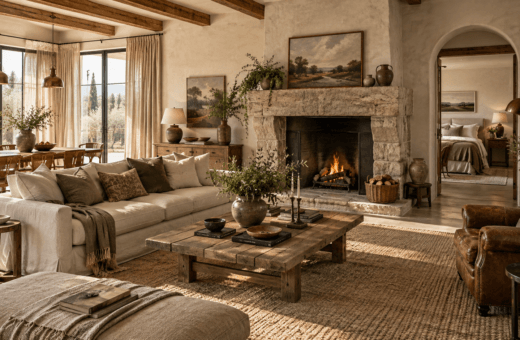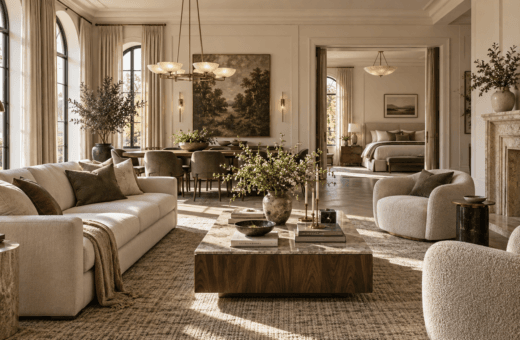
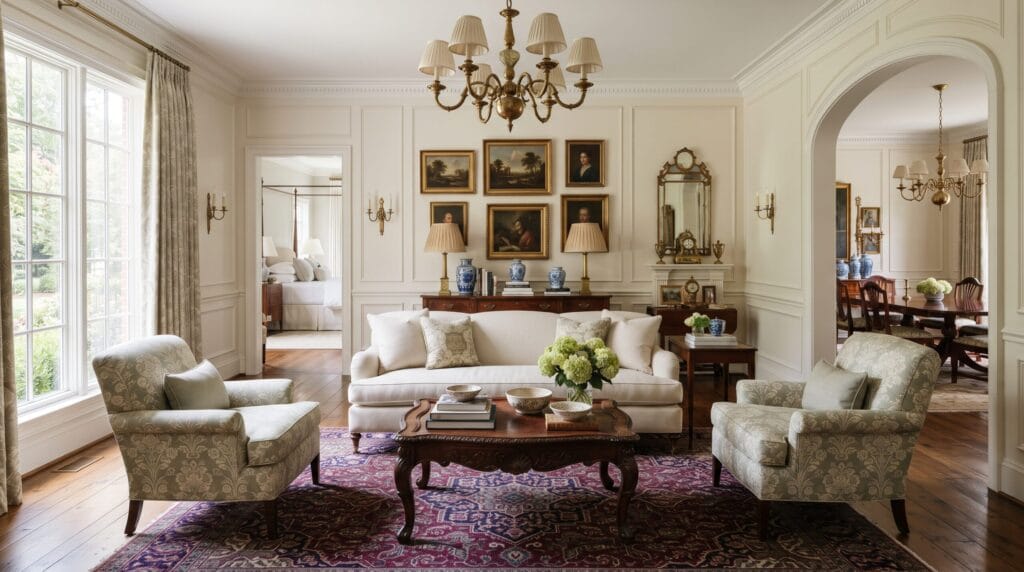
Traditional interiors have enduring appeal because they are built around proportion, craftsmanship, comfort, symmetry, and materials that age well. The best traditional interior design ideas create rooms that feel polished and established without making the home look formal, dated, or overly decorated.
A traditional room usually draws inspiration from classic European and American interiors. You may see paneled walls, crown molding, dark or medium wood, tailored upholstery, framed artwork, patterned rugs, pleated lampshades, carved furniture, antique or vintage pieces, and balanced furniture arrangements. These elements feel especially elegant when they are used with restraint.
Traditional design also works well in modern homes because it does not require every object to be antique. A contemporary sofa can sit beside a vintage chest. A streamlined kitchen can use Shaker cabinetry, brass hardware, and stone surfaces. A simple bedroom can feel traditional through an upholstered headboard, layered curtains, classic lamps, and symmetrical nightstands.
This guide shares 21 practical traditional interior design ideas for living rooms, dining rooms, bedrooms, kitchens, bathrooms, entryways, offices, and small spaces. The goal is to help you create a home that feels timeless, elegant, comfortable, and personal.
What Defines Traditional Interior Design?
Traditional interiors are usually shaped by a few consistent design principles.
Symmetry and Balance
Furniture, lamps, artwork, and architectural details often feel visually balanced.
Classic Materials
Wood, stone, linen, cotton, wool, leather, brass, bronze, ceramic, and glass create depth and longevity.
Layered Decoration
Traditional rooms often combine rugs, curtains, artwork, books, lamps, and accessories, but the strongest spaces still leave visual breathing room.
Architectural Detail
Molding, paneling, trim, fireplaces, and built-ins can give a room a sense of permanence.
Comfortable Furniture
Traditional design favors furniture that feels substantial, supportive, and well proportioned.
Timeless Color
Warm neutrals, navy, sage, burgundy, camel, cream, chocolate, and muted blue work especially well.
How to Use Traditional Interior Design Ideas Without Making a Home Feel Dated
Traditional design feels dated when every piece is heavy, dark, ornate, or perfectly matched.
A more current approach is to combine classic elements with cleaner pieces.
For example:
- Pair an antique chest with a simple upholstered sofa.
- Use traditional molding with modern art.
- Combine a Persian-style rug with streamlined chairs.
- Use brass lighting in a room with simple curtains.
- Mix dark wood with warm ivory walls.
- Keep decorative accessories edited.
The best traditional interior design ideas rely on quality, proportion, and balance rather than excessive ornament.
1. Start With a Warm, Timeless Color Palette
Traditional interiors usually benefit from colors that feel grounded.
Warm Neutral Palette
Use:
- Ivory
- Cream
- Beige
- Camel
- Walnut
- Soft black
Classic Color Palette
Use:
- Warm white
- Navy
- Burgundy
- Brass
- Dark wood
Fresh Traditional Palette
Use:
- Pale sage
- Warm cream
- Medium oak
- Dusty blue
- Charcoal
Why It Works
A controlled palette allows furniture, art, and architecture to feel connected.
2. Use Rich Wood Tones
Wood is one of the strongest traditional materials.
Good Choices
- Walnut
- Mahogany
- Cherry
- Medium oak
- Dark oak
Use Wood On
- Sideboards
- Dining tables
- Coffee tables
- Consoles
- Bed frames
- Bookcases
Keep It Balanced
You do not need dark wood everywhere.
One or two substantial wood pieces can create enough traditional character.
3. Add Crown Molding or Simple Wall Trim
Architectural detail can make a room feel more established.
Options
- Crown molding
- Picture-frame molding
- Chair rail
- Wall paneling
- Ceiling trim
- Built-in shelving
Keep the Proportions Right
Trim should suit the scale of the room.
Very elaborate molding in a small, low-ceiling room can feel overwhelming.
Modern Traditional Tip
Paint the molding the same color as the wall for a subtle, updated effect.
4. Use Symmetry in Key Areas
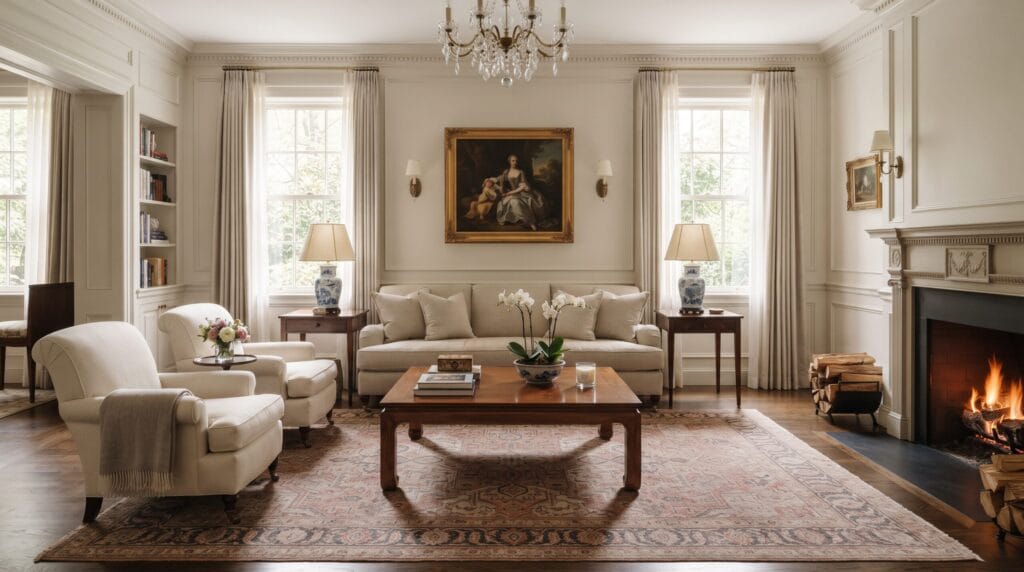
Symmetry is one of the easiest traditional interior design ideas to recognize.
Good Applications
- Matching lamps on a console
- Pair of chairs facing a sofa
- Two nightstands beside a bed
- Artwork centered over furniture
- Matching sconces around a mirror
Why It Works
Symmetry creates visual order and calm.
Avoid Overdoing It
Not every object needs a matching partner.
Use symmetry to organize the room, then add a few asymmetrical details for personality.
5. Choose a Tailored Living Room Sofa
Traditional sofas should feel comfortable and substantial.
Look For
- Rolled or gently shaped arms
- Tailored cushions
- Linen or cotton upholstery
- Subtle piping
- Neutral or muted color
Good Colors
- Cream
- Oatmeal
- Camel
- Warm gray
- Sage
- Soft blue
Why It Works
A simple tailored sofa becomes a flexible base for rugs, artwork, lamps, and wood furniture.
6. Anchor the Living Room With a Patterned Rug
Pattern is an important part of many traditional rooms.
Rug Styles
- Persian-inspired
- Oriental-inspired
- Floral
- Medallion
- Tonal traditional pattern
Color Ideas
- Rust
- Navy
- Burgundy
- Olive
- Beige
- Faded blue
Scale Matters
Choose a rug large enough to connect the seating group.
An undersized rug can make an elegant room feel fragmented.
7. Layer Curtains for a More Finished Look
Window treatments can add softness and formality.
Try
- Full-length drapery
- Linen or cotton panels
- Sheers behind heavier curtains
- Roman shades
- Pleated drapery
Hang Them High
A higher rod can make the room feel taller.
Use Enough Fabric
Traditional rooms often look better with generous folds rather than narrow, flat panels.
8. Add Classic Table and Floor Lamps
Lamps are essential in traditional interiors.
Good Styles
- Ceramic base
- Brass base
- Pleated shade
- Linen shade
- Pharmacy-style floor lamp
- Sculptural glass lamp
Layer Lighting
Combine ceiling fixtures with table lamps and floor lamps.
This creates a warmer, more comfortable room than relying on one overhead source.
9. Use a Statement Chandelier or Pendant
A beautiful ceiling fixture can define a room.
Good Locations
- Dining room
- Entryway
- Living room
- Bedroom
Traditional Directions
- Brass chandelier
- Crystal-inspired fixture
- Lantern
- Shaded chandelier
- Aged bronze pendant
Keep It Current
Choose a fixture with a classic form but cleaner detailing.
Hardwired fixtures should be installed by a qualified professional.
10. Use Antiques Selectively
Antiques can give traditional rooms authenticity and character.
Good Antique Pieces
- Console
- Side table
- Chest
- Mirror
- Chair
- Artwork
- Small cabinet
Use One or Two Per Room
A few genuine older pieces can create more impact than filling the room with reproductions.
Mix Old and New
This keeps the space from feeling like a period set.
11. Create an Elegant Traditional Dining Room
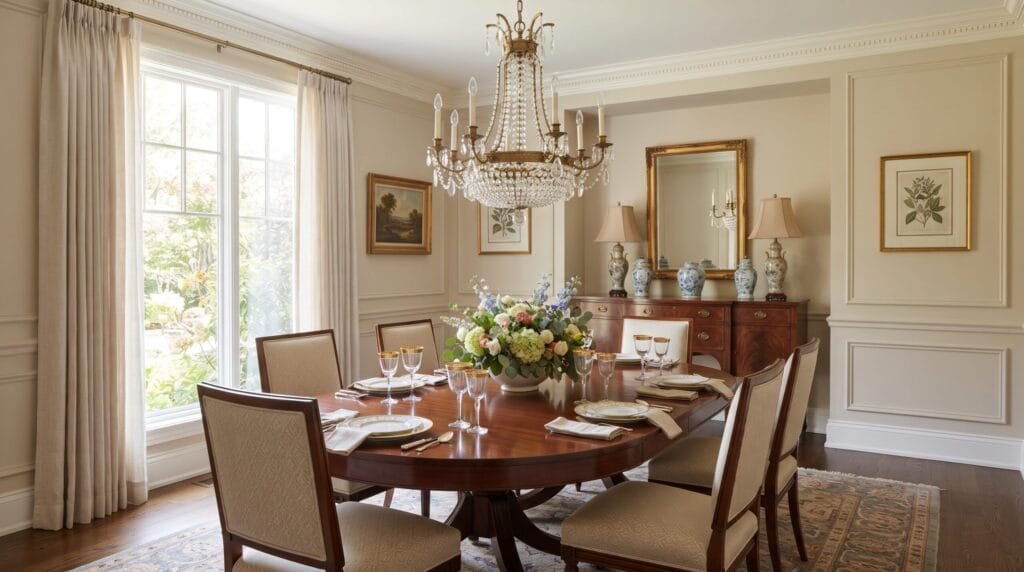
The dining room naturally suits traditional design.
Start With the Table
Choose:
- Solid wood
- Oval table
- Rectangular table
- Pedestal table
Add Comfortable Chairs
Upholstered chairs can soften the room.
Use a Statement Light
Center a chandelier or pendant above the table.
Keep the Centerpiece Low
Use flowers, branches, a ceramic bowl, or a simple candle grouping.
12. Style a Traditional Bedroom Around the Bed
The bed should be the main focal point.
Use
- Upholstered headboard
- Wood bed frame
- Layered bedding
- Matching or coordinated nightstands
- Substantial bedside lamps
- Full-length curtains
Color Direction
Try:
- Ivory
- Taupe
- Dusty blue
- Sage
- Walnut
- Burgundy accent
Why It Works
Traditional bedrooms feel elegant when the bed wall has clear visual balance.
13. Layer Bedding With Classic Textiles
Traditional bedding can feel luxurious without becoming overly formal.
Simple Formula
- Crisp sheets
- Duvet or quilt
- Sleeping pillows
- Two larger decorative pillows
- One accent cushion
- Folded throw
Pattern Options
- Stripe
- Floral
- Check
- Small geometric
- Solid velvet
Keep the Palette Controlled
Use patterns in related colors rather than mixing several unrelated prints.
14. Use Shaker or Inset Cabinetry in the Kitchen
Traditional kitchens benefit from simple, durable cabinetry.
Cabinet Colors
- Warm white
- Cream
- Sage
- Deep blue
- Natural wood
Hardware
Use:
- Aged brass
- Polished nickel
- Bronze
- Simple knobs
Stone Surfaces
Marble, granite, soapstone, or other durable stone-inspired surfaces can add a classic feeling.
Keep Counters Clear
Traditional does not mean cluttered.
15. Add a Classic Bathroom Vanity
A bathroom can feel traditional through a few carefully chosen details.
Use
- Furniture-style vanity
- Framed mirror
- Brass or nickel hardware
- Stone countertop
- Classic sconces
- Simple tile
Color Direction
Warm white, wood, pale stone, sage, navy, and black all work well.
Keep It Functional
Store daily products inside drawers or cabinets whenever possible.
16. Create a Strong Traditional Entryway
The entryway sets the tone for the rest of the home.
Include
- Console
- Mirror
- Table lamp
- Runner
- Tray
- Small vase
- Basket or hidden storage
Use Symmetry
Two lamps or balanced artwork can work beautifully in a larger entry.
Small Entryway Version
Use one narrow console, one mirror, and one lamp.
17. Decorate With Framed Art in Classic Arrangements
Traditional rooms often use art generously.
Good Choices
- Landscapes
- Botanical prints
- Portraits
- Architectural drawings
- Abstract art in traditional frames
- Photography
Arrangement Options
- One large artwork
- Symmetrical pair
- Gallery grid
- Salon-style arrangement used carefully
Modernize the Look
Mix contemporary art with classic frames or traditional paintings with simpler furniture.
18. Add Books and Decorative Objects With Restraint
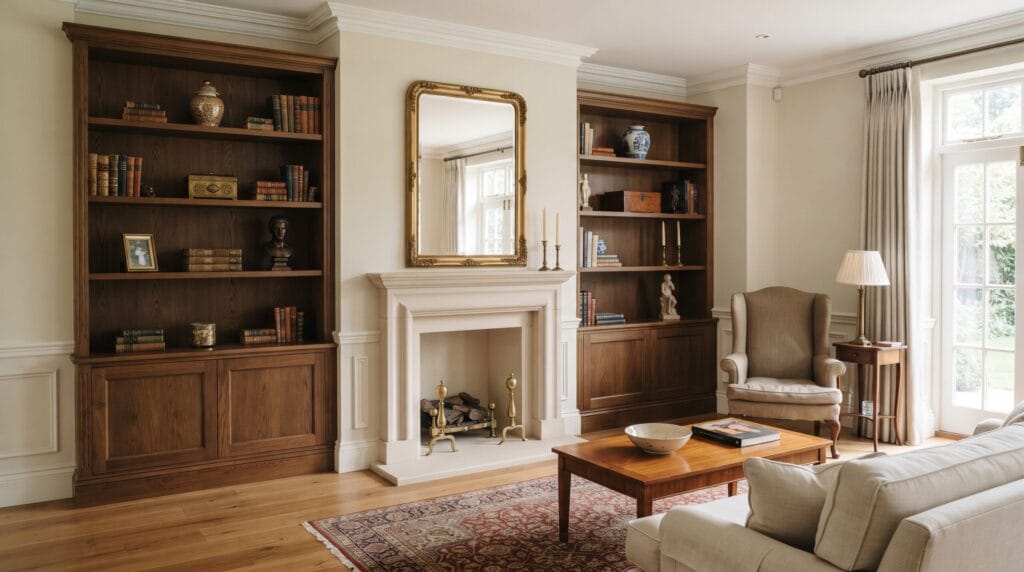
Traditional rooms often feel collected because they contain meaningful objects.
Display
- Books
- Ceramic vessels
- Boxes
- Small sculptures
- Framed photos
- Candlesticks
Group Items
Use small arrangements rather than spreading objects evenly.
Leave Negative Space
Even traditional rooms benefit from empty areas.
19. Use Classic Patterns in Controlled Amounts
Pattern can add richness to traditional interior design ideas.
Good Patterns
- Stripe
- Floral
- Plaid
- Check
- Damask-inspired
- Small geometric
Use Pattern On
- Cushions
- Curtains
- Rugs
- Accent chairs
- Bedding
Keep It Balanced
If the rug is heavily patterned, use quieter curtains and upholstery.
20. Create a Traditional Home Office or Library
Traditional style works especially well in offices and reading rooms.
Use
- Wood desk
- Bookcase
- Comfortable chair
- Desk lamp
- Framed art
- Closed storage
Add Warmth
Use a rug, curtains, leather, wool, or wood.
Keep Technology Organized
Hide cables and chargers where possible.
A traditional room should still support modern work.
21. Edit the Traditional Decor Before Buying More
The final and most important of these traditional interior design ideas is editing.
Traditional rooms can become visually heavy when too many dark, ornate, or decorative pieces compete.
Review
- Mantels
- Coffee tables
- Shelves
- Consoles
- Nightstands
- Dining surfaces
Ask
- Is this object useful or meaningful?
- Is the scale right?
- Does it support the color palette?
- Does it add elegance or visual clutter?
- Is there enough empty space around it?
Timeless Rule
Choose fewer, stronger pieces.
A well-proportioned lamp, substantial wood table, framed artwork, and one antique can create more elegance than many small decorative accessories.
Traditional Interior Design Ideas by Room
| Room | Main Priority | Best Materials | High-Impact Upgrade |
| Living room | Balance and comfort | Wood, wool, linen, brass | Larger patterned rug and layered lighting |
| Dining room | Formal focal point | Solid wood, upholstery, metal | Statement table and chandelier |
| Bedroom | Symmetry and softness | Linen, cotton, wood | Headboard, lamps, full-length curtains |
| Kitchen | Classic function | Wood, stone, metal | Shaker cabinetry and quality hardware |
| Bathroom | Refined detail | Stone, wood, ceramic | Framed mirror and traditional vanity |
| Entryway | First impression | Wood, brass, textile | Console, mirror, lamp |
| Home office | Warm focus | Wood, leather, wool | Strong desk and book storage |
| Small spaces | Proportion | Light wood, textile, glass | Fewer, better-scaled pieces |
Traditional vs Transitional Interior Design
Traditional and transitional interiors overlap, but they are not identical.
Traditional Design
Often uses:
- More symmetry
- Darker or richer wood
- Classic furniture
- Detailed molding
- Patterned textiles
- Antiques
Transitional Design
Usually uses:
- Cleaner silhouettes
- More neutral palettes
- Fewer decorative details
- A mix of traditional and contemporary furniture
- More visual simplicity
Which Is Better?
Neither is better.
Traditional design feels more classic and layered. Transitional design feels slightly lighter and more current.
Traditional Interior Design Color Palettes
Classic Warm Palette
- Ivory
- Camel
- Walnut
- Burgundy
- Brass
Blue Traditional Palette
- Warm white
- Navy
- Dusty blue
- Medium wood
- Nickel
Green Traditional Palette
- Cream
- Sage
- Olive
- Walnut
- Bronze
Light Traditional Palette
- Warm white
- Beige
- Pale blue
- Light oak
- Soft black
How to Make Traditional Interior Design Feel Fresh
Use More Light Colors
Warm ivory walls can balance darker furniture.
Limit Heavy Furniture
One substantial wood piece is often enough.
Mix Modern Art With Traditional Furniture
This creates contrast and keeps the room from feeling predictable.
Use Cleaner Lighting
Classic materials with simpler shapes feel current.
Keep Accessories Edited
Traditional does not require every surface to be filled.
Traditional Interior Design for Small Spaces
Small homes can still use traditional interior design ideas successfully.
Choose Fewer Furniture Pieces
Avoid filling the room with small tables and chairs.
Use Lighter Wood Tones
Medium oak can feel less visually heavy than very dark wood.
Use Mirrors
Mirrors add light and depth.
Use Pattern Strategically
One patterned rug or chair may be enough.
Keep Walkways Clear
Good circulation makes classic furniture feel more comfortable in a compact room.
Common Traditional Interior Design Mistakes
Matching Every Furniture Piece
A collected room feels more natural than a full matching set.
Using Too Much Dark Wood
Balance dark wood with light walls, rugs, or textiles.
Overusing Ornate Details
A few classic details create elegance. Too many create visual weight.
Ignoring Lighting
Layered lighting is essential.
Using Too Many Small Accessories
Choose larger, more meaningful pieces.
Treating Traditional Design Like a Museum
The home should still support daily life.
Avoiding Contemporary Elements Entirely
A few modern details can keep traditional rooms feeling fresh.
Traditional Interior Design Ideas Checklist
Use this traditional interior design ideas checklist:
- The home has a controlled, timeless color palette.
- Furniture feels substantial and comfortable.
- Wood tones are coordinated.
- Symmetry is used selectively.
- Rugs are properly scaled.
- Curtains are full length where appropriate.
- Lighting comes from multiple sources.
- Architectural detail suits the room scale.
- Antiques are used selectively.
- Artwork feels correctly proportioned.
- Patterns are coordinated.
- Kitchens prioritize function.
- Bedrooms feel balanced and calm.
- Bathrooms use classic materials carefully.
- Entryways create a strong first impression.
- Accessories are edited.
- The home feels elegant rather than overly formal.
Frequently Asked Questions
What Are the Best Traditional Interior Design Ideas for Beginners?
Start with a warm neutral palette, one substantial wood piece, a properly sized rug, full-length curtains, layered lighting, classic artwork, and a few balanced furniture arrangements.
What Colors Work Best in Traditional Interiors?
Ivory, cream, camel, navy, sage, burgundy, dusty blue, chocolate, walnut, brass, and soft black all work well.
Does Traditional Interior Design Have to Be Dark?
No. Traditional rooms can feel light and fresh when warm whites, pale neutrals, lighter woods, and soft textiles are used.
What Is the Difference Between Traditional and Transitional Design?
Traditional design uses more classic furniture, symmetry, pattern, and architectural detail. Transitional design combines those ideas with cleaner contemporary forms.
Can Traditional Interior Design Work in a Modern House?
Yes. Molding, rugs, classic lighting, wood furniture, and antiques can add traditional character to modern architecture.
How Do I Keep Traditional Decor From Looking Dated?
Use fewer ornate pieces, keep the palette controlled, mix old and new furniture, add contemporary art, and avoid complete matching sets.
What Materials Make a Traditional Home Feel Elegant?
Wood, stone, wool, linen, cotton, leather, brass, bronze, ceramic, and glass all support a timeless traditional look.
Conclusion
The best traditional interior design ideas create elegance through proportion, craftsmanship, comfort, and thoughtful layering.
Start with a timeless palette, quality wood furniture, correctly scaled rugs, full-length curtains, and layered lighting. Add architectural detail where it suits the room, then introduce classic art, books, patterned textiles, and a few vintage or antique pieces.
Traditional design should feel established, but it should never feel frozen in the past. Mixing classic furniture with cleaner lighting, modern artwork, or simpler upholstery can make the style feel fresh and relevant.
Most importantly, edit as you decorate. A traditional home becomes more elegant when each piece has room to stand out.
When symmetry, material, color, scale, and personal history work together, traditional interiors can feel timeless, comfortable, and beautifully suited to everyday life.
Also Read: “Japandi Interior Ideas That Feel Calm and Timeless“