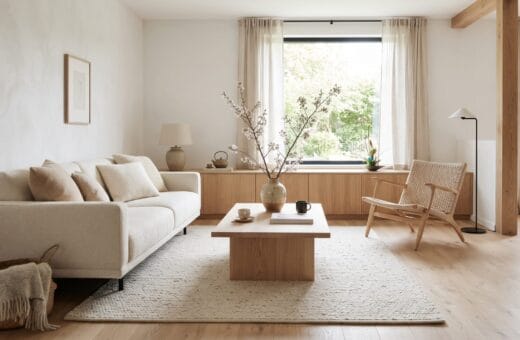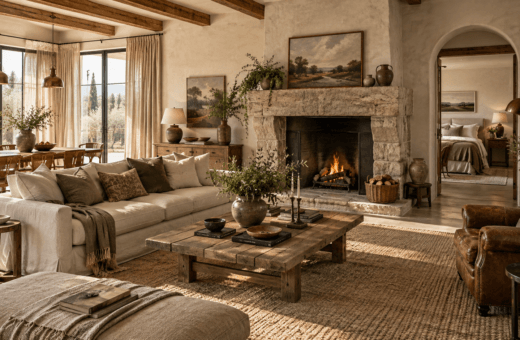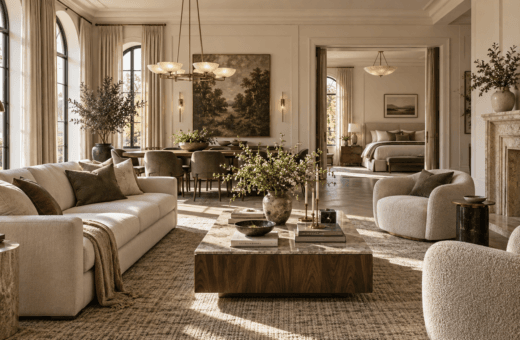
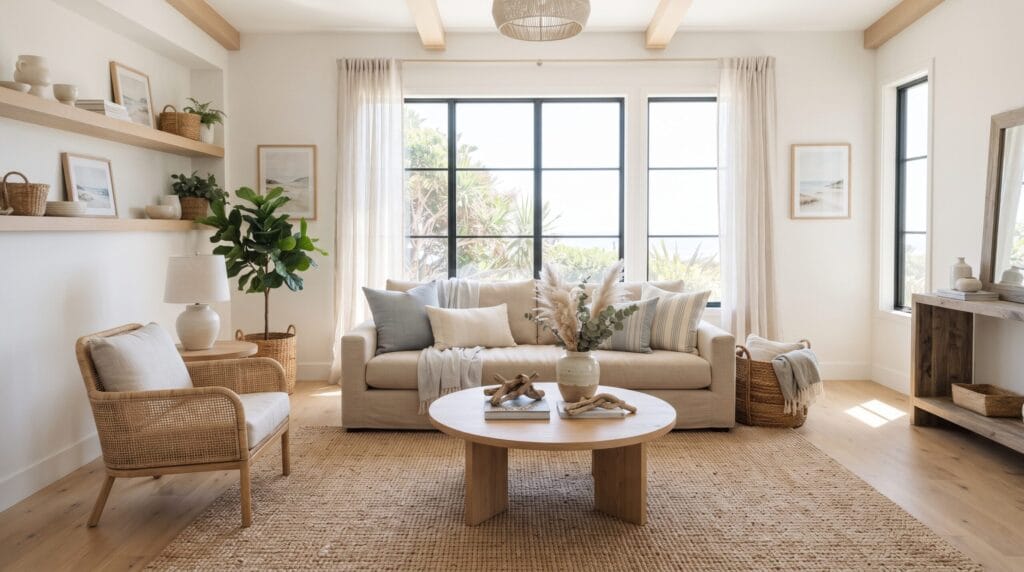
Coastal interior design is about creating a home that feels bright, breezy, comfortable, and connected to natural light. The strongest coastal interiors are not filled with seashells, anchors, or obvious beach motifs. Instead, they use warm whites, sandy neutrals, pale wood, linen, woven texture, soft blue accents, and relaxed furniture to create an easygoing atmosphere.
A successful coastal home should feel calm rather than themed. The materials do most of the work. Linen curtains soften windows, woven baskets add texture, pale oak brightens the room, and subtle blue-gray accents suggest water and sky without becoming literal. The result is timeless enough to work far beyond a vacation property.
Coastal style can also be practical. It works especially well in sunny living rooms, guest bedrooms, open-plan homes, small spaces, and rooms that benefit from a lighter visual palette. The goal is to keep the home airy while still making it comfortable and lived in.
This guide shares 21 practical coastal interior design ideas for living rooms, bedrooms, dining rooms, kitchens, bathrooms, entryways, rentals, and small spaces. You will also find color palettes, material combinations, budget ideas, common mistakes, and a final checklist for creating a light and relaxed home.
What Defines Coastal Interior Design?
Coastal style is usually built around a few consistent design principles.
Light, Warm Color
Warm white, cream, sand, pale gray, soft blue, and sea-glass green create an airy foundation.
Natural Materials
Wood, linen, cotton, rattan, jute, ceramic, glass, and stone add relaxed texture.
Easy Furniture
Comfort matters. Sofas, dining chairs, beds, and lounge seating should feel casual enough for daily use.
Abundant Natural Light
Windows are treated as a major design feature rather than something to cover heavily.
Simple Styling
A few large objects usually work better than many small themed accessories.
How to Keep Coastal Interior Design From Looking Themed
A refined coastal home suggests the coast rather than illustrating it.
Use Color Instead of Novelty Decor
Soft blue or sea-glass green can create a coastal mood without literal ocean imagery.
Use Texture Instead of Symbols
Rattan, linen, jute, and pale wood feel coastal naturally.
Choose Art Carefully
Use abstract landscapes, photography, or quiet seascapes instead of a room full of beach signs.
Keep the Palette Controlled
Three or four main colors are usually enough.
1. Start With Warm White Walls
One of the easiest coastal interior design ideas is using warm white as the main backdrop.
Good Directions
Try:
- Creamy white
- Soft ivory
- Warm off-white
- Pale sand
Why It Works
Warm white reflects light while preventing the room from feeling sterile.
Avoid
Very blue or icy whites if the space already has cool light.
2. Add Sandy Beige and Oatmeal Neutrals
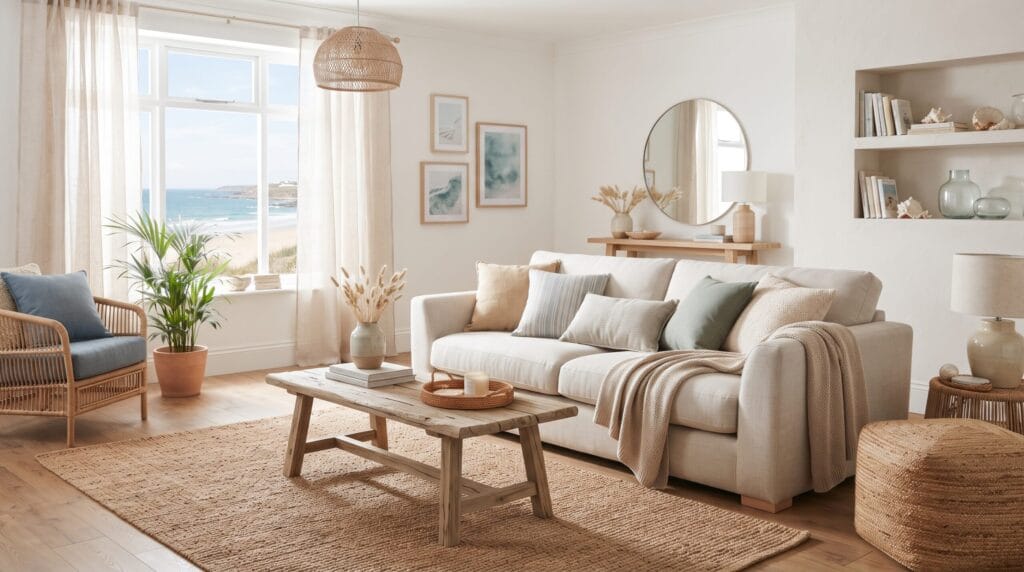
Neutral tones keep coastal rooms grounded.
Use Them In
- Rugs
- Upholstery
- Bedding
- Curtains
- Cushions
Why It Works
Sand-inspired neutrals soften white walls and make blue or green accents feel more natural.
3. Use Pale Natural Wood
Pale wood is one of the strongest materials in coastal interior design.
Use It On
- Coffee tables
- Dining tables
- Bed frames
- Shelving
- Cabinets
- Picture frames
Good Directions
Oak, ash, beech, or lightly finished wood often works well.
Why It Works
The visible grain adds warmth without making the room visually heavy.
4. Mix in Weathered or Mid-Tone Wood Carefully
Not every wood surface needs to be pale.
Add Contrast With
- Weathered oak
- Medium walnut
- Driftwood-inspired finishes
- A darker vintage table
Keep It Limited
One or two deeper wood pieces can prevent the room from looking flat.
Why It Works
Natural variation makes the home feel collected rather than showroom-perfect.
5. Use Linen Curtains That Let in Light
Soft window treatments are essential to relaxed coastal interior design.
Choose
- Warm white
- Natural flax
- Pale beige
- Soft gray
Hang Them Full Length
Floor-length curtains make the room feel polished while preserving a light atmosphere.
Why It Works
Linen adds softness and movement without blocking too much daylight.
6. Choose a Comfortable Cream or Beige Sofa
The sofa often becomes the visual anchor of a coastal living room.
Good Upholstery Colors
- Cream
- Oatmeal
- Light beige
- Warm gray
Add Color With
- Blue-gray cushions
- Sage accents
- Striped pillows
- Textured throws
Why It Works
A neutral sofa gives the room flexibility as seasonal accessories change.
7. Add Soft Blue Instead of Bright Nautical Blue
Muted blue creates a more sophisticated coastal look.
Good Shades
- Sky blue
- Dusty blue
- Blue-gray
- Faded denim
- Slate blue
Use It In
- Cushions
- Artwork
- Rugs
- Bedding
- Ceramic decor
Why It Works
Soft blue feels connected to the coast without dominating the room.
8. Add Sea-Glass Green Accents
Green can bring freshness to coastal interior design.
Use
- Glass vases
- Cushions
- Ceramics
- Artwork
- Small furniture
Pair With
- Cream
- Pale oak
- Sand
- Soft black
Why It Works
Sea-glass green adds subtle color while keeping the room calm.
9. Use Woven Materials for Texture
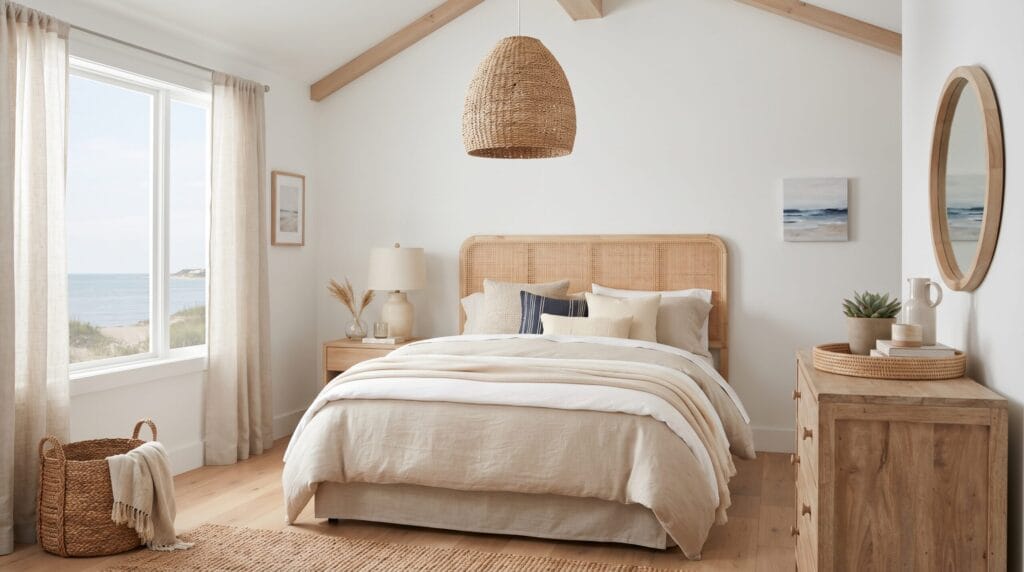
Woven materials help coastal rooms feel relaxed.
Add
- Rattan chair
- Cane cabinet doors
- Seagrass baskets
- Woven lampshades
- Natural fiber trays
Keep It Balanced
Too much rattan can make the room look overly tropical.
Why It Works
A few woven pieces add tactile warmth without extra visual clutter.
10. Add a Large Natural-Looking Rug
A well-scaled rug is central to comfortable coastal interior design.
Good Options
- Wool
- Jute blend
- Flatweave
- Low-pile neutral rug
Living Room
Choose a rug large enough to connect the seating group.
Bedroom
Let the rug extend beyond the bed.
Why It Works
The floor becomes a soft, continuous foundation for the room.
11. Use Stripes Selectively
Stripes are one of the easiest coastal patterns to use well.
Try
- Blue and white
- Sand and cream
- Charcoal and ivory
- Sage and white
Use Them On
- Cushion
- Throw
- Bench upholstery
- Table linen
Keep It Limited
One striped element is often enough.
12. Use Glass to Keep Rooms Feeling Light
Glass feels visually lighter than heavy opaque decor.
Use
- Clear vases
- Pale blue glass
- Green glass
- Glass lamps
- Simple hurricanes
Why It Works
Glass reflects light and adds color without visual weight.
13. Add White or Matte Ceramic Decor
Ceramics fit naturally into coastal interior design.
Use
- Lamps
- Bowls
- Vases
- Planters
- Tableware
Good Finishes
- Matte white
- Soft cream
- Speckled stone
- Pale blue-gray
Styling Tip
Use fewer, larger ceramic pieces instead of many small objects.
14. Create a Relaxed Coastal Living Room
A coastal living room should feel easy to use every day.
Start With
- Neutral sofa
- Large rug
- Pale wood coffee table
- One woven chair
- Soft curtains
- Layered lighting
Add
A few blue or green accents.
Keep the Layout Open
Clear walkways make the room feel breezier.
15. Create a Calm Coastal Bedroom
Bedrooms are ideal for soft coastal interior design.
Use
- White or cream bedding
- Pale blue coverlet
- Natural wood nightstands
- Linen curtains
- Neutral rug
- Ceramic lamps
Keep the Bed Relaxed
Use a few pillows and one throw instead of an oversized arrangement.
Why It Works
The bedroom feels fresh, calm, and easy to maintain.
16. Design a Coastal Dining Room
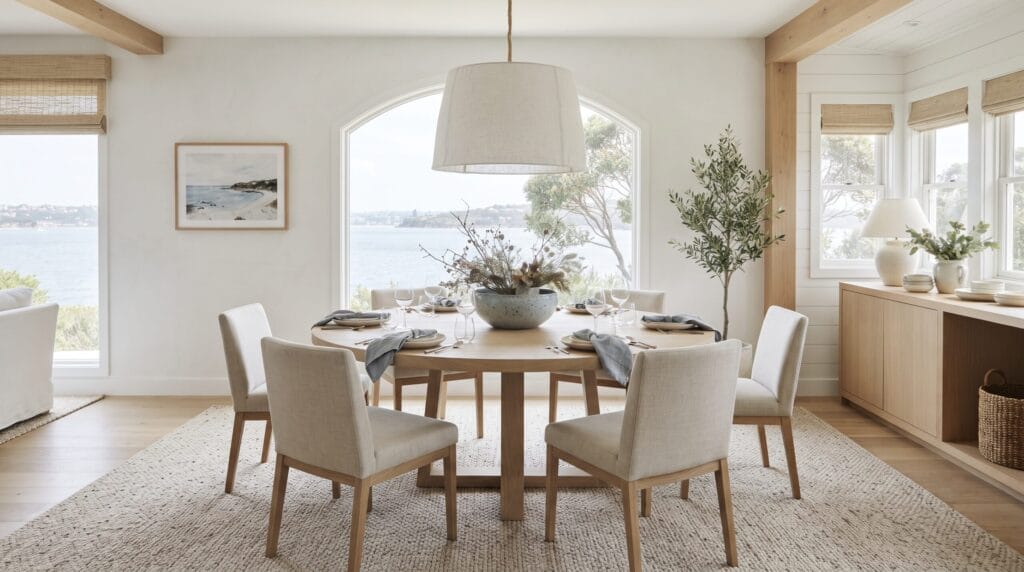
Dining rooms can feel light without looking casual in a negative way.
Use
- Pale wood table
- Simple chairs
- Linen pendant
- Neutral rug
- Ceramic centerpiece
Add
Blue-gray or sage through napkins, art, or seat cushions.
Why It Works
Natural materials keep the room warm while the palette remains airy.
17. Bring Coastal Style Into the Kitchen
Coastal kitchens work best when they feel bright and uncluttered.
Use
- Warm white cabinetry
- Pale wood accents
- Stone or light quartz
- Simple hardware
- Glass pendant lighting
Keep Counters Clear
Display only a few useful objects such as:
- Wood cutting board
- Ceramic bowl
- Herb pot
- Glass jar
Why It Works
A lighter visual field makes the kitchen feel larger.
18. Create a Coastal Bathroom With Soft Contrast
Bathrooms can use coastal style without obvious beach decor.
Combine
- Warm white tile
- Pale wood vanity
- Soft blue-gray paint
- White towels
- Woven basket
- Matte metal hardware
Add
One simple plant or branch arrangement where appropriate.
Why It Works
The bathroom feels fresh and natural rather than themed.
19. Use Coastal Interior Design in Small Spaces
Small rooms benefit from the style’s emphasis on light and editing.
Prioritize
- Warm white walls
- Large mirror
- Pale wood
- Full-length curtains
- One woven accent
- Closed storage
Avoid
Too many small decorative objects.
Why It Works
Open sightlines and lighter finishes make compact spaces feel more breathable.
20. Create a Coastal Home on a Budget
A coastal look does not require expensive furniture.
Free Improvements
- Declutter
- Rearrange furniture
- Open curtains
- Clear surfaces
- Remove overly dark accessories
Lower-Cost Upgrades
- Linen-look curtains
- Cushion covers
- Woven basket
- Ceramic vase
- Secondhand wood table
- Glass decor
Save For
- Sofa
- Rug
- Dining table
- Bed
- Window treatments
Why It Works
The style depends more on palette and material consistency than luxury pricing.
21. Edit Before Adding More Decor
The final and most important coastal interior design principle is restraint.
Review
- Coffee tables
- Shelves
- Consoles
- Nightstands
- Dining tables
- Kitchen counters
Ask
- Does this support the palette?
- Is it useful?
- Is it meaningful?
- Is the scale right?
- Does it make the room feel lighter?
- Would the room feel better without it?
Why It Works
Relaxed rooms still need negative space.
Coastal Interior Design by Room
| Room | Main Goal | Best Materials | High-Impact Upgrade |
| Living room | Breezy comfort | Linen, pale wood, wool | Neutral sofa and large rug |
| Bedroom | Calm rest | Cotton, linen, oak | Light bedding and curtains |
| Dining room | Relaxed gathering | Wood, ceramic, woven fiber | Pale wood table |
| Kitchen | Bright function | Wood, stone, glass | Clear counters |
| Bathroom | Fresh simplicity | Tile, wood, woven fiber | Warm white and blue-gray palette |
| Entryway | Light welcome | Wood, basketry, glass | Mirror and slim console |
| Home office | Calm focus | Pale wood, linen, ceramic | Simple desk and closed storage |
Coastal Interior Design Color Palettes
Classic Light Coastal
- Warm white
- Sand
- Pale oak
- Sky blue
- Charcoal
Soft Sea-Glass
- Cream
- Sea-glass green
- Natural wood
- Warm gray
- Soft black
Refined Coastal Neutral
- Ivory
- Oatmeal
- Taupe
- Walnut
- Dusty blue
Coastal Sage
- Warm white
- Sage
- Pale oak
- Beige
- Blue-gray
Coastal Materials Compared
| Material | Best Uses | Main Benefit | Design Note |
| Linen | Curtains, bedding | Soft and airy | Creates movement |
| Pale oak | Furniture, floors | Light natural warmth | Keeps rooms bright |
| Rattan | Chairs, lamps | Adds texture | Use selectively |
| Wool | Rugs, throws | Comfort | Softens hard surfaces |
| Ceramic | Lamps, bowls, vases | Handmade feel | Works well in matte finishes |
| Glass | Vases, lighting | Visual lightness | Good for subtle color |
| Stone | Tables, kitchens, baths | Timeless weight | Balance with textiles |
How to Make Coastal Interior Design Look More Expensive
Use Fewer Coastal References
Subtle color and material cues look more refined than obvious beach symbols.
Improve Rug Scale
A larger rug makes the room feel more complete.
Use Full-Length Curtains
Long linen or linen-look curtains create softness and height.
Repeat Natural Materials
Use pale wood, ceramic, glass, and woven texture consistently.
Choose Larger Artwork
One strong abstract or landscape piece can feel more intentional than many small prints.
Keep Surfaces Clear
Negative space helps natural materials stand out.
Coastal Interior Design for Renters
Renters can create a strong coastal look with portable pieces.
Use
- Rugs
- Curtains
- Lamps
- Mirrors
- Wood furniture
- Woven baskets
- Ceramics
- Glass decor
Check the Lease Before
- Painting
- Drilling
- Changing fixtures
- Applying adhesives
Choose Portable Investments
Spend more on furniture, textiles, and lighting that can move with you.
Common Coastal Interior Design Mistakes
Using Too Much Blue
Blue should support the room rather than dominate it.
Buying Too Much Beach-Themed Decor
Seashell signs and nautical symbols can make the room feel literal.
Using Only White
Without beige, wood, texture, or darker contrast, the room may feel flat.
Overusing Rattan
A few woven pieces usually work better than an entire matching set.
Ignoring Storage
Visible clutter undermines the relaxed feeling.
Choosing Furniture That Is Too Formal
Coastal rooms should feel comfortable and easy to use.
Using Rugs That Are Too Small
Small rugs can make furniture arrangements look disconnected.
Forgetting Contrast
A little charcoal, black, walnut, or deeper blue can keep the palette grounded.
Coastal Interior Design Checklist
Use this coastal interior design checklist:
- Walls feel light and warm.
- Sandy neutrals soften white surfaces.
- Pale wood is a key material.
- Deeper wood is used selectively.
- Curtains allow plenty of daylight.
- Main seating feels comfortable.
- Blue accents are muted rather than overly nautical.
- Sea-glass green is used selectively.
- Woven texture adds warmth.
- Rugs are large enough.
- Stripes are limited to a few accents.
- Glass adds visual lightness.
- Ceramics are simple and well scaled.
- Living room circulation is open.
- Bedrooms feel fresh and calm.
- Dining rooms stay relaxed.
- Kitchen counters remain clear.
- Bathrooms avoid literal beach decor.
- Small rooms preserve sightlines.
- The home feels coastal without looking themed.
Frequently Asked Questions
What Is Coastal Interior Design?
Coastal interior design uses light colors, natural materials, relaxed furniture, abundant daylight, and subtle references to sea and sky to create an airy, comfortable home.
What Colors Work Best for Coastal Interiors?
Warm white, cream, sand, pale blue, dusty blue, sea-glass green, sage, pale oak, taupe, and charcoal all work well.
What Materials Define Coastal Style?
Linen, cotton, pale wood, rattan, woven fiber, wool, ceramic, glass, and stone are common coastal materials.
How Do I Make Coastal Decor Look Elegant?
Use fewer colors, natural materials, large rugs, full curtains, restrained blue accents, simple artwork, and minimal themed accessories.
Can Coastal Interior Design Work in a Small Home?
Yes. Light walls, pale wood, full-length curtains, mirrors, closed storage, and fewer decorative objects work especially well in compact spaces.
How Can I Create Coastal Style on a Budget?
Declutter first, then add linen-look curtains, woven baskets, ceramic or glass accents, cushion covers, and secondhand pale wood furniture.
Is Coastal Interior Design the Same as Nautical Style?
No. Coastal style is usually softer and more natural, while nautical style often uses stronger navy, stripes, rope, anchors, and marine motifs.
Conclusion
The best coastal interior design creates a light and relaxed home through warm whites, sandy neutrals, natural wood, woven texture, linen, subtle blue and green accents, and abundant daylight.
Start with a bright neutral foundation, then layer pale wood, comfortable furniture, full-length curtains, a large rug, and a few natural textures. Use color selectively so the room feels calm rather than themed.
Storage and editing matter just as much as decoration. When surfaces stay clear and accessories are carefully chosen, the materials have more room to stand out.
Most importantly, aim for comfort. Coastal interiors should feel easy to live in, not like staged vacation properties.
When natural light, relaxed furniture, thoughtful texture, subtle color, and visual breathing room work together, coastal style can create a home that feels bright, peaceful, and timeless.
Also Read: “Modern Interior Design Ideas for Every Room in Your Home“