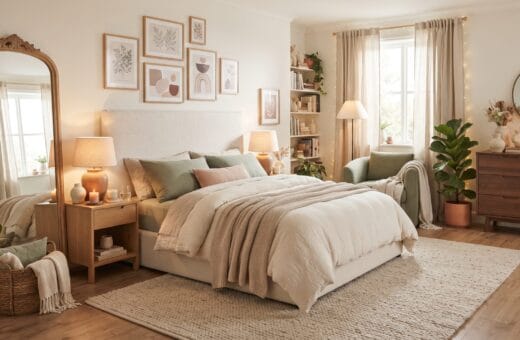
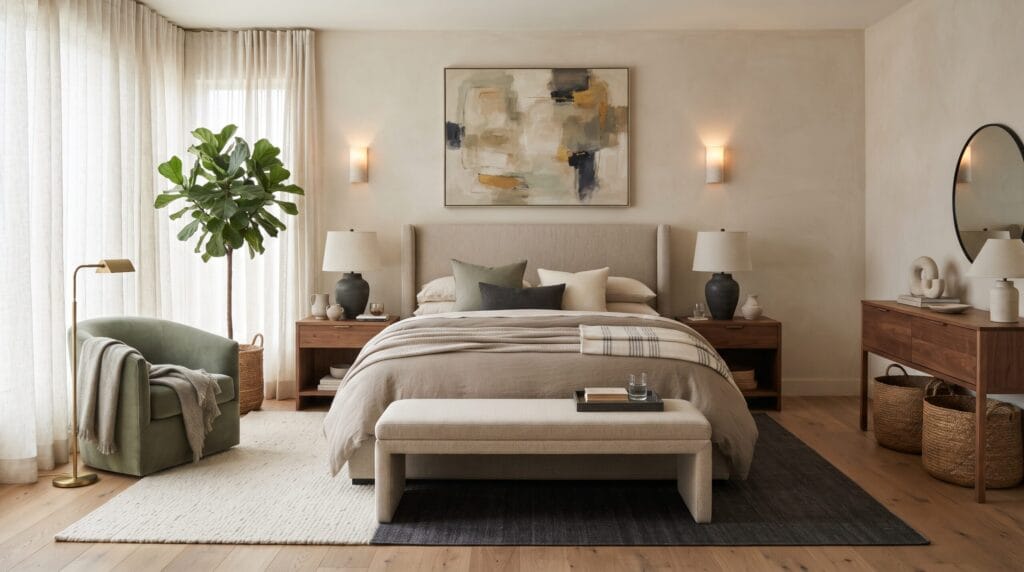
A bedroom should do more than look attractive. It should help you unwind, sleep well, get dressed comfortably, and start the day in a space that feels calm and organized. The best bedroom ideas balance style with comfort by improving the bed, lighting, color, furniture, storage, textiles, and visual clutter.
Because the bed is usually the largest element in the room, small changes around it can have an outsized effect. Better bedding, a correctly scaled headboard, floor-length curtains, softer bedside lighting, and a larger rug can make a basic room feel significantly more polished. At the same time, practical storage and edited surfaces help preserve the relaxing atmosphere.
A stylish bedroom does not need to follow one design trend. Warm minimalism, modern organic style, traditional details, contemporary furniture, vintage accents, and hotel-inspired symmetry can all work. What matters is that the colors, materials, proportions, and lighting feel connected.
This guide shares 21 practical bedroom ideas for large bedrooms, small rooms, rentals, guest rooms, and primary bedrooms. You can use a few ideas for a quick refresh or combine several for a more complete transformation.
What Makes a Bedroom Feel Relaxing?
A relaxing bedroom usually gets a few basics right.
A Calm Color Palette
Too many competing colors can make the room feel visually busy.
Comfortable Bedding
Sheets, pillows, blankets, and the mattress affect both appearance and comfort.
Soft Lighting
Multiple light sources create a gentler atmosphere than one bright overhead fixture.
Clear Surfaces
Nightstands and dressers feel calmer when daily clutter is stored away.
Good Scale
The rug, artwork, lamps, headboard, and furniture should fit the room rather than look undersized.
Personal Details
Books, art, photographs, and meaningful objects keep the room from feeling generic.
How to Plan Bedroom Ideas Before Buying Anything
Before shopping, identify the main problem.
Ask Yourself
- Does the bed look unfinished?
- Is the room too dark?
- Are the curtains too short?
- Is the rug too small?
- Are clothes and accessories visible everywhere?
- Is the furniture too large?
- Does the room feel empty?
- Is there no clear color palette?
Fix the biggest issue first.
This helps prevent decorative purchases that do not improve the room.
1. Make the Bed the Main Focal Point
One of the strongest bedroom ideas is to organize the room around the bed.
Position the Bed Carefully
When possible, place the bed where it feels visually grounded and allows comfortable circulation.
Create Balance Around It
Use:
- Nightstands
- Lamps
- Artwork
- Headboard
- Curtains
Why It Works
A clear focal point makes the entire room easier to style.
2. Add a Properly Scaled Headboard
A headboard can give the bedroom more visual structure.
Good Options
- Upholstered
- Wood
- Cane
- Simple panel
- Wall-mounted design
Color Directions
- Ivory
- Mushroom
- Taupe
- Walnut
- Sage
- Charcoal
Scale Tip
The headboard should feel substantial enough for the bed.
A small headboard can make a large bed look visually weak.
3. Layer Bedding in a Simple Formula
Better bedding is one of the fastest bedroom ideas for changing the look of the room.
Use
- Fitted and flat sheets
- Duvet or quilt
- Sleeping pillows
- Two larger decorative pillows
- One accent cushion
- Folded throw
Keep the Palette Controlled
Use two or three related colors.
For example:
- Ivory
- Taupe
- Warm brown
or:
- White
- Dusty blue
- Charcoal
Avoid Excess
Too many decorative pillows can make the bed impractical.
4. Choose a Larger Bedroom Rug
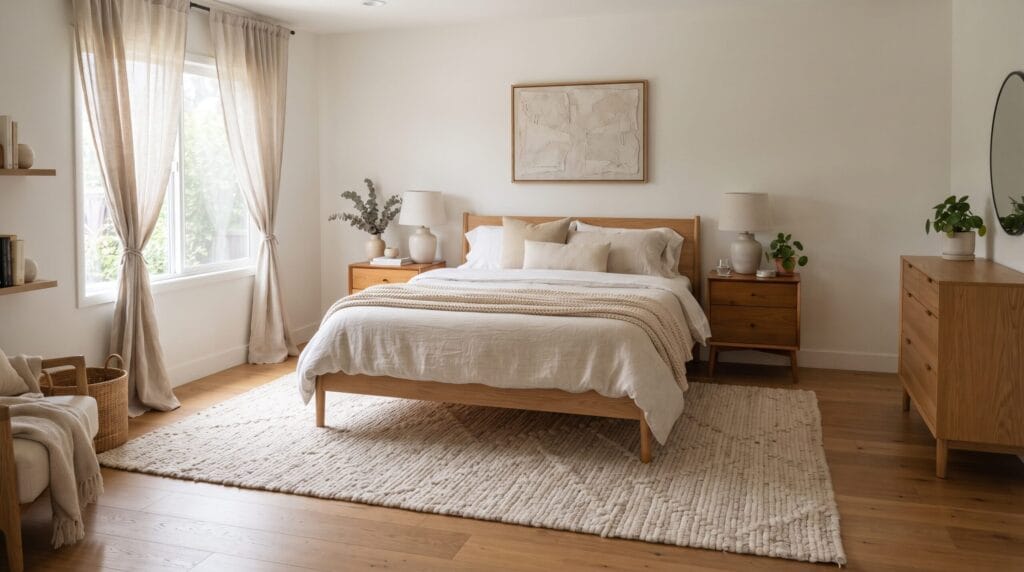
A properly sized rug makes the bed feel grounded.
Placement
The rug should extend beyond the sides and foot of the bed.
Good Materials
- Wool
- Wool blend
- Low-pile texture
- Soft woven rug
- Natural-fiber blend
Why It Works
The rug adds warmth, softness, and visual scale.
5. Hang Curtains High and Wide
Curtains can change the apparent proportions of the bedroom.
Try
- Mounting the rod above the window
- Extending it wider than the frame
- Using floor-length panels
- Adding enough fabric for soft folds
Good Fabrics
- Linen
- Linen blend
- Cotton
- Velvet for a richer look
Sleep Tip
Use blackout lining or a blackout layer when needed for sleep.
6. Add Sheers Behind Heavier Curtains
Layered curtains create a softer, hotel-inspired look.
During the Day
Sheers can filter harsh daylight while preserving privacy.
At Night
Heavier curtains provide darkness and visual warmth.
Keep the Colors Related
Use sheers in white, ivory, or light beige with darker or slightly richer outer panels.
7. Use Matching or Coordinated Nightstands
Symmetry can make a bedroom feel calm.
Nightstand Options
- Matching pair
- Same height but different design
- Similar material and color
Keep the Surface Simple
Use:
- Lamp
- Book
- Water
- Small tray
- One decorative object
Store the Rest
Chargers, cosmetics, and small clutter should go inside drawers or boxes when possible.
8. Add Better Bedside Lighting
Lighting is one of the most important bedroom ideas because it changes both mood and function.
Options
- Table lamps
- Wall sconces
- Pendant lights
- Reading lights
Scale Matters
Tiny lamps can look lost beside a large bed.
Evening Use
Warm, lower-level lighting is usually more relaxing than bright ceiling light.
Safety
Hardwired lighting should be installed by a qualified professional according to local requirements.
9. Create a Layered Lighting Plan
A comfortable bedroom needs more than bedside lamps.
Ambient Light
General room lighting.
Task Light
Useful for reading, dressing, or working.
Accent Light
Adds atmosphere around artwork, shelving, or architectural details.
Why It Works
Different lighting levels allow the room to change from practical in the morning to calm at night.
10. Use a Calm Bedroom Color Palette
Color has a major effect on the atmosphere.
Warm Neutral Palette
- Ivory
- Beige
- Taupe
- Walnut
- Soft black
Natural Palette
- Cream
- Sage
- Light oak
- Sand
- Charcoal
Soft Blue Palette
- Warm white
- Dusty blue
- Medium wood
- Gray
- Navy accent
Moody Palette
- Mushroom
- Deep green
- Espresso
- Burgundy
- Warm cream
Simple Rule
Choose one dominant neutral, one supporting color, and one stronger accent.
11. Add One Large Artwork Piece
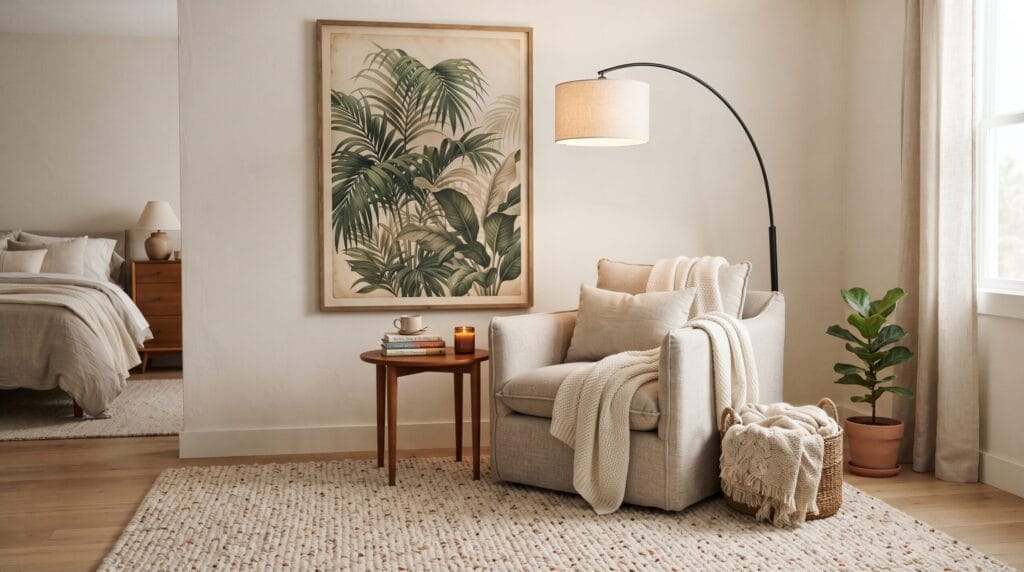
Artwork can make a bedroom feel more finished.
Good Locations
- Above the headboard
- Opposite the bed
- Above a dresser
- Beside a reading chair
Art Directions
- Abstract print
- Landscape
- Black-and-white photography
- Textile art
- Botanical art
Scale Tip
A single larger artwork often looks stronger than several tiny frames.
12. Create a Feature Wall Behind the Bed
A bed wall can become a focal point without adding more furniture.
Options
- Paint
- Wallpaper
- Wood paneling
- Picture-frame molding
- Upholstered panels
- Textured wall finish
Keep It Balanced
If the wall treatment is visually strong, you may not need artwork above it.
13. Add an Upholstered Bench or Small Stool
A bench can make the room feel more complete.
Good Locations
- Foot of the bed
- Beside a window
- Near a dresser
Use It For
- Sitting
- Placing a throw
- Temporary clothing storage
Scale Tip
The bench should not block movement around the bed.
14. Create a Small Reading Corner
A quiet corner can make the bedroom more functional.
Use
- Comfortable chair
- Small side table
- Reading lamp
- Cushion
- Throw
- Basket
Best Location
Choose a spot near natural light when possible.
Small Room Alternative
Use a compact chair or stool rather than forcing in a large lounge chair.
15. Add Greenery Selectively
Plants can soften straight furniture lines.
Try
- One tall plant
- Small nightstand plant
- Branches in a vase
- Fresh flowers
Choose for the Light
Select plants according to actual room conditions.
Keep It Simple
One substantial plant can look calmer than several tiny plants.
16. Keep the Dresser Surface Edited
Dressers can become clutter zones.
Simple Styling Formula
Use:
- Mirror or artwork
- Lamp
- Tray
- Vase
- Small box
Store
- Loose jewelry
- Receipts
- Cosmetics
- Cables
- Paper clutter
Why It Works
A cleaner dresser gives the room visual breathing space.
17. Improve Hidden Storage
Storage is essential to relaxing bedroom ideas.
Use
- Under-bed drawers
- Wardrobe organizers
- Dresser drawers
- Storage bench
- Baskets inside closets
- Bedside drawers
Keep Frequently Used Items Easy to Reach
Good storage should reduce clutter without making daily routines inconvenient.
Organize by Category
Group clothing, accessories, electronics, and linens separately.
18. Use Mirrors to Increase Light
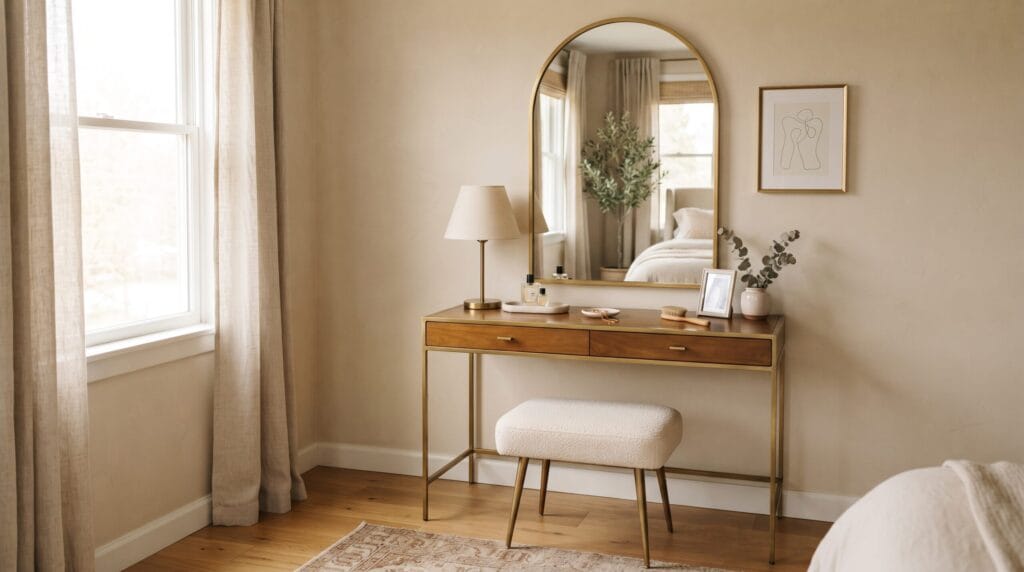
Mirrors can add depth and reflect daylight.
Good Locations
- Above a dresser
- Near a window
- On a wardrobe
- Beside a vanity
Frame Options
- Natural wood
- Thin black metal
- Brass
- Frameless
Check the Reflection
A mirror should reflect something visually calm rather than clutter.
19. Make a Small Bedroom Feel Bigger
Small bedrooms need careful scale and editing.
Use
- Bed with storage
- Wall-mounted lighting
- Narrow nightstands
- Full-length curtains
- Large mirror
- Vertical storage
Keep the Floor Clear
Avoid adding unnecessary chairs and tables.
Do Not Use Tiny Everything
A few properly scaled pieces often look better than many small ones.
20. Create a Renter-Friendly Bedroom Makeover
Renters can still make significant changes.
Use
- Rugs
- Lamps
- Curtains
- Freestanding mirrors
- Bedding
- Artwork with approved mounting
- Removable wall treatments where permitted
- Freestanding storage
Check the Lease Before
- Painting
- Drilling
- Changing fixtures
- Applying adhesives
Keep Original Hardware
If temporary changes are permitted, save original pieces for reinstalling later.
21. Edit the Bedroom Before Buying More
The final and most important of these bedroom ideas is editing.
Review
- Nightstands
- Dresser
- Floor
- Bed
- Shelves
- Chair
- Window area
Ask
- Is this useful?
- Is this meaningful?
- Does it support the color palette?
- Is the scale right?
- Does it make the room calmer?
- Would the room feel better without it?
Remove Visual Noise
A relaxing bedroom often contains fewer visible objects, allowing the bed, lighting, textiles, and artwork to stand out.
Bedroom Ideas by Budget
| Budget | Best Upgrades | Typical Impact |
| $0 | Rearrange furniture, declutter, restyle nightstands | High when layout or clutter is the problem |
| Under $75 | Cushion covers, throw, lampshade, small art | Quick refresh |
| $75-$250 | Curtains, bedding, mirror, bedside lamps | Noticeable transformation |
| $250-$700 | Larger rug, headboard, bench, storage | Strong visual and functional change |
| $700+ | Bed, mattress, premium lighting, custom curtains | Long-term upgrade |
Costs vary by location, brand, room size, material, and whether items are new or secondhand.
Bedroom Ideas by Style
| Style | Main Colors | Key Materials | Best Details |
| Warm minimal | Cream, taupe, charcoal | Linen, oak, wool | Large art, simple lamps |
| Modern organic | Sand, olive, walnut | Wood, stone, woven fiber | Plants, textured rug |
| Contemporary | Greige, black, muted blue | Upholstery, glass, wood | Sculptural lighting |
| Traditional | Ivory, navy, walnut | Cotton, wood, brass | Symmetry, classic lamps |
| Moody | Deep green, burgundy, espresso | Velvet, dark wood, brass | Layered lighting |
| Scandinavian | White, beige, pale oak | Cotton, wool, light wood | Simple forms, soft textiles |
How to Make a Bedroom Look More Expensive
A polished bedroom depends on scale and editing.
Improve the Bed First
Use better bedding, a stronger headboard, and correctly scaled pillows.
Improve Lighting
Use substantial bedside lamps and layered light.
Use Full-Length Curtains
Long curtains usually feel more finished.
Choose a Larger Rug
A correctly sized rug visually anchors the bed.
Coordinate Finishes
Repeat wood and metal tones.
Leave Empty Space
Do not fill every wall, nightstand, and corner.
Bedroom Ideas for Better Relaxation
A relaxing room should support winding down.
Reduce Visual Clutter
Clear surfaces help the room feel calmer.
Lower Lighting in the Evening
Use bedside lamps or other soft light sources.
Keep Work Separate Where Possible
If the bedroom includes a desk, keep the work zone visually organized.
Choose Comfortable Textiles
Bedding, rugs, curtains, and upholstered furniture affect how the room feels.
Keep the Palette Cohesive
Too many unrelated colors and patterns can create visual noise.
Common Bedroom Design Mistakes
Choosing a Rug That Is Too Small
An undersized rug can make the bed look disconnected.
Hanging Curtains Too Short
Full-length curtains usually create a more polished result.
Using Tiny Bedside Lamps
Lighting should match the scale of the bed and nightstands.
Adding Too Many Decorative Pillows
The bed should still be practical to use.
Matching Every Furniture Piece
Coordinated pieces often look more natural than a complete matching set.
Ignoring Storage
Visible clutter can undermine an otherwise stylish bedroom.
Using Only Overhead Lighting
A bedroom benefits from layered light.
Filling Every Corner
Empty floor space can make the room feel calmer.
Bedroom Ideas Checklist
Use this bedroom ideas checklist:
- The bed is the main focal point.
- The headboard is correctly scaled.
- Bedding feels comfortable and layered.
- The rug extends beyond the bed.
- Curtains are full length where appropriate.
- Lighting comes from multiple sources.
- Bedside lamps are substantial enough.
- Nightstands remain mostly clear.
- The color palette feels cohesive.
- Artwork is correctly scaled.
- Storage supports daily routines.
- Mirrors reflect calm views.
- Seating does not block movement.
- Dresser styling is edited.
- Small rooms use vertical storage.
- Renter updates are reversible where needed.
- New purchases solve a specific problem.
- The room feels relaxing as well as stylish.
Frequently Asked Questions
What Are the Easiest Bedroom Ideas for Beginners?
Start with better bedding, decluttering, bedside lighting, full-length curtains, a larger rug, a stronger headboard, and one substantial artwork.
What Colors Are Best for a Relaxing Bedroom?
Warm white, cream, taupe, mushroom, sage, dusty blue, muted green, walnut, and charcoal can all work well.
How Do I Make My Bedroom Look More Expensive?
Improve the bed, use larger lamps, hang full-length curtains, add a properly sized rug, coordinate finishes, and keep surfaces edited.
How Can I Make a Small Bedroom Look Bigger?
Use fewer furniture pieces, vertical storage, narrow nightstands, mirrors, wall-mounted lighting, full-length curtains, and hidden storage.
Should Bedroom Furniture Match?
No. Furniture can coordinate through color, scale, wood tone, or material without being identical.
How Many Decorative Pillows Should a Bed Have?
There is no fixed number. Use enough to create softness while keeping the bed easy to use every day.
How Can I Make My Bedroom More Relaxing at Night?
Reduce clutter, use soft bedside lighting, keep the color palette controlled, choose comfortable bedding, and avoid making the room visually busy.
Conclusion
The best bedroom ideas create a space that feels stylish because it is comfortable, balanced, and easy to live in.
Start with the bed. Improve the bedding, headboard, rug, and bedside lighting before adding more accessories. Then use full-length curtains, large artwork, coordinated furniture, hidden storage, and a calm color palette to build the rest of the room.
A relaxing bedroom does not need to be empty or perfectly matched. Personal books, art, photographs, plants, and meaningful objects can make the space feel warm and individual.
Most importantly, edit before adding more. When the room has clear surfaces, good lighting, comfortable textiles, proper scale, and enough breathing room, the result can feel both polished and deeply relaxing.
Also Read: “10 Minimalist Interior Design Styles for Calm, Modern Spaces“