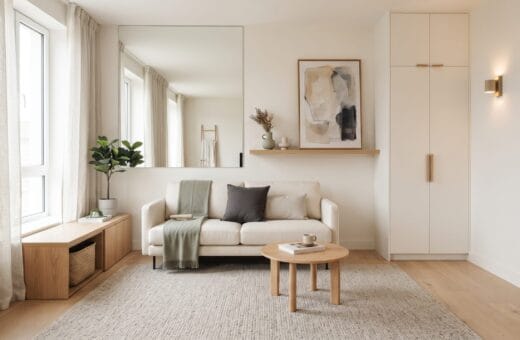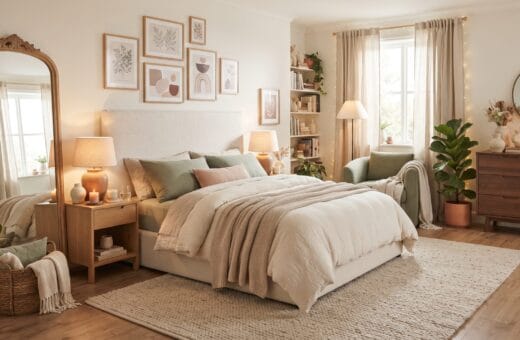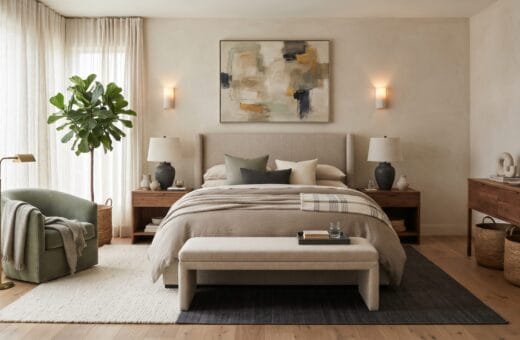
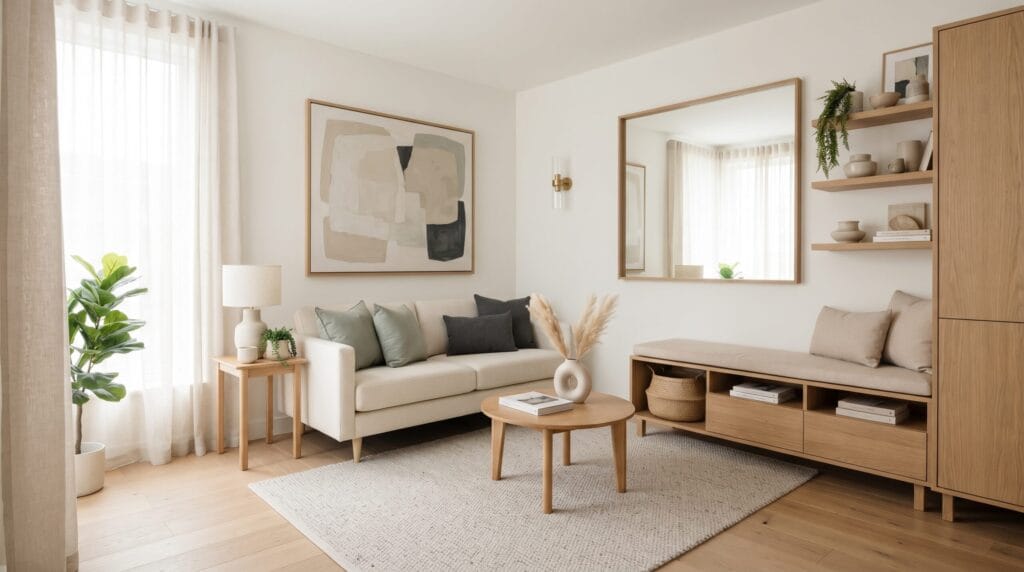
A small room can feel comfortable, stylish, and surprisingly spacious when the layout, furniture, lighting, color, and storage work together. The best small room ideas do not try to hide the size of the room. Instead, they reduce visual clutter, improve movement, make better use of vertical space, and help natural light travel more freely.
Many compact rooms feel smaller than they really are because too many objects compete for attention. Oversized furniture may block pathways, several tiny storage pieces can fragment the layout, short curtains can visually lower the ceiling, and poor lighting can make corners disappear into shadow. Fixing these issues often creates a bigger difference than adding more decor.
A successful small room also needs to be practical. Furniture should earn its place, storage should support daily routines, and decorative objects should be edited carefully. Multifunctional furniture, wall-mounted lighting, tall storage, mirrors, larger rugs, and a controlled color palette can all help the room feel more open without sacrificing comfort.
This guide shares 21 practical small room ideas for bedrooms, living rooms, home offices, dining areas, rentals, studio apartments, and other compact spaces. You can apply a few ideas for a quick refresh or combine several for a more complete transformation.
Why Small Room Ideas Can Make a Space Feel Bigger
The strongest small room ideas usually improve one of five things:
- Floor visibility
- Light
- Storage
- Scale
- Visual continuity
A room feels larger when the eye can move easily across it.
That means:
- Fewer interruptions
- Cleaner pathways
- Better furniture proportions
- More vertical storage
- Larger rather than many tiny decor pieces
- Better use of mirrors and light
The goal is not emptiness. The goal is clarity.
Before You Rearrange the Room, Measure It
Good small-space design starts with accurate measurements.
Record
- Room width and length
- Ceiling height
- Window dimensions
- Door swings
- Furniture dimensions
- Walkways
- Outlet locations
- Storage depth
Why It Matters
A sofa that is only slightly too deep can block circulation. A cabinet that is a few inches too wide can make a corner feel crowded.
Measurement prevents expensive mistakes.
1. Remove One Unnecessary Furniture Piece
One of the easiest small room ideas costs nothing.
Look for
- Extra side table
- Unused chair
- Duplicate storage unit
- Oversized bench
- Decorative furniture with no practical use
Why It Works
Removing one piece can improve circulation and reveal more floor area.
Quick Test
Take a photo of the room, remove one item, then photograph it again.
If the room feels calmer and easier to navigate, the furniture probably was not necessary.
2. Keep the Main Walkway Clear
A compact room should be easy to move through.
Try
- Moving furniture away from doorways
- Avoiding stools in circulation zones
- Keeping coffee tables proportional
- Leaving clear access to windows and storage
Why It Works
Visible, uninterrupted pathways make the room feel less crowded.
Practical Rule
Do not force people to walk around several small pieces to cross the room.
3. Choose Fewer, Better-Scaled Furniture Pieces
Small rooms do not always need tiny furniture.
Better Approach
Use:
- One properly sized sofa
- One useful coffee table
- One slim storage unit
- One substantial artwork
instead of several miniature pieces.
Why It Works
Too many small objects can make a room look fragmented.
A few correctly scaled pieces create stronger visual order.
4. Use Furniture With Visible Legs
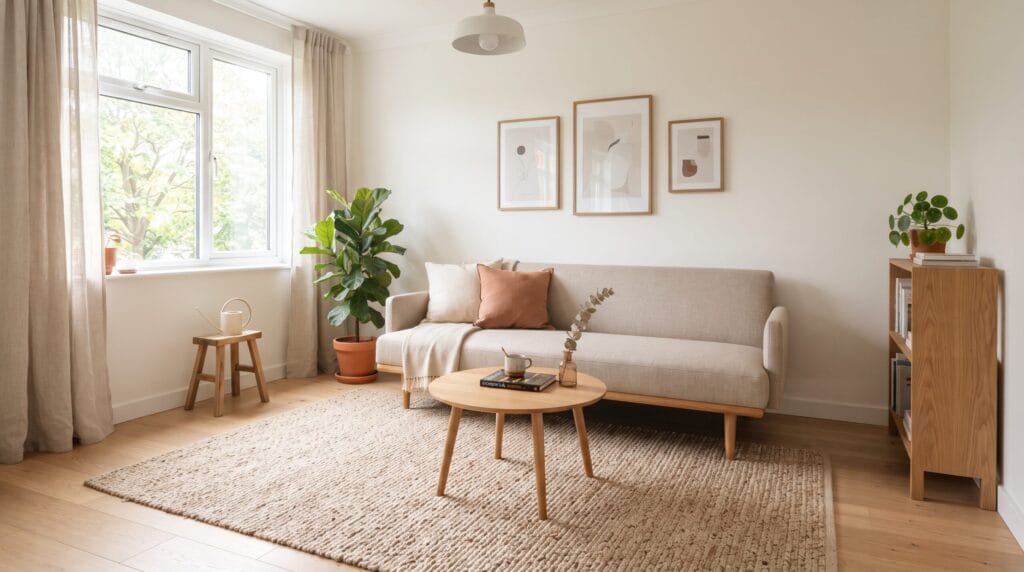
Furniture raised slightly off the floor can make the room feel lighter.
Good Options
- Sofa with visible legs
- Bed frame with clearance
- Slim console
- Leggy side table
- Floating vanity
Why It Works
Seeing more floor creates a greater sense of continuity.
Keep It Practical
Do not choose raised furniture if the open space underneath will become cluttered.
5. Add a Large Mirror
Mirrors are one of the most effective small room ideas for adding visual depth.
Good Locations
- Opposite or near a window
- Above a console
- Beside a dining area
- On a bedroom wall
- In a narrow hallway
Frame Options
- Thin black metal
- Natural wood
- Brass
- Frameless
Check the Reflection
A mirror should reflect daylight, greenery, art, or open space rather than clutter.
6. Hang Curtains High and Wide
Curtains can change the apparent proportions of a room.
Try
- Mounting the rod above the window
- Extending it wider than the frame
- Using floor-length panels
- Keeping the fabric relatively light
Why It Works
The eye reads the window as taller and larger.
Good Fabrics
- Linen
- Linen blend
- Cotton
- Sheer panels
7. Use Light-Filtering Curtains During the Day
Natural light can make a compact room feel more open.
Use
- Sheer curtains
- Light linen panels
- Adjustable blinds
- Layered curtains with a lighter daytime layer
Avoid
Heavy window treatments that block daylight when privacy does not require them.
Sleep or Privacy Needs
Use blackout or lined panels where appropriate, but keep them open during the day.
8. Layer Lighting Instead of Using One Overhead Fixture
Lighting is one of the most useful small room ideas because dark corners can visually shrink a space.
Combine
- Ceiling light
- Wall light
- Floor lamp
- Table lamp
- Small accent light
Use Different Heights
This creates depth.
Wall-Mounted Option
Wall sconces or plug-in wall lights can save table space.
Safety
Hardwired lighting should be installed by a qualified professional.
9. Use a Controlled Color Palette
Too many unrelated colors can make a small room feel busy.
Simple Formula
Choose:
- One dominant neutral
- One supporting tone
- One darker accent
Example
- Warm white
- Sage
- Charcoal
or:
- Cream
- Taupe
- Walnut
Why It Works
Color repetition creates visual continuity.
10. Paint Walls and Trim in Similar Tones
Strong contrast can break a compact room into smaller visual sections.
Try
- Warm white walls with slightly warmer white trim
- Greige walls with similar-toned trim
- Pale sage walls with soft off-white trim
Why It Works
Lower contrast can make walls feel more continuous.
Alternative
Color drenching can also work in small rooms when the chosen color is appropriate for the space and light.
11. Choose One Larger Rug
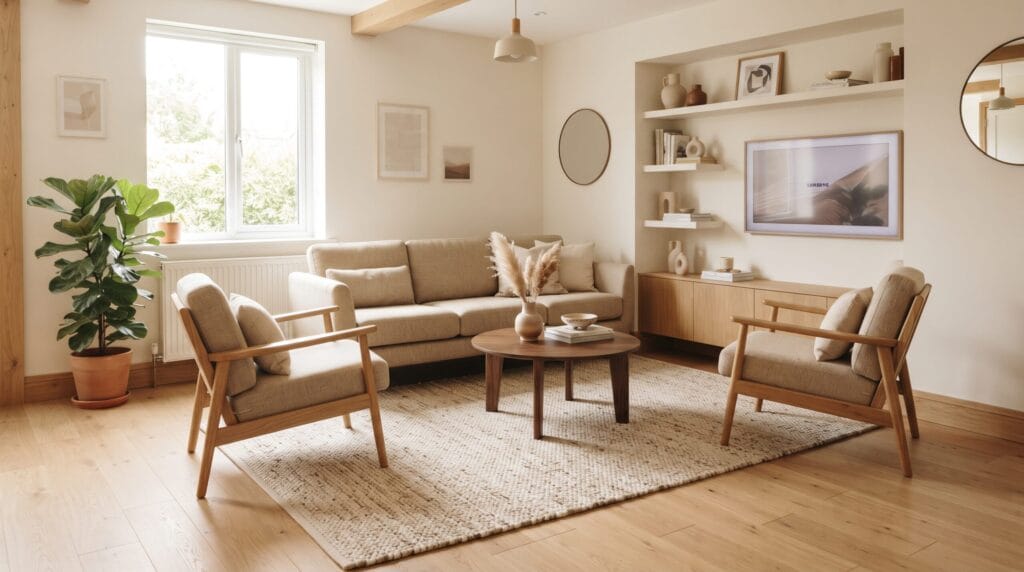
A larger rug can make a room feel more cohesive.
Living Room
Try to place at least the front legs of the main seating on the rug.
Bedroom
Let the rug extend beyond the sides and foot of the bed.
Why It Works
A tiny rug can divide the floor visually.
A larger rug creates one connected zone.
12. Use Multifunctional Furniture
Multifunctional pieces are essential small room ideas because they reduce the number of objects needed.
Good Options
- Storage ottoman
- Bed with drawers
- Bench with storage
- Extendable dining table
- Desk-console combination
- Nesting tables
Buying Rule
Choose multifunctional furniture only when both functions are genuinely useful.
13. Use Vertical Storage
Small rooms often have more wall space than floor space.
Try
- Tall bookcase
- Wall shelves
- High cabinets
- Over-door storage
- Tall wardrobe
- Vertical pegboard
Why It Works
Vertical storage preserves floor area.
Keep It Balanced
Do not fill every wall from floor to ceiling.
Leave some empty space so the room can breathe.
14. Use Floating Shelves Instead of Bulky Cabinets
Floating shelves can add storage without visually closing the room.
Good Uses
- Books
- Small decor
- Everyday dishes
- Office supplies
- Plants
Styling Rule
Keep shelves edited.
Avoid
Using every shelf as overflow storage.
Open shelving only looks spacious when it is controlled.
15. Choose Closed Storage for Visual Clutter
Not everything should be displayed.
Store
- Cables
- Papers
- Toys
- Cleaning supplies
- Electronics
- Extra toiletries
- Clothing accessories
Good Storage Pieces
- Slim cabinet
- Sideboard
- Storage bed
- Drawer unit
- Wardrobe
- Basket inside closed furniture
Why It Works
A room with clear surfaces feels more spacious.
16. Use One Large Artwork Piece
Wall decor should help simplify the room.
Best Locations
- Above the sofa
- Above the bed
- Opposite the main entrance
- Above a desk
Why It Works
One substantial artwork creates a focal point without visual clutter.
Alternative
Use a small, structured gallery grid with consistent frames and spacing.
17. Choose Round or Curved Furniture Where Helpful
Curved shapes can improve circulation in tight areas.
Try
- Round dining table
- Rounded coffee table
- Curved side table
- Soft-cornered chair
Why It Works
Rounded furniture reduces hard corners in pathways.
Best For
- Narrow living rooms
- Small dining areas
- Studio apartments
- Compact bedrooms
18. Use Wall-Mounted Furniture Where Possible
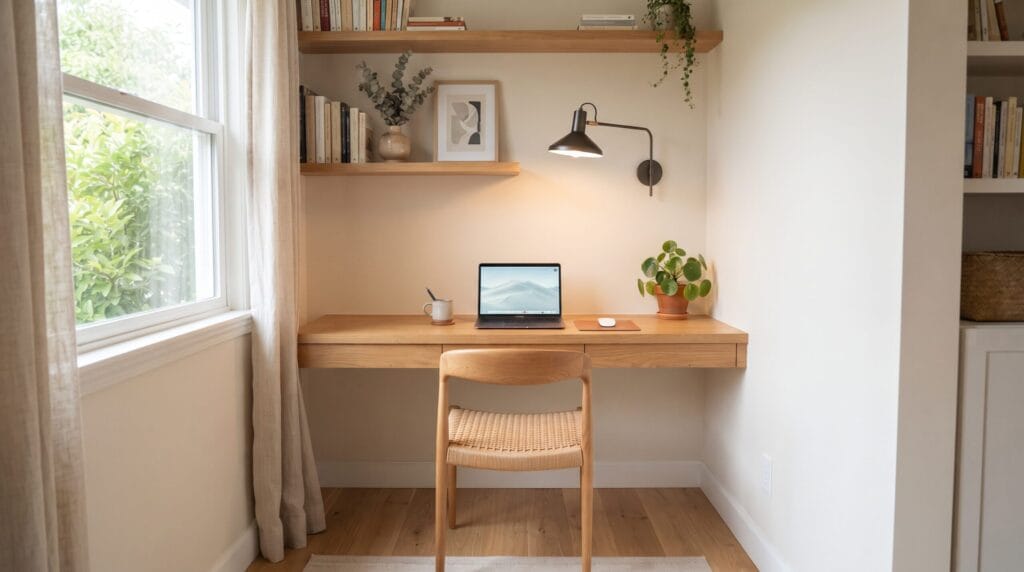
Wall-mounted elements can free floor space.
Options
- Floating desk
- Wall-mounted bedside table
- Floating vanity
- Wall shelves
- Wall-mounted lighting
Why It Works
Visible floor area makes the room feel lighter.
Installation
Use appropriate hardware for the wall type and the expected load.
19. Keep Surfaces Mostly Clear
Visible clutter can quickly shrink a room.
Review
- Coffee table
- Desk
- Dresser
- Nightstand
- Kitchen counter
- Bathroom vanity
Keep Out
Only items that are:
- Used frequently
- Visually important
- Meaningful
Use Trays
Grouping small objects can make them read as one unit rather than several pieces of clutter.
20. Make a Small Bedroom Feel Larger
Bedrooms often become crowded because the bed already occupies most of the floor.
Use
- Narrow nightstands
- Wall-mounted lighting
- Bed with storage
- Full-length curtains
- Large mirror
- One larger artwork
- Vertical storage
Avoid
Adding a chair, bench, dresser, and extra table when there is not enough circulation.
Priority
Keep the path around the bed as clear as possible.
21. Edit Before Buying More
The final and most important of these small room ideas is editing.
Review
- Furniture
- Decor
- Storage
- Lighting
- Wall art
- Textiles
Ask
- Is this useful?
- Is it correctly scaled?
- Does it block movement?
- Does it create visual clutter?
- Does it need to be visible?
- Would the room feel bigger without it?
Remove Before Adding
A small room usually improves faster when unnecessary objects are removed before new ones are purchased.
Small Room Ideas by Room Type
| Room | Main Problem | Best Small-Space Solution | High-Impact Move |
| Living room | Crowded furniture | Fewer pieces, larger rug | Clear the main walkway |
| Bedroom | Bed dominates floor | Storage bed, wall lights | Free space around the bed |
| Home office | Surface clutter | Floating desk, vertical storage | Clear the desktop |
| Dining area | Limited footprint | Round or extendable table | Use fewer chairs daily |
| Entryway | Clutter buildup | Wall hooks, narrow storage | Use vertical organization |
| Bathroom | Small surfaces | Wall storage, closed vanity | Clear the counter |
| Studio | Too many functions | Multifunctional furniture | Define only essential zones |
Small Room Ideas by Budget
| Budget | Best Upgrades | Typical Impact |
| $0 | Declutter, rearrange, remove furniture | High when crowding is the problem |
| Under $75 | Mirror, shelves, lamp, simple storage | Quick improvement |
| $75-$250 | Curtains, rug, wall lighting, slim furniture | Noticeable transformation |
| $250-$700 | Storage bed, larger mirror, tall cabinet | Strong functional change |
| $700+ | Custom storage, built-ins, major furniture replacement | Long-term solution |
Costs vary by location, material, room size, brand, and whether items are new or secondhand.
How to Make a Small Room Look More Expensive
A polished small room relies on scale, editing, and consistency.
Use Fewer Materials
Repeat the same wood and metal finishes.
Improve Lighting
Layered lighting adds depth.
Use Larger Decor
One larger mirror or artwork often looks more intentional than several tiny pieces.
Keep the Palette Controlled
Consistent color makes the room feel calmer.
Hide Clutter
Closed storage makes furniture and architecture more visible.
Use Full-Length Curtains
Long curtains can make the room feel taller and more finished.
Small Room Ideas for Renters
Renters can make compact rooms more functional without permanent construction.
Use
- Rugs
- Freestanding mirrors
- Tall bookcases
- Tension-rod or approved curtain systems
- Portable lighting
- Storage furniture
- Removable treatments where permitted
Check the Lease Before
- Drilling
- Painting
- Installing fixtures
- Applying adhesives
Choose Portable Investments
Focus on pieces that can move with you.
Small Room Color Palettes That Feel Open
Warm Neutral
- Warm white
- Beige
- Light oak
- Taupe
- Charcoal
Soft Green
- Cream
- Sage
- Natural wood
- Soft black
Light Contemporary
- Greige
- Dusty blue
- Pale oak
- Ivory
High Contrast
- Warm white
- Black accents
- Natural wood
- Greenery
The best palette depends on natural light, existing finishes, and personal preference.
Common Small Room Design Mistakes
Buying Too Much Furniture
More furniture does not always create more function.
Choosing Everything Small
Too many tiny pieces can make the room feel fragmented.
Blocking Natural Light
Tall furniture should not unnecessarily cover windows.
Ignoring Vertical Space
Walls can provide valuable storage.
Using a Rug That Is Too Small
A small rug can visually divide the room.
Using Only Overhead Lighting
Dark corners make the space feel smaller.
Filling Every Wall
Empty areas are important.
Ignoring Storage
Visible clutter quickly overwhelms compact rooms.
Small Room Ideas Checklist
Use this small room ideas checklist:
- The room has one clear primary purpose.
- Unnecessary furniture has been removed.
- The main walkway is open.
- Furniture fits the available floor area.
- Natural light is not blocked.
- Curtains improve the window proportions.
- Lighting comes from multiple sources.
- The color palette is controlled.
- The rug is properly scaled.
- Mirrors reflect light or open views.
- Tall storage uses vertical space.
- Closed storage hides visual clutter.
- Multifunctional furniture solves real needs.
- Wall-mounted pieces free floor space.
- Artwork is substantial rather than overly fragmented.
- Surfaces remain mostly clear.
- Small bedrooms preserve circulation around the bed.
- Renter changes are reversible where necessary.
- New purchases solve a specific problem.
- The room feels comfortable, not crowded.
Frequently Asked Questions
What Are the Best Small Room Ideas for Beginners?
Start with decluttering, removing unnecessary furniture, opening walkways, using a larger mirror, improving lighting, hanging full-length curtains, and adding vertical storage.
What Colors Make a Small Room Look Bigger?
Warm whites, creams, pale neutrals, soft greens, muted blues, and light wood tones can help create continuity. Dark colors can also work when used intentionally and supported by good lighting.
Do Mirrors Really Make a Small Room Look Bigger?
Mirrors can increase the perception of depth and reflect light, especially when positioned near windows or open views.
Should Small Rooms Use Small Furniture?
Not always. A few correctly scaled pieces often look better than many tiny furniture items.
How Can I Make a Small Bedroom Feel Bigger?
Use narrow nightstands, wall-mounted lighting, a storage bed, full-length curtains, a large mirror, vertical storage, and fewer decorative objects.
How Do I Add Storage Without Making the Room Feel Smaller?
Use tall cabinets, under-bed storage, floating shelves, closed furniture, and multifunctional pieces rather than adding several low storage units.
How Can I Make a Small Room Look Stylish Without Clutter?
Use a controlled color palette, one or two strong focal points, coordinated materials, closed storage, larger decor pieces, and enough negative space.
Conclusion
The best small room ideas make a compact space feel larger by improving clarity, movement, light, scale, and storage.
Start by removing furniture and objects that do not serve a clear purpose. Keep the main walkway open, use furniture with appropriate proportions, and make use of vertical storage before adding more floor-based pieces.
Then improve the visual structure through full-length curtains, a larger rug, layered lighting, mirrors, and a controlled color palette. Use closed storage to hide everyday clutter and choose one substantial artwork or focal point instead of many small decorations.
Most importantly, do not treat a small room as a problem that needs to be filled with clever products. Often, the most effective improvement is simply giving the space more breathing room.
When layout, lighting, storage, furniture scale, color, and editing work together, even a very compact room can feel brighter, calmer, and noticeably larger.
Also Read: “Small Closet Organization Ideas That Maximize Space“