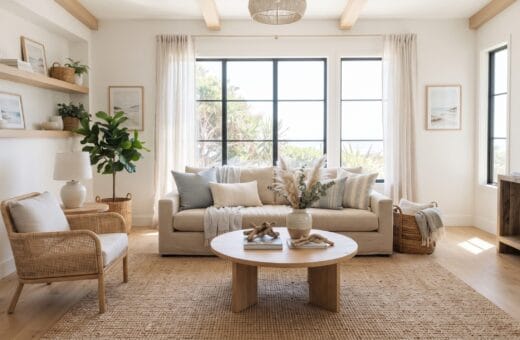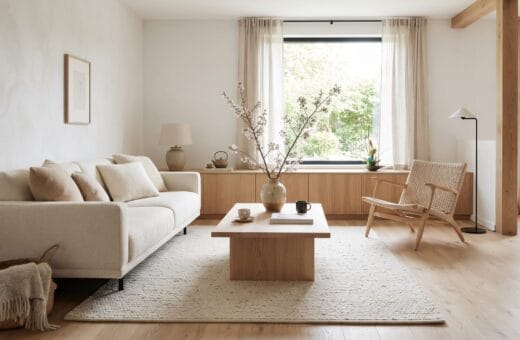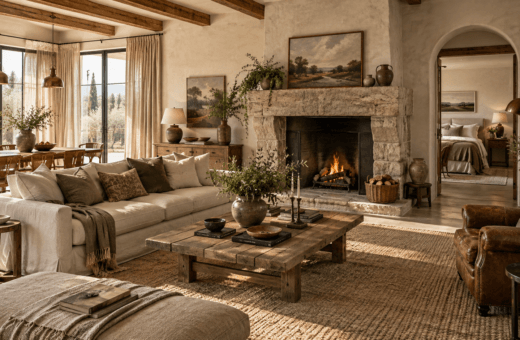
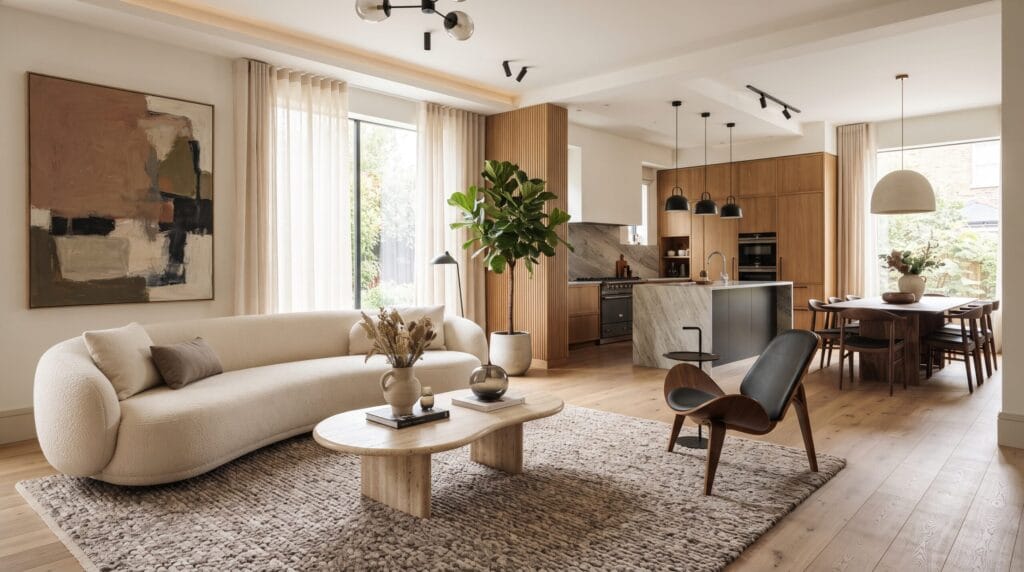
Contemporary interiors are designed for the way people live now. They combine clean architecture, comfortable furniture, thoughtful storage, modern materials, and carefully edited decoration. Unlike a strict historical style, contemporary interior design evolves over time, which means it can absorb new ideas without losing its focus on simplicity, function, and visual balance.
A contemporary home often feels open and calm, but it does not have to be cold or empty. Warm wood, textured fabrics, natural stone, sculptural furniture, layered lighting, and personal artwork can make a streamlined room feel inviting. The key is restraint. Instead of filling every surface, contemporary rooms usually rely on fewer, stronger pieces.
One of the biggest advantages of contemporary interior design is flexibility. It can work in a city apartment, a family home, a small studio, or a large open-plan space. It can lean warm, minimal, luxurious, organic, or dramatic depending on the palette and materials you choose.
This complete guide explains the defining principles of contemporary design, how it differs from modern and minimalist styles, which colors and materials work best, how to choose furniture and lighting, and how to apply the look to every major room in your home.
What Is Contemporary Interior Design?
Contemporary interior design refers to interiors that reflect current design thinking rather than one fixed historical period.
Typical characteristics include:
- Clean lines
- Open visual space
- Simple furniture forms
- A controlled color palette
- Natural and modern materials
- Sculptural lighting
- Practical storage
- Large-scale art
- Layered texture
- Limited but meaningful decor
The style changes as tastes and technology evolve, but its core focus remains the same: creating spaces that feel current, balanced, functional, and visually refined.
Contemporary vs Modern Interior Design
The words contemporary and modern are often used interchangeably, but they are not exactly the same.
Contemporary Interior Design
Contemporary design reflects the present.
It may include:
- Curved sofas
- Soft minimalism
- Statement stone
- Large-format surfaces
- Mixed natural textures
- Integrated technology
- Sculptural lighting
- Current color trends
Modern Interior Design
Modern design usually refers to styles influenced by the early and mid-20th century.
It often includes:
- Mid-century furniture
- Simple geometric forms
- Functional layouts
- Wood, glass, and metal
- Minimal ornament
The most useful distinction is that modern design is rooted in a defined historical movement, while contemporary design continues to change.
Also Read: Minimalist Graphic Design Inspiration for Modern Brands
Contemporary vs Minimalist Interior Design
Minimalism removes as much visual noise as possible.
Contemporary design is often simple, but it can include:
- More color
- More texture
- Bolder art
- Decorative lighting
- Statement furniture
- Layered materials
A contemporary room can be visually clean without being extremely sparse.
The Core Principles of Contemporary Interior Design
1. Use Clean Architectural Lines
Contemporary interiors benefit from clear structure.
Look for:
- Simple door profiles
- Straight or gently curved furniture lines
- Clean cabinetry
- Uncluttered walls
- Large windows
- Simple trim
Architectural details should support the room rather than dominate it.
2. Prioritize Function
Every room should support real daily routines.
A beautiful living room still needs comfortable seating. A kitchen still needs practical storage. A home office still needs an ergonomic work surface.
Good contemporary interior design balances appearance and use.
3. Keep Visual Clutter Under Control
Contemporary rooms usually look calm because everyday clutter has a place.
Use:
- Closed cabinets
- Drawers
- Storage benches
- Baskets
- Built-ins
- Media units
- Wardrobes
Open shelving can work, but it should be carefully edited.
Contemporary Interior Design Color Palettes
Color is one of the easiest ways to define the mood of a room.
Warm Contemporary Palette
Use:
- Warm white
- Beige
- Taupe
- Walnut
- Soft black
This palette feels relaxed and sophisticated.
Organic Contemporary Palette
Use:
- Cream
- Sand
- Olive
- Clay
- Natural oak
This works well with plants and natural textures.
High-Contrast Contemporary Palette
Use:
- White
- Black
- Charcoal
- Light wood
- One muted accent
This creates a sharper architectural look.
Soft Contemporary Palette
Use:
- Greige
- Mushroom
- Dusty blue
- Chocolate brown
- Ivory
This is a good choice for bedrooms and living rooms.
Best Materials for Contemporary Interiors
The strongest contemporary interior design schemes mix smooth and textured materials.
Natural Wood
Wood prevents streamlined interiors from feeling cold.
Use it on:
- Flooring
- Cabinetry
- Dining tables
- Consoles
- Bed frames
- Shelving
Stone
Stone adds visual weight.
Popular choices include:
- Travertine
- Marble
- Limestone
- Granite
- Quartz
Glass
Glass keeps visual weight low and works well on tables, doors, and partitions.
Metal
Use metal in controlled amounts.
Good finishes include:
- Matte black
- Brushed brass
- Bronze
- Stainless steel
- Polished nickel
Textiles
Layer:
- Linen
- Wool
- Cotton
- Velvet
- Boucle
- Leather
Texture is essential when the color palette is simple.
Contemporary Furniture – What to Look For
Furniture should feel simple but not generic.
Choose Strong Silhouettes
A contemporary room may feature:
- Curved sofa
- Sculptural lounge chair
- Oval dining table
- Low media console
- Slim side table
Get the Scale Right
Large rooms need appropriately substantial furniture.
Small furniture in a large space can look disconnected.
Avoid Matching Sets
Choose pieces that coordinate through material, shape, color, or proportion rather than buying a complete matching collection.
Contemporary Living Room Design
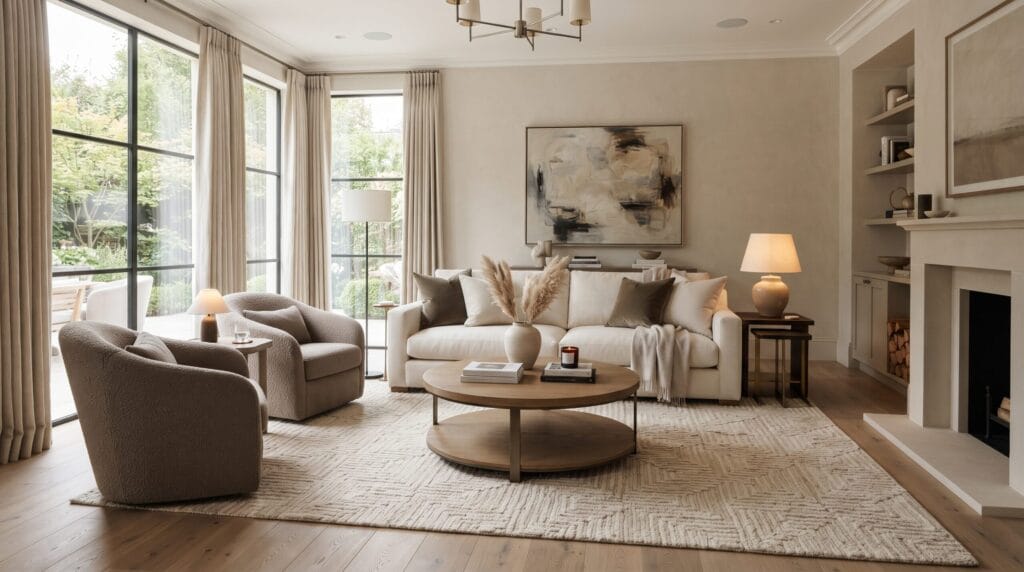
The living room is a natural place to express contemporary interior design.
Start With the Layout
Create a seating group that supports conversation.
Use:
- One main sofa
- One or two chairs
- Coffee table
- Side tables where needed
- Clear walkways
Add a Large Rug
The rug should visually connect the seating.
Use One Strong Focal Point
Choose:
- Large artwork
- Fireplace
- Sculptural light
- Feature wall
- Window view
Layer Lighting
Use:
- Ceiling light
- Floor lamp
- Table lamp
- Accent light
Also Read: “Japandi Interior Ideas That Feel Calm and Timeless“
Contemporary Bedroom Design
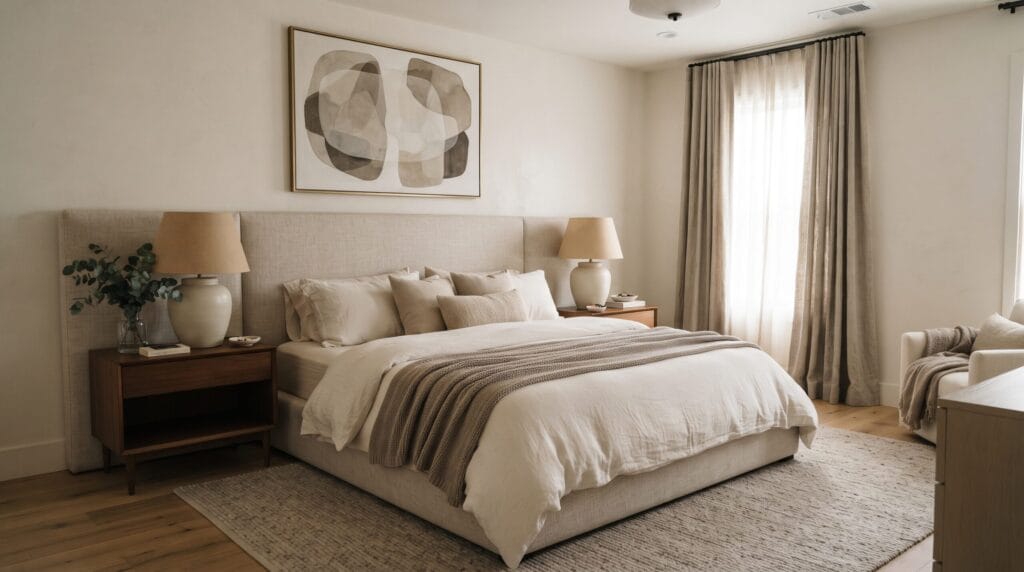
Bedrooms should feel calmer than social spaces.
Keep the Palette Soft
Use warm neutrals, muted green, dusty blue, or deeper earthy tones.
Make the Bed the Focal Point
Use:
- Upholstered headboard
- Layered bedding
- Substantial bedside lamps
- One large artwork
- Full-length curtains
Reduce Visual Noise
Keep nightstands and dressers mostly clear.
Closed storage is especially useful in contemporary bedrooms.
Contemporary Kitchen Design
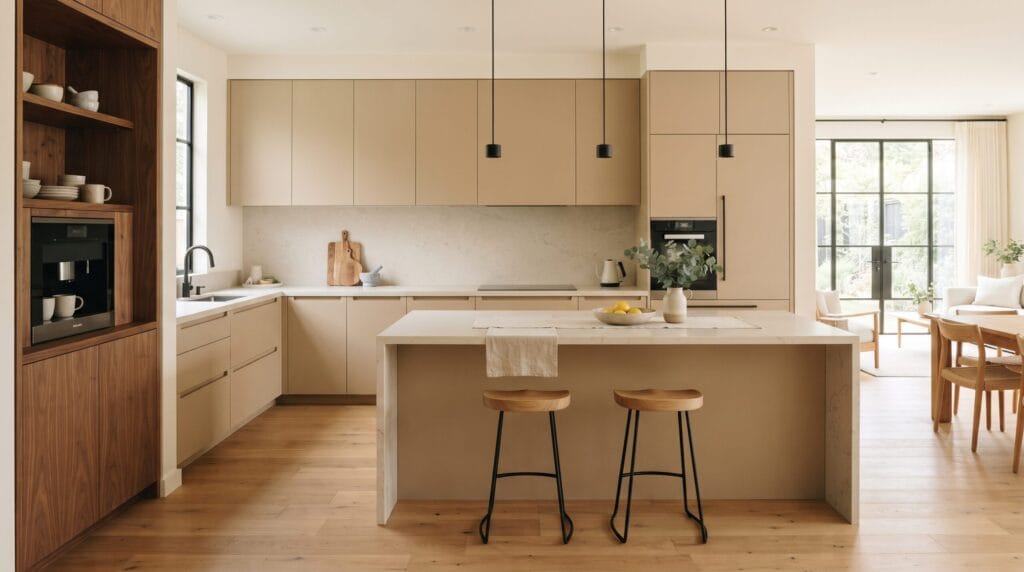
Contemporary kitchens combine visual simplicity with high functionality.
Cabinetry
Use:
- Flat-panel doors
- Simple Shaker profiles
- Integrated handles
- Minimal bar pulls
Materials
Combine:
- Wood
- Stone
- Matte cabinetry
- Metal
- Glass
Countertops
Keep counters mostly clear.
Group daily-use objects on one tray.
Lighting
Pendant lighting can create a focal point over an island or dining area.
Hardwired fixtures should be installed by a qualified professional.
Contemporary Dining Room Design
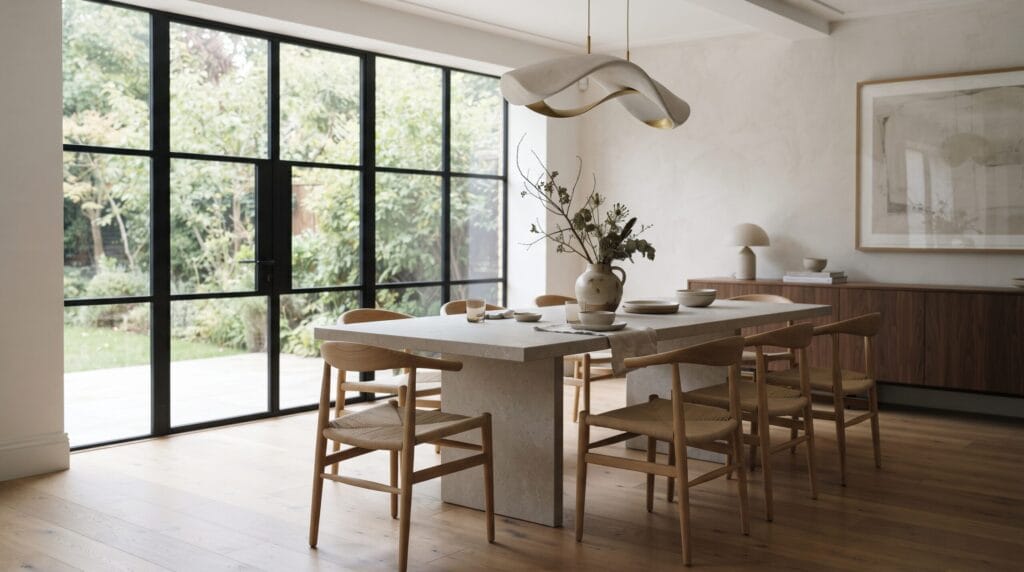
The dining table should anchor the space.
Table Options
- Solid wood
- Stone
- Round pedestal
- Oval
- Slim rectangular
Chairs
Mix material and texture.
For example:
- Wood table + upholstered chairs
- Stone table + timber chairs
Lighting
A single well-scaled pendant can define the room.
Keep the centerpiece low enough for conversation.
Contemporary Bathroom Design
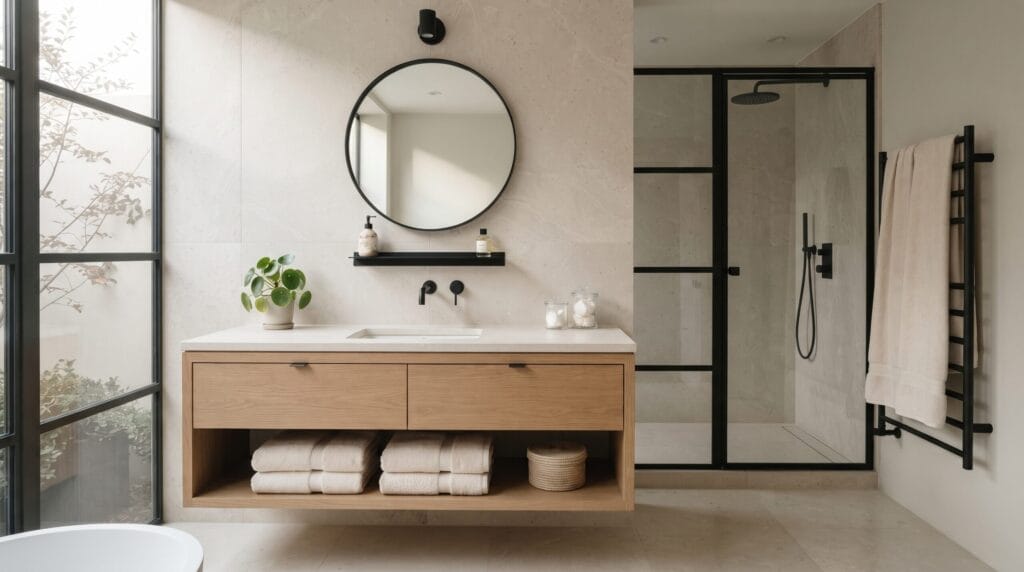
Bathrooms work well with contemporary styling because the room naturally benefits from clean surfaces.
Use a Controlled Material Palette
For example:
- Pale stone
- Warm wood
- Black metal
- White ceramic
Choose a Large Mirror
A simple frameless or thin-frame mirror keeps the room visually open.
Improve Vanity Storage
Store daily products inside drawers or cabinets when possible.
Add Softness
Use:
- Towels
- Bath mat
- Small stool
- Plant where conditions allow
Contemporary Home Office Design
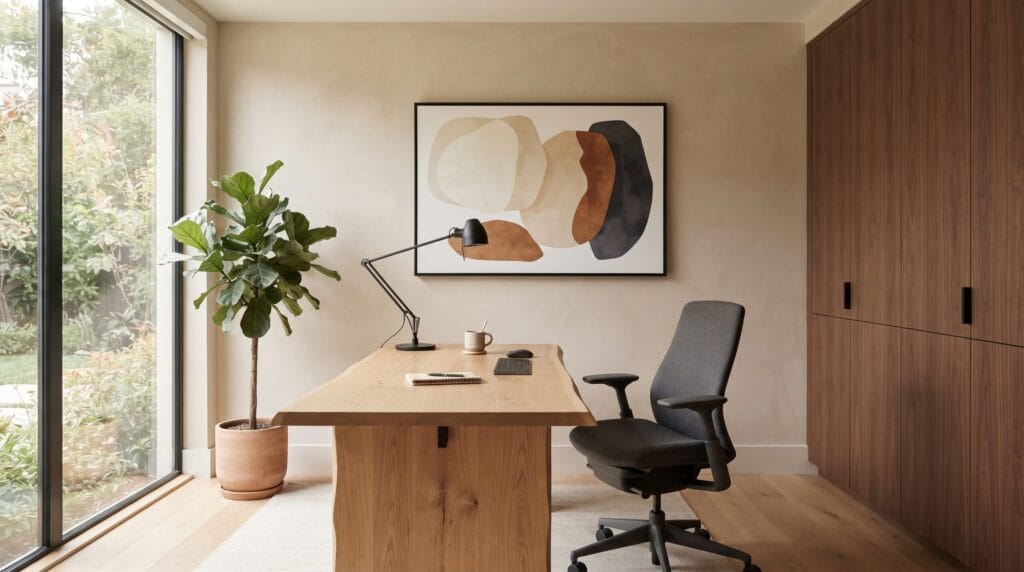
A contemporary office should look calm and support concentration.
Use
- Simple desk
- Comfortable chair
- Task lamp
- Closed storage
- One piece of art
- One plant
Control Cables
Use approved cable management to reduce visual clutter.
Create a Simple Video Background
A shelf, artwork, or plant can be enough.
Contemporary Entryway Design
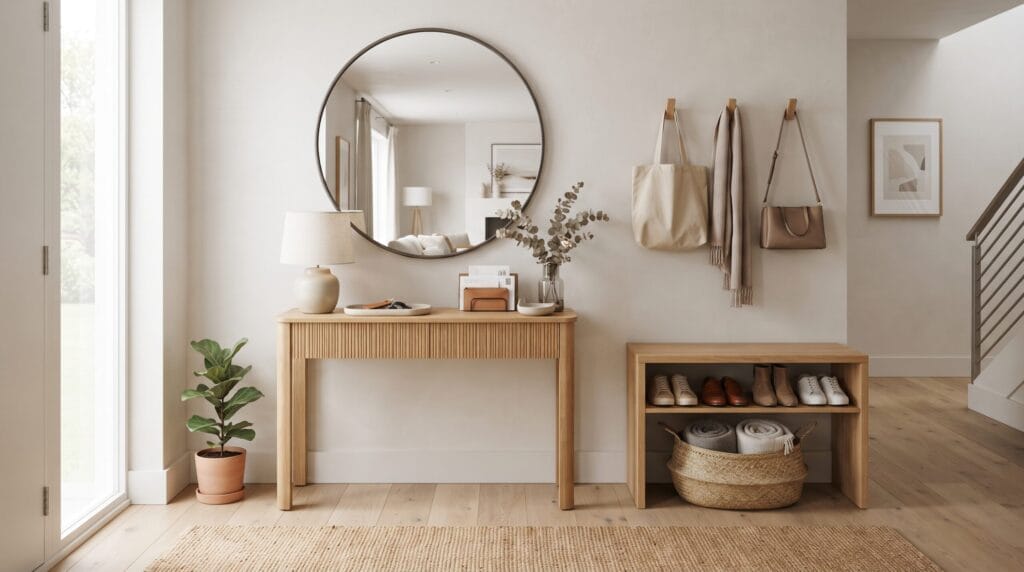
The entryway should combine style and organization.
Include
- Mirror
- Slim console
- Tray
- Hooks
- Shoe storage
- Basket
Keep It Edited
The entryway should not become a permanent drop zone.
Give keys, mail, bags, and shoes a defined place.
Contemporary Design for Small Spaces
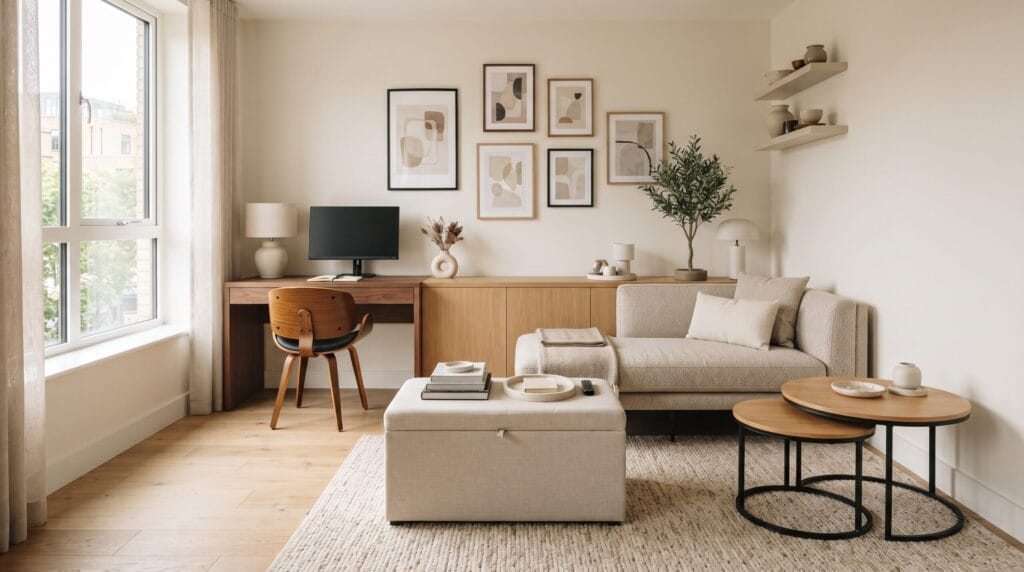
Small homes can benefit significantly from contemporary interior design because the style emphasizes editing and efficient layouts.
Choose Multifunctional Furniture
Use:
- Storage ottoman
- Extendable table
- Bed with drawers
- Desk-console combination
- Nesting tables
Use Vertical Storage
Tall cabinetry and shelving can preserve floor space.
Use Mirrors Strategically
Reflect natural light or a pleasing view.
Avoid Too Many Small Accessories
A few larger objects often create a calmer room.
Contemporary Lighting Design
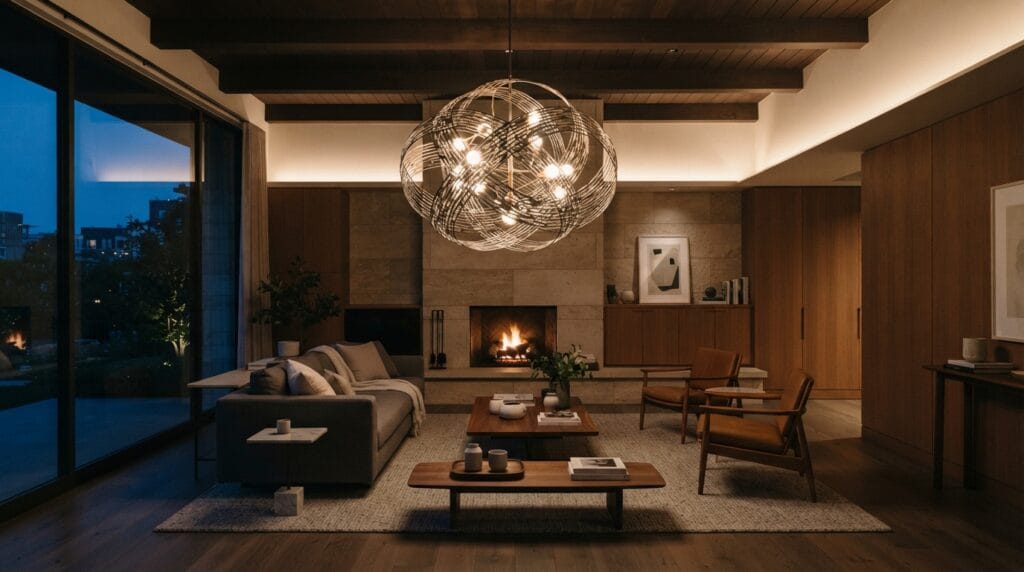
Lighting changes the character of a room more than many decorative purchases.
Ambient Lighting
Provides general illumination.
Task Lighting
Supports specific activities such as reading, cooking, or working.
Accent Lighting
Highlights artwork, architecture, shelving, or textured surfaces.
Contemporary Fixture Styles
Look for:
- Sculptural pendants
- Simple globes
- Linear lights
- Slim floor lamps
- Architectural wall lights
Choose one statement light per zone rather than making every fixture compete.
How to Decorate Contemporary Walls
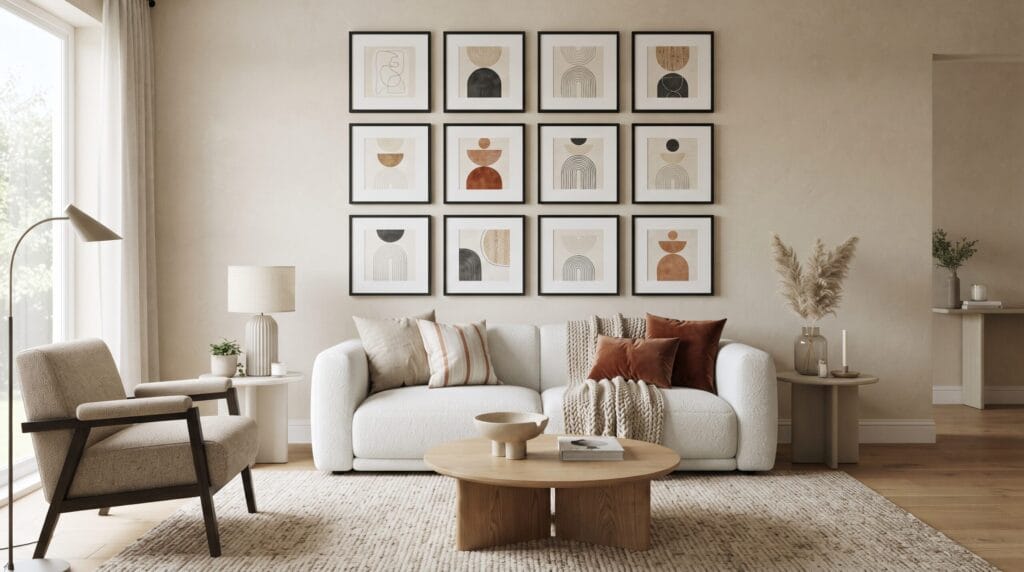
Walls should feel intentional rather than empty.
Use Oversized Art
One substantial piece can anchor a room.
Try a Gallery Grid
A symmetrical grid creates a cleaner look than an irregular arrangement.
Add Texture
Consider:
- Plaster-style finishes
- Wallpaper
- Wood panels
- Molding used selectively
Keep Negative Space
Do not fill every wall.
Empty wall space can make artwork feel more important.
Contemporary Window Treatments
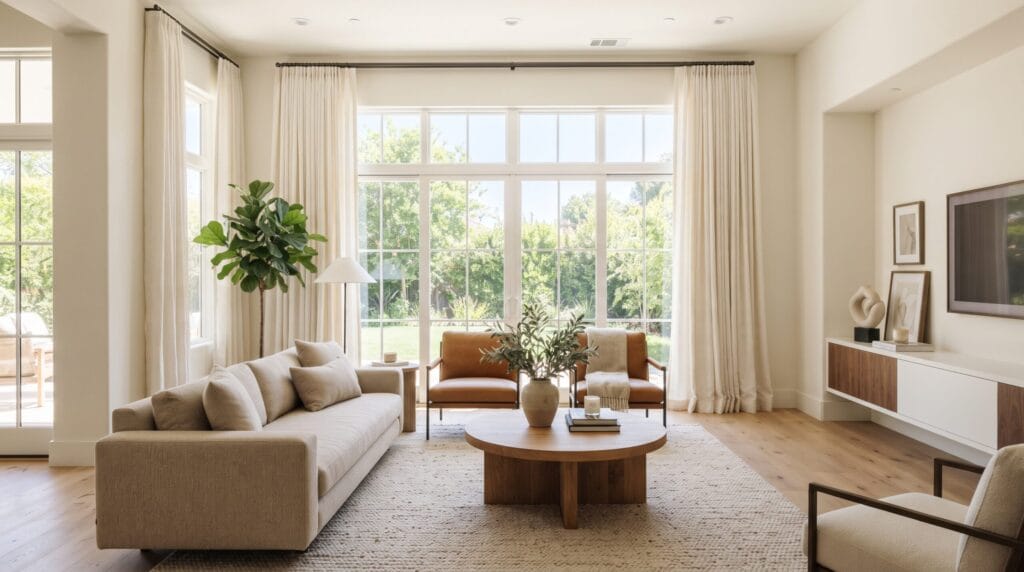
Curtains affect room proportions.
Hang Curtains High
This can make ceilings feel taller.
Extend the Rod Wider
This allows more daylight when the curtains are open.
Use Full-Length Panels
Floor-length curtains usually create a more polished look.
Fabric Choices
Use:
- Linen
- Linen blend
- Textured woven fabric
- Sheers
Contemporary Decor and Accessories
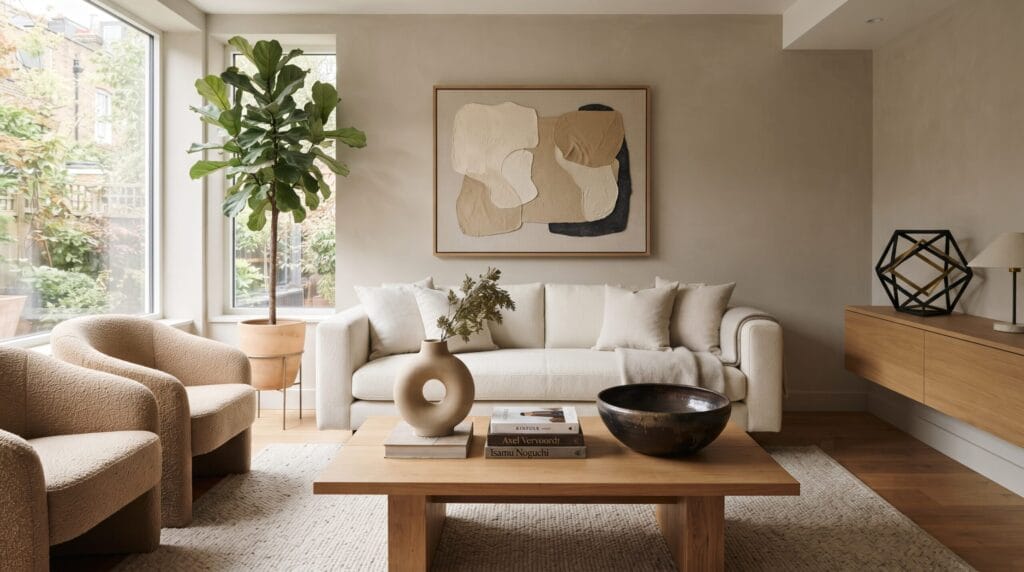
The goal is not to eliminate accessories, but to choose them carefully.
Good Choices
- Sculptural vase
- Stack of books
- Ceramic bowl
- Large plant
- Framed art
- Tray
- Decorative object with strong shape
Use Fewer, Larger Pieces
This usually feels more contemporary than many tiny decorations.
How to Make Contemporary Interiors Feel Warm
One common mistake is making contemporary rooms too cold.
Add Warmth With
- Natural wood
- Warm lighting
- Wool rugs
- Linen curtains
- Upholstered furniture
- Plants
- Handmade ceramics
- Books
- Soft earth tones
Also Read: “Small Closet Organization Ideas That Maximize Space“
Contemporary Interior Design by Room
| Room | Main Priority | Best Materials | High-Impact Upgrade |
| Living room | Layout and scale | Wood, wool, stone, linen | Larger rug and layered lighting |
| Bedroom | Calm and comfort | Upholstery, wood, cotton | Strong headboard wall |
| Kitchen | Function and surfaces | Wood, stone, metal | Simplify cabinetry and counters |
| Dining room | Focal point | Wood, stone, upholstery | Statement table or pendant |
| Bathroom | Clean surfaces | Tile, stone, wood | Large mirror and better storage |
| Home office | Focus | Wood, metal, textile | Closed storage |
| Entryway | Organization | Wood, mirror, woven storage | Slim console and mirror |
| Small spaces | Flexibility | Light wood, glass, textile | Multifunctional furniture |
Contemporary vs Transitional Design
Transitional interiors combine traditional and contemporary elements.
Contemporary Design Usually Uses
- Cleaner silhouettes
- More sculptural furniture
- Stronger contrast
- Current materials
- More visual simplicity
Transitional Design Often Uses
- More classic furniture
- Traditional molding
- Symmetry
- Soft neutral colors
- Timeless fabrics
Both styles can feel elegant, but contemporary design generally feels more current and architectural.
Common Contemporary Interior Design Mistakes
Making Everything Gray
Contemporary interiors can use warm neutrals, olive, blue, brown, terracotta, and black.
Buying Furniture That Is Too Small
Scale matters.
Using Only Ceiling Lights
Layered lighting creates depth.
Overusing Open Shelving
Too much visible storage creates visual noise.
Matching Everything
Coordination is better than exact matching.
Ignoring Texture
Smooth surfaces alone can make a room feel flat.
Following Trends Too Literally
A home should still feel personal.
Contemporary Interior Design Checklist
Use this contemporary interior design checklist:
- The room has a clear focal point.
- Furniture fits the room scale.
- Walkways remain open.
- The color palette is controlled.
- Wood tones are coordinated.
- Metal finishes relate to one another.
- Lighting comes from several sources.
- Storage supports everyday routines.
- Open shelves are edited.
- Artwork is correctly scaled.
- Textures add depth.
- Natural materials add warmth.
- Decorative objects have a purpose.
- Curtains fit the room proportions.
- Small spaces use multifunctional furniture.
- The home feels current without becoming trend-dependent.
Frequently Asked Questions
What Is Contemporary Interior Design?
Contemporary design reflects current design thinking and usually combines clean lines, modern materials, comfortable furniture, layered lighting, and controlled decoration.
Is Contemporary Interior Design the Same as Modern Design?
No. Modern design is rooted in historical 20th-century design movements, while contemporary design evolves with current trends and lifestyles.
What Colors Work Best for Contemporary Interiors?
Warm white, beige, taupe, charcoal, olive, muted blue, terracotta, walnut, and soft black all work well.
How Do I Make a Contemporary Home Feel Cozy?
Use natural wood, warm lighting, rugs, curtains, soft upholstery, plants, books, and layered textures.
What Furniture Works Best in Contemporary Homes?
Choose simple furniture with strong proportions, clean or gently curved silhouettes, useful storage, and durable materials.
Can Contemporary Interior Design Work in a Small Home?
Yes. Efficient layouts, multifunctional furniture, vertical storage, mirrors, and visual editing make it especially suitable for compact spaces.
Does Contemporary Design Have to Be Minimalist?
No. Contemporary interiors can include color, art, texture, and decorative objects as long as the overall composition remains intentional.
Conclusion
The best contemporary interior design creates a home that feels current without sacrificing comfort or personality.
Start with layout and scale. Choose furniture that fits the room, create clear walking paths, and use storage to control everyday clutter. Build a simple color palette, then add depth through wood, stone, metal, glass, linen, wool, and other tactile materials.
Lighting should be layered rather than limited to one overhead fixture. Artwork should be large enough for the wall. Curtains should support the proportions of the room. Accessories should be selected carefully instead of covering every surface.
Most importantly, contemporary design should serve real life. A beautiful room still needs to be comfortable, practical, and personal. When function, materials, lighting, color, and proportion work together, contemporary interiors can feel modern, welcoming, and timeless enough to evolve with you.